


Custom ductwork design halifax ns services provide custom heating and cooling solutions that address your property's unique layout and comfort needs. If you're experiencing inconsistent temperatures, facing high energy bills despite a new HVAC system, or dealing with poor indoor air quality, the problem often lies in your ductwork—not your furnace or heat pump.
Standard, off-the-shelf ductwork rarely fits the unique layout of Halifax properties. Older homes, commercial spaces, and new builds all require custom solutions that account for airflow dynamics, spatial constraints, and local climate conditions.
Custom ductwork provides:
• Proper sizing for your specific HVAC system
• Elimination of hot and cold spots
• Reduced energy waste from air leaks and poor airflow
• Improved indoor air quality through better ventilation
• Compliance with local Halifax building codes
This precision process involves a detailed property assessment, professional airflow calculations, and custom fabrication to ensure your HVAC system operates at peak efficiency, delivering consistent comfort while minimizing energy waste.

Every Halifax property is unique, which is why custom ductwork design halifax ns makes such a difference. Cookie-cutter solutions don't work for buildings with distinct layouts and heating needs. When ductwork is precisely designed for your space, you'll notice more consistent temperatures, lower energy bills, and cleaner air.
Custom ductwork allows your HVAC equipment to operate at peak efficiency, extending its lifespan and reducing running costs. It can also increase your property value, as buyers and tenants appreciate reliable, efficient climate control. For homeowners considering upgrades, programs like the Canada Greener Homes Grant can help make energy-efficient improvements more affordable.

Custom ductwork offers significant savings. When ducts are properly sized using Manual J load calculations, conditioned air travels exactly where it needs to go, eliminating waste. This precision engineering results in optimal airflow that delivers comfort efficiently.
Minimized air leaks are another key benefit. Custom-fabricated sections have tighter seals than standard pre-made ducts, preventing expensive conditioned air from escaping. This reduces strain on your furnace or heat pump, leading to lower energy consumption and a longer equipment lifespan. When installing a new system like Ducted Heat Pumps Halifax, NS, custom ductwork ensures you get the full efficiency you paid for, resulting in lower utility bills year after year.
Custom ductwork plays a vital role in the air you breathe. Standard systems with poorly sealed joints can circulate dust, allergens, and other contaminants. Custom ductwork design halifax ns creates a tightly sealed system that keeps these unwanted particles out.
Properly designed ductwork also ensures proper ventilation, exchanging stale indoor air for fresh outdoor air. This helps remove odors and pollutants. In Halifax's humid climate, it also aids in moisture control, preventing condensation that can lead to mold and mildew. The result is reduced dust and allergens, creating a healthier living environment. Regular maintenance, like Air Duct Cleaning Windsor, keeps your system performing at its best.
Getting custom ductwork design halifax ns is a straightforward process refined over decades to be as smooth as possible. It's a result of careful planning, precise calculations, and expert craftsmanship, all designed to deliver consistent temperatures, lower energy bills, and cleaner air.
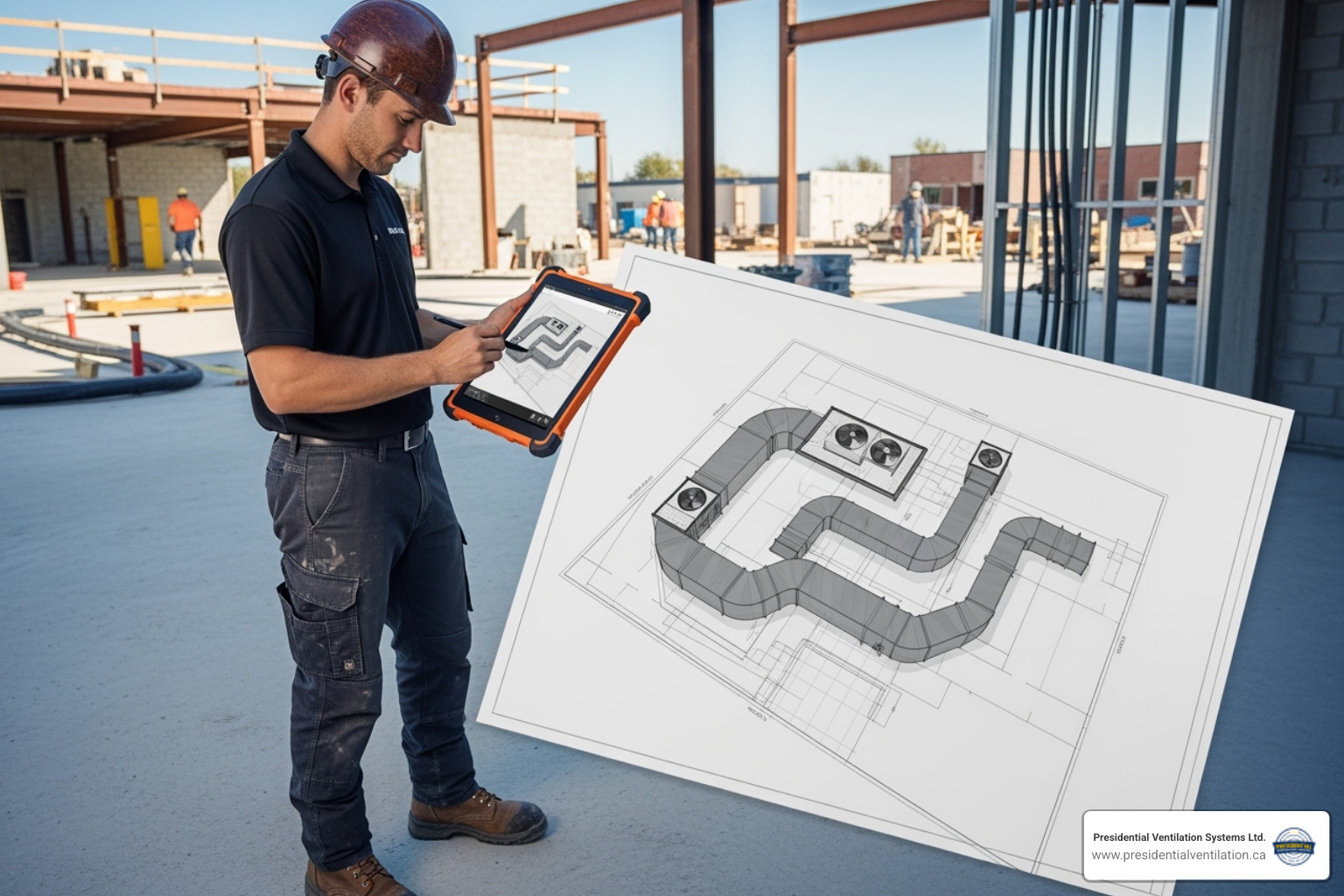
Our process ensures your custom ductwork system performs perfectly:
1. Comprehensive Site Assessment: We visit your property to evaluate the layout, existing infrastructure, and your specific comfort and air quality needs.
2. System Design and Airflow Calculations: Using advanced software and Manual J load calculations, our designers determine the exact airflow each room needs for optimal efficiency, whether for Ducted Heating Systems Halifax, NS or cooling.
3. Material Fabrication: We use high-quality galvanized steel, aluminum, or insulated materials to precisely fabricate each component in-house, ensuring a perfect fit.
4. Expert Installation: Our certified professionals install the ductwork, ensuring proper sealing, smooth airflow, and secure mounting for a flawless, professional finish.
5. System Balancing and Final Testing: We adjust dampers and registers to ensure each room receives the right amount of conditioned air, testing and fine-tuning until the system delivers peak performance.
Designing custom ductwork design halifax ns differs for homes and businesses.
• Residential Layouts: For Halifax homes, we focus on systems that operate quietly and blend seamlessly into the living space. We prioritize aesthetics, often routing ducts through basements, attics, or closets to preserve your home's character while maximizing comfort.
• Commercial Spaces: Businesses require robust systems to handle larger air volumes and meet strict building codes. We design for reliability to maintain comfort for employees and customers. For industrial settings, we can integrate specialized dust collection systems. Many businesses also opt for spiral ductwork, which offers excellent efficiency and a sleek, modern aesthetic when left exposed.
Our experience with Commercial HVAC Halifax projects ensures we understand the unique demands of any business environment.
Exceptional ductwork requires a customized solution based on your property's unique characteristics. That's what makes custom ductwork design halifax ns a specialized field. We consider every detail, from building layout to local climate, to create a system that delivers superior comfort and efficiency.
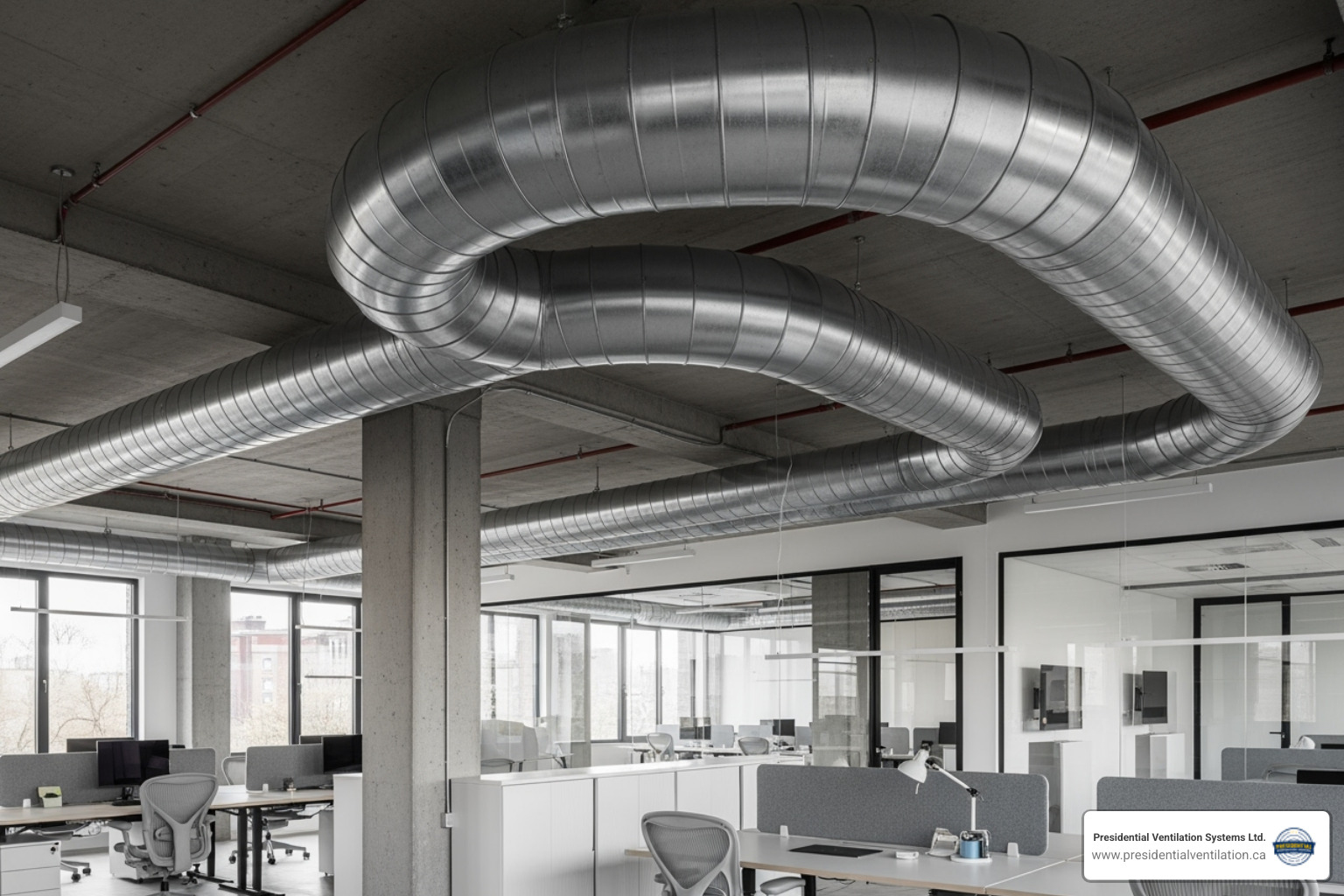
Our design process accounts for several critical factors:
• Property Age and Type: We have experience retrofitting older Halifax homes while preserving their character, as well as designing systems for new construction from the ground up.
• Unique Architectural Features: We design around features like high ceilings, open-concept layouts, and irregularly shaped rooms to ensure even airflow without compromising aesthetics.
• Insulation Levels: We assess your building's insulation and factor it into our calculations to maximize energy efficiency.
• Space Constraints: Our team is skilled at navigating tight spaces in basements, attics, and wall cavities to maximize airflow without major structural changes.
• Existing Infrastructure: We evaluate your current HVAC, electrical, and plumbing systems to ensure seamless integration.
• Halifax's Climate: We design systems to handle our region's cold, damp winters and humid summers efficiently, drawing on decades of local experience with HVAC Services Halifax, HRM, NS.
The quality of your ductwork depends on how it's made. We use advanced technology and premium materials for custom ductwork design halifax ns to ensure precision and durability.
• Fabrication: We use plasma cutting for accuracy, roll forming for smooth and efficient spiral ductwork, and expert welding for strong, leak-free seams.
• Materials: We select the best material for the job, including durable galvanized steel, lightweight aluminum, and essential insulated ductwork for unconditioned spaces to prevent energy loss and condensation.
This combination of advanced techniques and quality materials results in a custom system built to last.
When you choose custom ductwork design halifax ns, you deserve the confidence that your investment is safe, compliant, and built to last. We emphasize quality craftsmanship and strict adherence to all codes and standards, because creating an efficient and safe system requires expertise and precision.
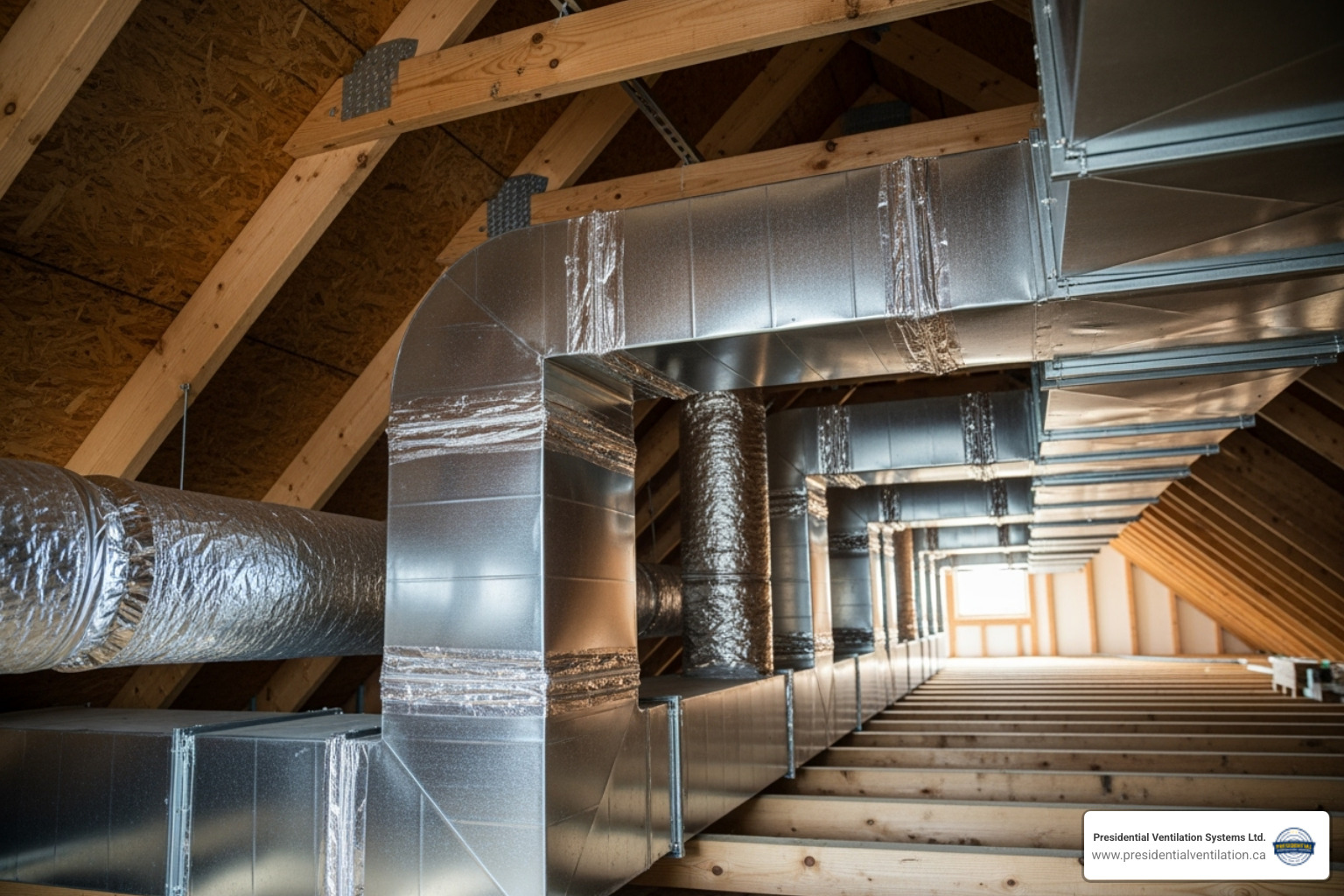
Our team consists of Red Seal-certified sheet metal professionals with proven skill and knowledge. Their technical expertise in airflow dynamics and fabrication ensures every measurement is precise and every connection is secure. A certified team also follows strict safety standards, protecting your property and ensuring a reliable installation. This expertise provides a durable, leak-free system and genuine peace of mind that your investment is sound.
We know Halifax's municipal regulations inside and out, ensuring every custom ductwork design halifax ns project is fully compliant. Our systems are designed to meet or exceed local building codes for sizing, materials, and fire safety.
We also adhere to industry standards from organizations like SMACNA and the NFPA, which provide best practices for duct construction and installation. Our rigorous quality assurance process verifies that every component aligns with these standards, ensuring the long-term reliability of your system. This commitment to compliance applies to every project, whether it's a home in Halifax or a business requiring HVAC Services Dartmouth, NS.
Here are answers to some common questions about custom ductwork to help you feel confident about your project.
The timeline for a custom ductwork design halifax ns project varies, as every property is unique. Factors include the project scope (residential vs. commercial, single-zone vs. multi-zone), design complexity, and fabrication time. A straightforward residential job may take a couple of weeks, while a larger or more complex project will take longer. We provide a clear, realistic timeline before any work begins.
Yes, absolutely. Older homes often benefit most from custom ductwork design halifax ns because off-the-shelf solutions can't handle their unique challenges. Our retrofitting solutions involve working with existing structures to find creative pathways for ducts without compromising your home's character. We specialize in preserving architecture while delivering modern comfort, a thoughtful approach we apply to all our HVAC Services Bedford, NS projects.
Even the best heat pump or AC system will underperform with poor ductwork. Custom ductwork is essential to getting the performance you paid for. It provides optimized airflow that is sized precisely for your new equipment, which maximizes system efficiency and reduces strain. This ensures you meet manufacturer specifications (protecting your warranty) and achieve peak performance—no hot or cold spots, just reliable comfort. Pairing a new Ducted AC Systems Halifax, NS with custom ductwork is a smart way to protect your investment.
In Halifax, the quality of your ductwork makes all the difference in comfort and efficiency. Custom ductwork design halifax ns is the key to creating an environment where health and performance come together seamlessly. It delivers consistent temperatures, improved indoor air quality, lower utility bills, and long-term reliability.
From older homes to modern commercial spaces, custom solutions address challenges that off-the-shelf products can't. By using advanced techniques, quality materials, and adhering to all building codes, we ensure your system provides lasting value and peace of mind.
Your property deserves a system that works in harmony with your space. Custom ductwork is a smart, long-term investment in your property's value and your daily comfort.
At Presidential Ventilation Systems Ltd., we bring over 30 years of expertise to every project. As a leading Daikin Comfort Pro Dealer, we combine technical excellence with genuine care for our customers throughout Halifax and the surrounding areas.
Ready to experience the difference that expertly designed ductwork makes? Contact us to design your high-efficiency ducted system today. Let's create the comfortable, efficient space you deserve.
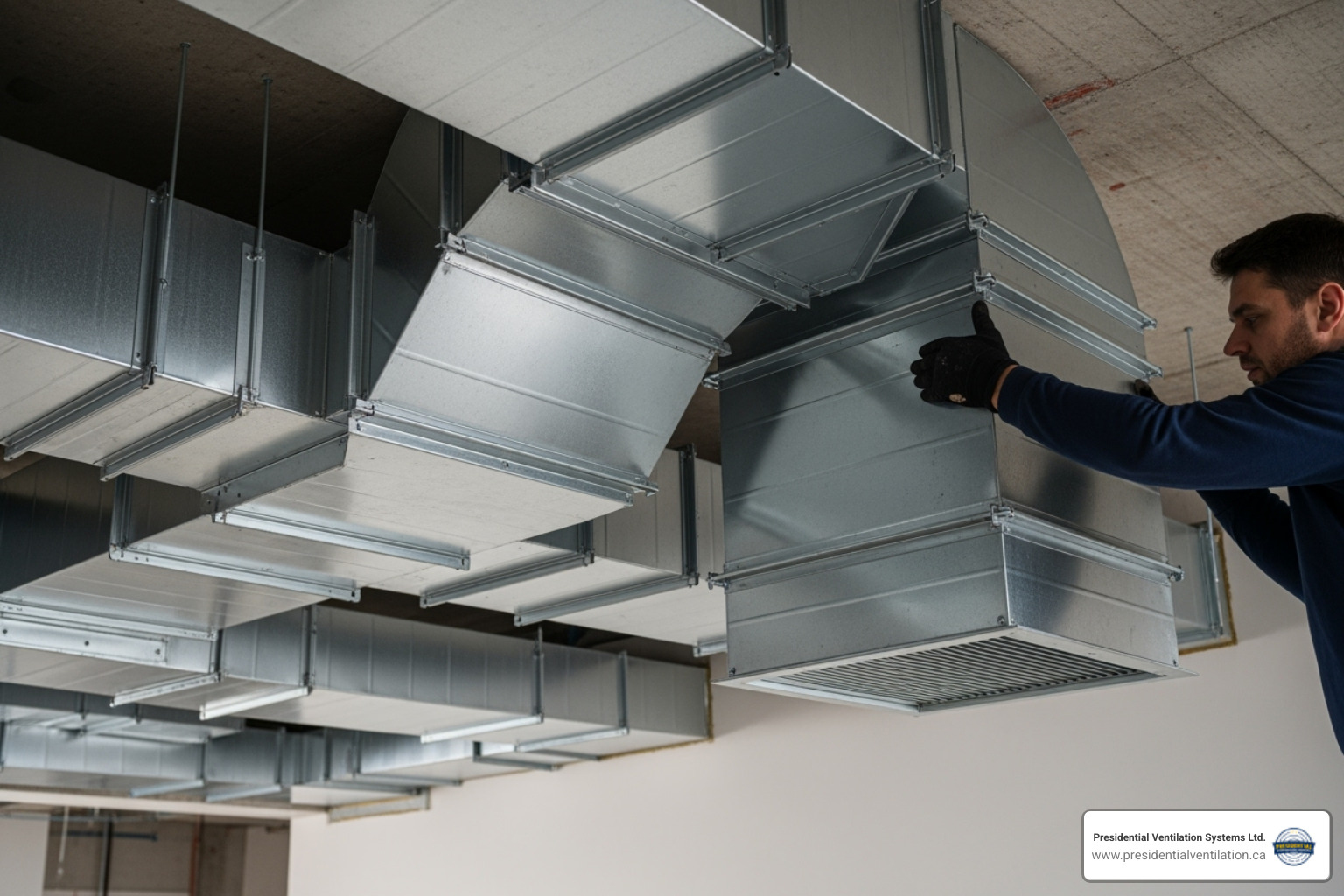

Custom ductwork design halifax ns services provide custom heating and cooling solutions that address your property's unique layout and comfort needs. If you're experiencing inconsistent temperatures, facing high energy bills despite a new HVAC system, or dealing with poor indoor air quality, the problem often lies in your ductwork—not your furnace or heat pump.
Standard, off-the-shelf ductwork rarely fits the unique layout of Halifax properties. Older homes, commercial spaces, and new builds all require custom solutions that account for airflow dynamics, spatial constraints, and local climate conditions.
Custom ductwork provides:
• Proper sizing for your specific HVAC system
• Elimination of hot and cold spots
• Reduced energy waste from air leaks and poor airflow
• Improved indoor air quality through better ventilation
• Compliance with local Halifax building codes
This precision process involves a detailed property assessment, professional airflow calculations, and custom fabrication to ensure your HVAC system operates at peak efficiency, delivering consistent comfort while minimizing energy waste.
Every Halifax property is unique, which is why custom ductwork design halifax ns makes such a difference. Cookie-cutter solutions don't work for buildings with distinct layouts and heating needs. When ductwork is precisely designed for your space, you'll notice more consistent temperatures, lower energy bills, and cleaner air.
Custom ductwork allows your HVAC equipment to operate at peak efficiency, extending its lifespan and reducing running costs. It can also increase your property value, as buyers and tenants appreciate reliable, efficient climate control. For homeowners considering upgrades, programs like the Canada Greener Homes Grant can help make energy-efficient improvements more affordable.
Custom ductwork offers significant savings. When ducts are properly sized using Manual J load calculations, conditioned air travels exactly where it needs to go, eliminating waste. This precision engineering results in optimal airflow that delivers comfort efficiently.
Minimized air leaks are another key benefit. Custom-fabricated sections have tighter seals than standard pre-made ducts, preventing expensive conditioned air from escaping. This reduces strain on your furnace or heat pump, leading to lower energy consumption and a longer equipment lifespan. When installing a new system like Ducted Heat Pumps Halifax, NS, custom ductwork ensures you get the full efficiency you paid for, resulting in lower utility bills year after year.
Custom ductwork plays a vital role in the air you breathe. Standard systems with poorly sealed joints can circulate dust, allergens, and other contaminants. Custom ductwork design halifax ns creates a tightly sealed system that keeps these unwanted particles out.
Properly designed ductwork also ensures proper ventilation, exchanging stale indoor air for fresh outdoor air. This helps remove odors and pollutants. In Halifax's humid climate, it also aids in moisture control, preventing condensation that can lead to mold and mildew. The result is reduced dust and allergens, creating a healthier living environment. Regular maintenance, like Air Duct Cleaning Windsor, keeps your system performing at its best.
Getting custom ductwork design halifax ns is a straightforward process refined over decades to be as smooth as possible. It's a result of careful planning, precise calculations, and expert craftsmanship, all designed to deliver consistent temperatures, lower energy bills, and cleaner air.
Our process ensures your custom ductwork system performs perfectly:
1. Comprehensive Site Assessment: We visit your property to evaluate the layout, existing infrastructure, and your specific comfort and air quality needs.
2. System Design and Airflow Calculations: Using advanced software and Manual J load calculations, our designers determine the exact airflow each room needs for optimal efficiency, whether for Ducted Heating Systems Halifax, NS or cooling.
3. Material Fabrication: We use high-quality galvanized steel, aluminum, or insulated materials to precisely fabricate each component in-house, ensuring a perfect fit.
4. Expert Installation: Our certified professionals install the ductwork, ensuring proper sealing, smooth airflow, and secure mounting for a flawless, professional finish.
5. System Balancing and Final Testing: We adjust dampers and registers to ensure each room receives the right amount of conditioned air, testing and fine-tuning until the system delivers peak performance.
Designing custom ductwork design halifax ns differs for homes and businesses.
• Residential Layouts: For Halifax homes, we focus on systems that operate quietly and blend seamlessly into the living space. We prioritize aesthetics, often routing ducts through basements, attics, or closets to preserve your home's character while maximizing comfort.
• Commercial Spaces: Businesses require robust systems to handle larger air volumes and meet strict building codes. We design for reliability to maintain comfort for employees and customers. For industrial settings, we can integrate specialized dust collection systems. Many businesses also opt for spiral ductwork, which offers excellent efficiency and a sleek, modern aesthetic when left exposed.
Our experience with Commercial HVAC Halifax projects ensures we understand the unique demands of any business environment.
Exceptional ductwork requires a customized solution based on your property's unique characteristics. That's what makes custom ductwork design halifax ns a specialized field. We consider every detail, from building layout to local climate, to create a system that delivers superior comfort and efficiency.
Our design process accounts for several critical factors:
• Property Age and Type: We have experience retrofitting older Halifax homes while preserving their character, as well as designing systems for new construction from the ground up.
• Unique Architectural Features: We design around features like high ceilings, open-concept layouts, and irregularly shaped rooms to ensure even airflow without compromising aesthetics.
• Insulation Levels: We assess your building's insulation and factor it into our calculations to maximize energy efficiency.
• Space Constraints: Our team is skilled at navigating tight spaces in basements, attics, and wall cavities to maximize airflow without major structural changes.
• Existing Infrastructure: We evaluate your current HVAC, electrical, and plumbing systems to ensure seamless integration.
• Halifax's Climate: We design systems to handle our region's cold, damp winters and humid summers efficiently, drawing on decades of local experience with HVAC Services Halifax, HRM, NS.
The quality of your ductwork depends on how it's made. We use advanced technology and premium materials for custom ductwork design halifax ns to ensure precision and durability.
• Fabrication: We use plasma cutting for accuracy, roll forming for smooth and efficient spiral ductwork, and expert welding for strong, leak-free seams.
• Materials: We select the best material for the job, including durable galvanized steel, lightweight aluminum, and essential insulated ductwork for unconditioned spaces to prevent energy loss and condensation.
This combination of advanced techniques and quality materials results in a custom system built to last.
When you choose custom ductwork design halifax ns, you deserve the confidence that your investment is safe, compliant, and built to last. We emphasize quality craftsmanship and strict adherence to all codes and standards, because creating an efficient and safe system requires expertise and precision.
Our team consists of Red Seal-certified sheet metal professionals with proven skill and knowledge. Their technical expertise in airflow dynamics and fabrication ensures every measurement is precise and every connection is secure. A certified team also follows strict safety standards, protecting your property and ensuring a reliable installation. This expertise provides a durable, leak-free system and genuine peace of mind that your investment is sound.
We know Halifax's municipal regulations inside and out, ensuring every custom ductwork design halifax ns project is fully compliant. Our systems are designed to meet or exceed local building codes for sizing, materials, and fire safety.
We also adhere to industry standards from organizations like SMACNA and the NFPA, which provide best practices for duct construction and installation. Our rigorous quality assurance process verifies that every component aligns with these standards, ensuring the long-term reliability of your system. This commitment to compliance applies to every project, whether it's a home in Halifax or a business requiring HVAC Services Dartmouth, NS.
Here are answers to some common questions about custom ductwork to help you feel confident about your project.
The timeline for a custom ductwork design halifax ns project varies, as every property is unique. Factors include the project scope (residential vs. commercial, single-zone vs. multi-zone), design complexity, and fabrication time. A straightforward residential job may take a couple of weeks, while a larger or more complex project will take longer. We provide a clear, realistic timeline before any work begins.
Yes, absolutely. Older homes often benefit most from custom ductwork design halifax ns because off-the-shelf solutions can't handle their unique challenges. Our retrofitting solutions involve working with existing structures to find creative pathways for ducts without compromising your home's character. We specialize in preserving architecture while delivering modern comfort, a thoughtful approach we apply to all our HVAC Services Bedford, NS projects.
Even the best heat pump or AC system will underperform with poor ductwork. Custom ductwork is essential to getting the performance you paid for. It provides optimized airflow that is sized precisely for your new equipment, which maximizes system efficiency and reduces strain. This ensures you meet manufacturer specifications (protecting your warranty) and achieve peak performance—no hot or cold spots, just reliable comfort. Pairing a new Ducted AC Systems Halifax, NS with custom ductwork is a smart way to protect your investment.
In Halifax, the quality of your ductwork makes all the difference in comfort and efficiency. Custom ductwork design halifax ns is the key to creating an environment where health and performance come together seamlessly. It delivers consistent temperatures, improved indoor air quality, lower utility bills, and long-term reliability.
From older homes to modern commercial spaces, custom solutions address challenges that off-the-shelf products can't. By using advanced techniques, quality materials, and adhering to all building codes, we ensure your system provides lasting value and peace of mind.
Your property deserves a system that works in harmony with your space. Custom ductwork is a smart, long-term investment in your property's value and your daily comfort.
At Presidential Ventilation Systems Ltd., we bring over 30 years of expertise to every project. As a leading Daikin Comfort Pro Dealer, we combine technical excellence with genuine care for our customers throughout Halifax and the surrounding areas.
Ready to experience the difference that expertly designed ductwork makes? Contact us to design your high-efficiency ducted system today. Let's create the comfortable, efficient space you deserve.

You finally finish draft-proofing your historic property, upgrading the insulation and sealing the windows to keep the winter chill out, only to wake up to a new, frustrating reality: water pooling heavily on the windowsills every morning. At Presidential Ventilation Systems, our team frequently encounters this scenario in Mount Uniacke and Halifax homes built between 1880 and 1940. The process of retrofitting air exchangers into Halifax homes without existing ductwork is rapidly becoming a structural necessity rather than a luxury. Older properties upgraded for energy efficiency suddenly trap everyday moisture inside, leading to severe winter window condensation, peeling paint, and poor indoor air quality.
Properties heated by traditional hot water boilers or electric baseboards lack the forced-air infrastructure to naturally circulate and exhaust this trapped, damp air. This leaves homeowners facing a difficult decision point: do you tear down historic plaster walls to install highly disruptive traditional ductwork, or do you utilize localized, decentralized heat recovery ventilation (HRV) systems? By choosing a decentralized approach, you preserve the home's architectural integrity while effectively managing moisture.
If you are tired of wiping down wet windows but refuse to destroy your home's character, integrating localized ventilation through professional HVAC services offers a clean, non-destructive path forward for older Halifax neighborhoods.
The problem: Modern draft-proofing and insulation are fantastic for lowering heating bills, but they trap indoor humidity that previously escaped through natural leaks in the building envelope. The cause: Homes relying solely on radiant or baseboard heat have zero mechanical air circulation to mix the air, allowing moisture to accumulate. The solution: Implementing mechanical ventilation to actively exhaust damp air and introduce fresh, dry air without relying on a central furnace fan.
Halifax's coastal maritime climate presents a unique challenge for historic building envelopes, particularly during the damp November-to-March heating season. High year-round humidity and damp winters exacerbate indoor moisture issues. When you combine the natural coastal dampness with everyday moisture generation—like cooking, showering, and even breathing—the humidity levels in a newly sealed home quickly skyrocket. In older Halifax neighborhoods, our ventilation experts frequently see winter indoor humidity pushed well above the recommended 30% to 50% range—sometimes spiking to 70%—resulting in frost buildup on the glass and eventual rot in the wooden window frames.
Without forced-air circulation, stagnant air pockets form in corners, behind furniture, and inside closets. This lack of movement allows moisture to settle and condense on the coldest surfaces in the room.
• Original (Drafty) Historic Home — Air Circulation: High (driven by wind and heat loss) — Moisture Management: Natural exhaust through leaks, but high energy waste
• Air-Sealed Ductless Home — Air Circulation: Zero (stagnant air pockets) — Moisture Management: Trapped moisture, severe window condensation
• Air-Sealed with Localized HRV — Air Circulation: Controlled mechanical exchange — Moisture Management: Balanced humidity, recovered heat, fresh air
Opening windows in the dead of winter is an inefficient and uncomfortable workaround that dumps your expensive heating energy right out into the cold. Mechanical ventilation steps in to solve this physics problem permanently, ensuring the home can breathe without sacrificing the comfort you just insulated it to achieve.
Trying to force modern, centralized HVAC infrastructure into a house built a century ago is a recipe for aesthetic disaster. It is physically impossible to run large 6-inch or 8-inch rigid sheet-metal trunk lines through 100-year-old plaster walls and solid timber framing without causing catastrophic damage to the home's interior.
Traditional HRV system installation requires a network of supply and return ducts connected to a large central unit. In a home with no existing ductwork, accommodating these bulky steel pipes means dropping ceilings, building intrusive drywall bulkheads, and sacrificing valuable square footage in closets and living spaces. Decentralized air exchangers act as the elegant, non-destructive alternative, providing the exact same fresh air benefits without the demolition.
In our 30+ years of working in Nova Scotia, the methodology at Presidential Ventilation Systems has shifted heavily toward protecting historic drywall and plaster rather than forcing standardized ductwork where it does not belong. The hidden costs of repairing historic wall materials after invasive retrofits are astronomical. Plaster is notoriously brittle; cutting into it for a 6-inch duct often causes massive spiderweb cracking that requires a specialized plasterer to fix.
• Zero bulkheads required: You maintain your original ceiling heights and crown moldings.
• No lost closet space: You do not have to surrender storage to house vertical duct runs.
• Targeted installation: The units are placed specifically where they are needed, leaving the rest of the wall completely untouched.
• Preserved structural integrity: No cutting through antique floor joists or load-bearing timber.
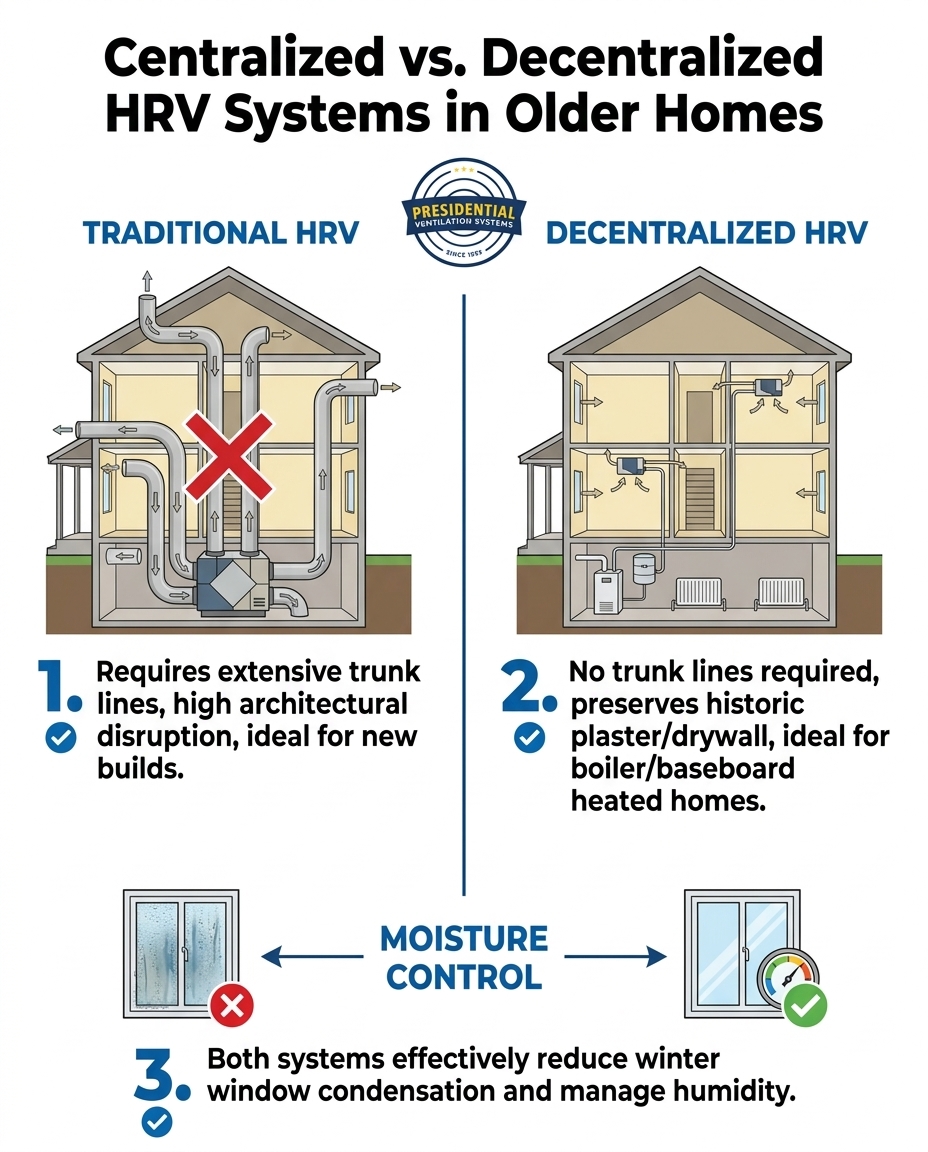
If there are no ducts to carry the air around the house, how does a decentralized system actually work? Instead of one large box in the basement trying to pull air from every room, a localized system uses compact, through-wall units strategically placed in the living space. These units manage moisture and recover heat completely independent of any central furnace.
The brilliance of a localized HRV lies in its internal ceramic core. Here is exactly how the heat recovery process functions in a ductless setup:
1. The Exhaust Phase: The unit's fan pulls warm, stale, damp air from inside the room and pushes it outside. As this air passes through the unit, the thermal energy is captured and stored in a highly conductive ceramic core.
2. The Reversal: After about 70 seconds, the fan automatically reverses direction.
3. The Intake Phase: The unit now pulls fresh, cold outside air indoors. As this freezing winter air passes over the warmed ceramic core, it absorbs the stored heat.
4. The Delivery: The fresh air enters your room pre-warmed, ensuring you get ventilation without creating a freezing draft or spiking your heating bills.
Homes upgrading away from heavy oil boilers often need simultaneous ventilation strategies. When you switch to ductless heat pumps for efficient heating and cooling, you are still utilizing a ductless distribution method. Heat pumps circulate the air within the room, but they do not bring in fresh oxygen from outside. Pairing decentralized air exchangers with modern heat pumps—such as the high-efficiency Daikin ductless systems our team regularly installs—creates a perfect synergy: the heat pump handles the temperature, and the localized HRV handles the moisture and air quality, resulting in an exceptionally comfortable, healthy living space.
A successful ductless HRV retrofit requires absolute precision. You are cutting directly through the exterior envelope of a finished, occupied home. This process demands seamless coordination between electrical and ventilation trades. Hiring separate contractors often leads to miscommunication, improper electrical sizing for the new continuous-duty motors, and messy wall penetrations that leak air.
What our team of approximately 70 employees—including Red Seal HVAC, electrical, and sheet-metal tradespeople—has learned over decades of retrofits is that keeping the electrical and sheet-metal work in-house guarantees safety and precision. The homeowner never has to act as a general contractor trying to coordinate an electrician's schedule with the HVAC installer's timeline.
The electrical reality: Localized air exchangers require dedicated power. You cannot simply plug them into an existing bedroom outlet with an extension cord. Assessing older electrical panels for new ventilation circuits is a critical first step. Because these units feature continuous-duty motors designed to run 24/7, the electrical integration must meet strict safety codes. Licensed electrical work ensures the new circuits are properly sized, grounded, and integrated into your existing panel—often revealing the need for a 200-amp panel upgrade to support modern electrical loads without overloading older wiring infrastructure.
The weather-sealing requirement: Drilling a core through a 100-year-old exterior wall requires navigating varied historic siding materials, from original wood clapboard to multiple layers of retrofitted vinyl. The exterior penetrations must be perfectly pitched and expertly weather-proofed against driving maritime storms. Proper draft-stopping and insulating around the localized unit housing prevent cold air from bypassing the ceramic core and seeping into the wall cavity, which would otherwise cause hidden rot.
Because you are not relying on a central fan to push air everywhere, professionals must determine exactly where to place these localized units for maximum impact. We map out the home to identify dead-air zones and high-moisture generation areas, calculating the required air changes per hour (ACH) for specific room volumes. For instance, our technicians typically target an optimal 0.35 ACH for healthy residential indoor air quality.
To create balanced pressure and optimal cross-ventilation across a ductless historic home, we follow a specific zoning strategy:
1. Targeting the Moisture Sources: Exhaust-heavy units are prioritized in high-moisture zones, such as bathroom proximities, laundry areas, and near kitchens. This captures the damp air before it can migrate to the colder bedrooms.
2. Establishing Cross-Ventilation: In a multi-story property, units are often installed in pairs. While one unit on the main floor exhausts stale air, a synchronized unit on the second floor intakes fresh air. They communicate wirelessly to alternate cycles, creating a gentle, invisible sweep of fresh air through the hallways and stairwells.
3. Addressing Dead-Air Zones: Rooms historically heated by a single radiator at the far end of the house often suffer from severe air stagnation. Placing a unit in these specific bedrooms ensures the occupants have continuous fresh oxygen while sleeping.
Once the zones are established, keeping them effective requires simple but consistent upkeep. Knowing what happens if you don't maintain your HRV—such as clogged filters reducing airflow and freezing the core—highlights why routine professional maintenance is just as important as the initial strategic placement.
Adding mechanical ventilation aligns perfectly with overall home energy efficiency goals. When you seal a home tight enough to stop heat loss, you must ventilate it right to stop moisture damage. Recognizing this, provincial programs in Nova Scotia often support structural energy upgrades that improve both efficiency and indoor air quality.
It is important to note that rebate programs and eligibility criteria frequently change. What qualifies for an incentive this season might shift by next year. Therefore, verification is essential. A professional assessment ensures that the specific decentralized system chosen for your property meets the current technical requirements for any available rebates. We strongly advise homeowners to confirm current programs directly with our team at Presidential Ventilation Systems during the estimate phase, ensuring your retrofit is both architecturally respectful and financially optimized.
Older ductless homes in Nova Scotia can absolutely achieve excellent, modern indoor air quality without sacrificing their architectural charm. You do not have to live with winter window condensation, and you certainly do not have to tear down your historic plaster walls to fix it. Decentralized HRV methods are the proven key to managing moisture effectively, recovering heat, and breathing easily all winter long.
By relying on a multi-trade contractor with the in-house expertise to handle the core drilling, the electrical integration, and the ventilation strategy, the entire process remains clean and stress-free. Discovering that these localized methods exist is the first step; mapping them to your specific floor plan is the next. Reach out to Presidential Ventilation Systems today to request a free estimate, and let our experienced team design a customized, non-invasive ventilation strategy for your home.
Can you install an air exchanger without ductwork?
Yes, you can install an air exchanger without traditional ductwork by utilizing a decentralized or localized system. These compact units are installed directly through the exterior wall of specific rooms. They operate independently to exhaust stale air and bring in fresh air, completely bypassing the need for a central furnace or extensive sheet-metal trunk lines.
How do you ventilate an old house without ducts?
Ventilating an old house without ducts requires strategically placing localized heat recovery ventilators (HRVs) in high-moisture areas and dead-air zones. These units work in pairs, communicating wirelessly to alternate between intake and exhaust cycles. This creates a gentle cross-ventilation effect throughout the home, ensuring fresh air circulates without relying on a central blower.
What is a decentralized HRV system?
A decentralized HRV system is a room-specific ventilation unit that provides fresh air and exhausts stale air without connecting to central ductwork. It features a built-in ceramic core that captures the heat from outgoing indoor air and transfers it to the cold, incoming outdoor air. This allows ductless homes to enjoy energy-efficient mechanical ventilation on a room-by-room basis.
Are through-wall air exchangers effective for whole-home ventilation?
Through-wall air exchangers are highly effective for whole-home ventilation when properly zoned and synchronized. By installing multiple paired units across different floors and living spaces, they establish a continuous, balanced airflow pattern. A professional assessment calculates the necessary air changes per hour to ensure the combined units adequately ventilate the entire square footage.
How much wall damage occurs during a ductless HRV retrofit?
During a professional ductless HRV retrofit, wall damage is virtually non-existent beyond the exact footprint of the unit itself. The installation requires a precise core-drilled hole straight through the exterior wall, leaving the surrounding interior plaster and exterior siding completely intact. There is no need to open up ceilings, build bulkheads, or tear into interior partition walls.
Do localized air exchangers require dedicated electrical circuits?
Yes, localized air exchangers typically require dedicated electrical circuits to operate safely and reliably. Because these units feature continuous-duty motors designed to run constantly, they must be hardwired or plugged into properly sized, dedicated receptacles. A licensed electrician will assess your existing panel to ensure the new circuits meet all current safety codes.
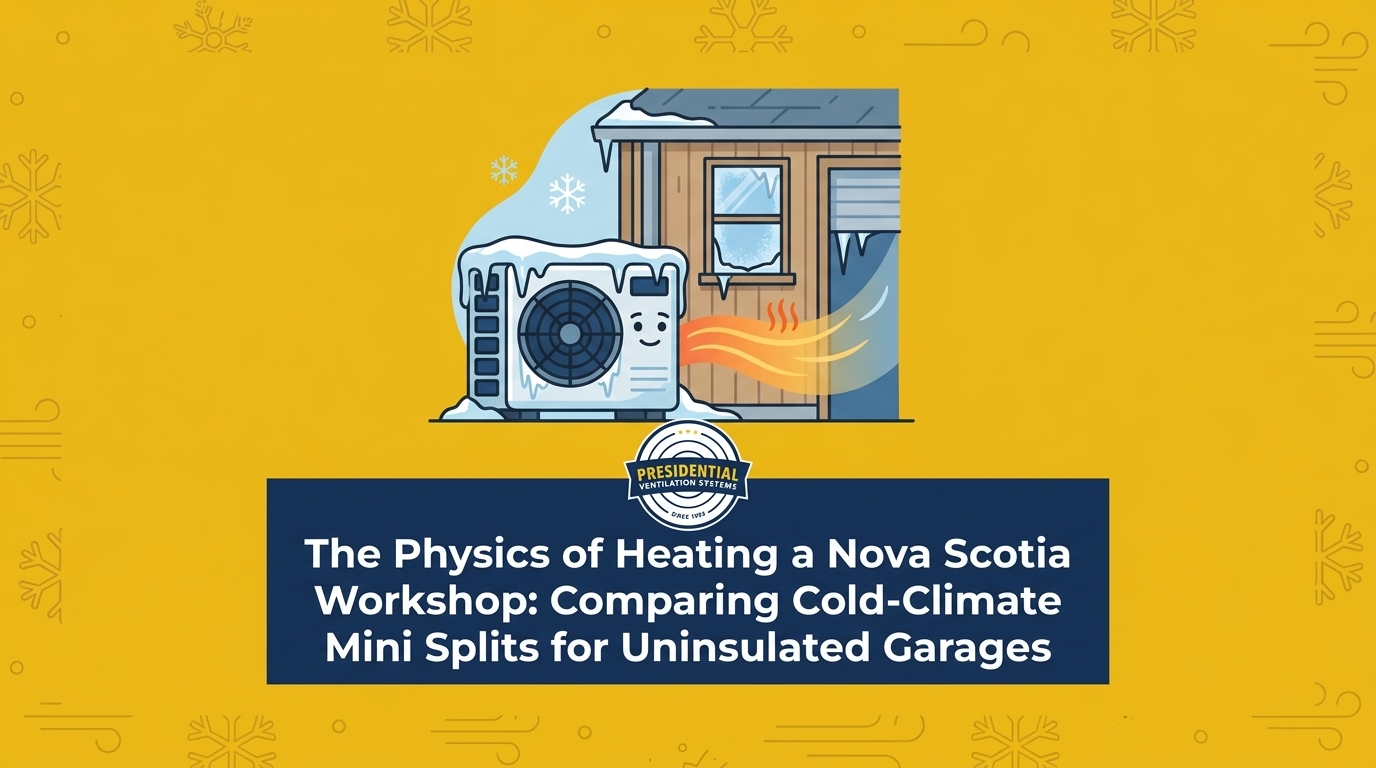
Is it possible to keep a detached workshop comfortable when it completely lacks thermal retention? When comparing cold-climate mini splits for uninsulated garages in Nova Scotia, you are ultimately trying to solve a concrete problem: you want to use your outbuilding year-round, but standard heating methods waste massive amounts of energy while the space remains freezing. The core decision comes down to choosing between a premium hyper-heat system and a standard unit, while carefully factoring in the electrical reality of your detached space.
If you are ready to explore your options for garage comfort, reviewing our complete guide to Heat Pumps is the best place to start.
Heating an uninsulated space is an uphill battle against physics. A harsh Nova Scotia winter brings a specific kind of freezing coastal dampness that quickly penetrates uninsulated walls, turning a standard garage into an icebox. Relying on basic square-footage rules to size a heating system for this environment simply does not work. Instead, achieving true comfort requires a realistic, physics-based approach that balances thermal heat loss with the mechanical and electrical capabilities of modern HVAC equipment.
The problem: Standard residential HVAC sizing assumes your walls, roof, and windows have a baseline level of thermal retention. Uninsulated spaces, however, lose heat almost as fast as a system can produce it. The thermal envelope is virtually non-existent, meaning the air inside the garage offers no buffer against the outdoor elements.
The cause: A common but flawed strategy is to simply install an oversized standard unit, assuming the extra power will overcome the lack of insulation. In reality, oversizing leads to short-cycling. The oversized unit blasts a massive amount of heat, quickly satisfies the thermostat, and shuts off. Because the garage has no insulation, the temperature plummets within minutes, forcing the system to turn back on. This constant on-and-off cycling causes premature wear on the compressor and wastes a tremendous amount of electricity.
The solution: Instead of guessing with square footage, you need a professional heat-loss calculation. This evaluates the specific materials of your garage, the ceiling height, and the draft points to determine exactly how much heating capacity is required to maintain a set temperature.
For more details on how these systems operate, you can explore our resources on Ductless Heat Pumps.
In our 30+ years serving the region, what our Red Seal tradespeople see in the field is that temperature is only half the battle. High humidity combined with freezing temperatures creates a much heavier thermal load on your building. Wind chill on detached structures lacking proper vapor barriers strips heat away rapidly. The moist, freezing air of a coastal winter constantly pulls warmth through the thin garage walls, forcing any heating system to work continuously just to maintain a baseline temperature above freezing.
Standard heat pumps are highly efficient pieces of engineering, but they have distinct operational limits when deployed in poorly insulated environments. Most standard units begin to lose significant heating capacity once the outdoor temperature drops below -10 degrees Celsius. While this might be manageable in a well-insulated living room, it becomes a severe liability in an uninsulated garage.
The Coastal Defrost Dilemma: Nova Scotia's frequent temperature swings and coastal dampness trigger frequent, energy-draining defrost cycles. When a heat pump operates in heating mode, the outdoor coil gets extremely cold. Moisture from the humid coastal air condenses and freezes on this coil. To protect itself, the system periodically goes into a defrost cycle—temporarily reversing its operation to melt the ice on the outdoor unit.
During a defrost cycle, the indoor unit stops blowing warm air. In a well-insulated home, you barely notice this brief pause. However, uninsulated spaces exacerbate the defrost problem. Without insulation to hold the heat, the garage temperature plummets rapidly during the 10-to-15-minute defrost period. By the time the unit resumes heating, it has to work at maximum capacity just to recover the lost ground.
There are, however, specific scenarios where a standard system, such as standard Lennox Ductless Systems, might suffice for an outbuilding. If you only use your workshop during the mild shoulder seasons (spring and fall) and plan to winterize and abandon the space during the deep freezes of January and February, a standard unit can provide excellent, efficient comfort without the premium cost of a hyper-heat model.
For homeowners who need reliable warmth in their workshop every day of the winter, cold-climate (or hyper-heat) systems offer a robust engineering solution. These units are specifically designed to maintain their output in extreme conditions where standard units fail.
• Advanced Inverter Compressors: Unlike standard units that lose power as temperatures drop, premium cold-climate units utilize advanced inverter-driven compressors. These can maintain up to 100% of their rated heating capacity down to -15 degrees Celsius.
• Extreme Low-Temperature Operation: High-end models, such as Daikin Comfort Pro cold-climate systems, boast continuous operation capabilities even when the thermometer plunges to -25 degrees Celsius, ensuring your workshop pipes won't freeze during a severe cold snap.
• Optimized Defrost Logic: Hyper-heat systems manage defrost cycles more intelligently. They often feature redesigned outdoor base pans with built-in heaters that prevent ice accumulation, allowing the system to space out its defrost cycles and minimize the temperature drop inside the garage.
The long-term energy efficiency of a system designed to run continuously in harsh conditions is vastly superior to a standard unit that spends half the winter struggling to catch up. A hyper-heat unit modulates its power output, providing a steady, consistent stream of warmth that fights back against the rapid heat loss of bare garage walls.
One of the most critical, yet frequently overlooked, aspects of heating a detached structure is the electrical infrastructure required to support the equipment. Upgrading to a high-capacity heat pump is not just an HVAC decision; it is an electrical project. With our dual in-house expertise featuring Red Seal HVAC and electrical tradespeople, we consistently see homeowners caught off guard by their garage's power limitations.
1. Understanding the Voltage Difference: While some small, standard-efficiency heat pumps can run on a standard 120v circuit, high-capacity hyper-heat systems require a dedicated 240v circuit to generate the immense power needed during deep freezes.
2. Sub-Panel Limitations: Most standard detached garages are wired with a basic sub-panel intended only for lighting, a garage door opener, and a few standard outlets. These small panels rarely have the physical space or the amperage capacity to support a new 240v double-pole breaker.
3. Infrastructure Upgrades: If your garage sub-panel is undersized, safely powering a cold-climate unit may require a main panel upgrade at your house, followed by a dedicated underground trench run to bring heavy-gauge wiring out to the detached structure.
4. Safety First: Attempting to overload an existing, under-equipped circuit in a detached structure poses severe fire and safety risks. High-draw units must be hardwired to code by licensed electricians.
Before falling in love with a specific heat pump model, you must evaluate what your garage can handle. Look at the sub-panel in your garage: does it have empty breaker slots? What is the main breaker rating on that sub-panel? Because these variables are complex, a licensed electrician must evaluate the load calculation of both your main home panel and your garage sub-panel before an HVAC installation can safely proceed.
To help you weigh your options for your detached workspace, it helps to look at the operational differences side-by-side. If you want to dive deeper into specific models across the industry, you can read our guide on the best ductless heat pumps.
• Sub-Zero Capacity — Standard Mini Split: Loses significant heating capacity below -10°C. — Cold-Climate (Hyper-Heat) Mini Split: Maintains up to 100% capacity down to -15°C; operates at -25°C.
• Electrical Load — Standard Mini Split: Often available in 120v models for smaller capacities. — Cold-Climate (Hyper-Heat) Mini Split: Requires a dedicated 240v circuit and sufficient panel amperage.
• Defrost Frequency — Standard Mini Split: Frequent cycles in coastal dampness; slow recovery in uninsulated spaces. — Cold-Climate (Hyper-Heat) Mini Split: Advanced defrost logic and base pan heaters reduce cycle frequency.
• Best Use Case — Standard Mini Split: Weekend hobbyists; mild shoulder-season usage. — Cold-Climate (Hyper-Heat) Mini Split: Daily winter workspaces; protecting sensitive equipment from freezing.
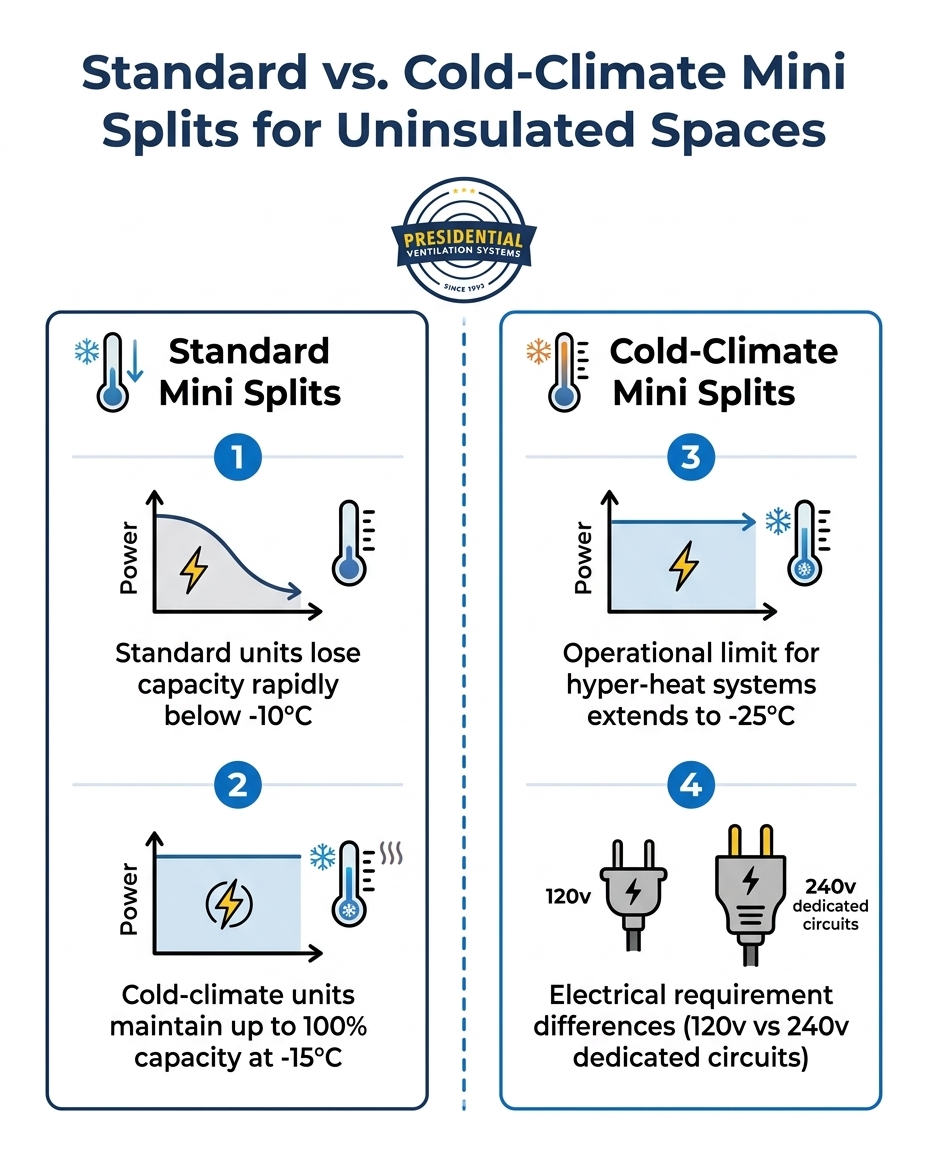
Transitioning from theory to a functional, warm garage requires moving away from online calculators. Square-footage calculators assume your building has standard residential insulation, drywall, and double-pane windows. Using these tools for a detached, uninsulated structure will leave you with an undersized system that runs constantly but never actually warms the room.
A professional heat-loss assessment involves evaluating the specific wall materials, measuring the ceiling height, identifying major draft points (like unsealed overhead doors), and calculating the exact thermal load required to overcome the lack of insulation. Because of our comprehensive approach, a combined HVAC and electrical inspection prevents costly mid-project surprises. We evaluate the panel capacity at the same time we evaluate the thermal load, ensuring the system we recommend can actually be powered safely.
One homeowner reached out to our team last fall needing a complex multi-head ductless split heat pump system installed in a challenging space. By performing a proper, thorough assessment first, our technicians were able to install four mini-split heads that ultimately exceeded the customer's expectations for both comfort and efficient operation.
It is also important to note that while government and provincial rebates may be available for primary residences, outbuildings often have entirely different eligibility rules. Because rebate programs change frequently, you should always confirm current eligibility with our team during your assessment. Once your system is installed, protecting your investment is crucial, which is why we recommend reviewing our Heat Pump Maintenance Plan.
Yes, but it requires precise sizing and the right equipment. An uninsulated garage loses heat rapidly, so a standard unit will likely struggle during deep freezes. To effectively heat the space, you typically need a hyper-heat model sized specifically via a professional heat-loss calculation, rather than relying on square footage. Without insulation, the unit will run more frequently to maintain the temperature.
High-capacity heat pumps generally require a dedicated 240-volt circuit. Many basic garage sub-panels are only equipped to handle 120-volt lighting and standard outlets. Installing a hyper-heat system often requires upgrading the garage sub-panel or running a new, dedicated electrical trench from the home's main breaker panel to safely handle the increased load.
Heat pumps struggle in uninsulated spaces because there is no thermal envelope to trap the warm air they produce. As soon as the unit satisfies the thermostat and shuts down, the heat immediately escapes through the walls and roof. This rapid heat loss forces the system to run almost continuously, and makes the temperature drop severely during the unit's mandatory outdoor defrost cycles.
The outdoor unit of a mini split is designed to handle winter weather, but it will accumulate frost during operation in cold, humid climates. To combat this, the system runs an automatic defrost cycle to melt the ice off the outdoor coil. Premium cold-climate models often feature built-in base pan heaters to ensure ice drains away safely without damaging the fan blades or compressor.
If you plan to use the workshop daily throughout the deep winter, a hyper-heat mini split is absolutely worth the investment. It guarantees continuous warmth even when temperatures drop to -25 degrees Celsius, protecting your tools, materials, and comfort. However, if you only use the shop occasionally during mild spring and fall weather, a standard unit may be more cost-effective.
No, you cannot plug a cold-climate heat pump into a standard wall outlet. High-capacity hyper-heat systems draw significant amperage and require a hardwired, dedicated 240-volt circuit installed by a licensed electrician. Attempting to run heavy HVAC equipment on standard 120v garage wiring is a major fire hazard and violates electrical codes.
Satisfying garage comfort requires balancing thermal heat loss, equipment capability, and electrical safety. Comparing cold-climate mini splits for uninsulated garages in Nova Scotia isn't just about picking a brand; it is about understanding how coastal dampness and rapid heat loss affect equipment performance. A realistic comparison prevents wasted investments on undersized units that run constantly without ever making the room comfortable.
Because every outbuilding has unique thermal and electrical challenges, guessing on a system size is a risk you don't have to take. Our Red Seal tradespeople are here to provide a thorough, professional assessment of both your HVAC needs and your electrical panel capacity. Reach out to Presidential Ventilation Systems today to request a free estimate and find the right heating solution for your detached workspace.