



The best heat pump replacement in Upper Sackville, NS comes from contractors who are certified, locally experienced, and familiar with Nova Scotia's cold-climate demands. Here are the top factors to look for when choosing a replacement contractor in the area:
• Nova Scotia Power Preferred Contractor Network - Look for contractors vetted and certified by the Nova Scotia Apprenticeship Agency
• Local experience - Contractors who regularly service Upper, Middle, and Lower Sackville understand the regional climate challenges
• BBB accreditation - Many top-rated area providers hold A+ BBB ratings
• Free home assessment - Reputable contractors size your system properly before quoting
• Full-service capability - Installation, maintenance, electrical upgrades, and ongoing support under one roof
When your heat pump starts struggling through a Nova Scotia winter, the discomfort hits fast. Upper Sackville homeowners know the feeling — inconsistent temperatures, rising energy bills, and a system that just can't keep up when temperatures drop. Finding the right contractor to replace an aging or failing unit is not always simple, especially with so many options serving the Halifax Regional Municipality. With over 244 heat pump service providers listed near the Sackville area alone, knowing who to trust matters. This guide cuts through the noise to help you find the right fit for your home.
Recognizing when your system has moved past the point of a simple fix is the first step toward restoring your home's comfort. While regular maintenance can extend the life of a system by over 100% compared to neglected units, every machine eventually reaches its expiration date.
In Upper Sackville, the local climate puts a significant strain on outdoor equipment. If your unit is over 10 to 15 years old, it is likely nearing the end of its functional lifespan. You might notice the system running constantly but failing to reach the temperature set on the thermostat. Frequent repairs are another major red flag; if you find yourself calling a technician every few months to patch up a leak or replace a motor, those costs quickly add up to more than the price of a new, efficient system.
Listen to your unit as well. Unusual grinding, squealing, or rattling noises often indicate mechanical failure in the compressor or blower motor. Furthermore, if you notice inconsistent temperatures—where one room is freezing while another is sweltering—your system's ability to distribute air effectively has likely been compromised. For more detailed insights, you can explore our guides on Time to Replace Your Heat Pump and why Timely Heat Pump Replacement is Crucial to avoid a total system collapse during a cold snap.
Not every home in Upper Sackville is built the same, which means the "best" system is the one tailored to your specific floor plan. When we perform a home assessment, we look at whether a ductless mini-split or a central-ducted system is the most effective choice.
• Ductless Mini-Splits: These are ideal for homes without existing ductwork or for homeowners looking to create specific temperature zones. They consist of an outdoor compressor and one or more indoor heads mounted on the wall.
• Central-Ducted Systems: If your home already has a ductwork system from a previous forced-air furnace, a central-ducted replacement is often the most seamless way to provide whole-home comfort.
• Multi-Zone Systems: For larger homes or split-levels common in areas like Indigo Shores or Beaver Bank, multi-zone configurations allow you to control the climate in different areas independently, maximizing efficiency.
Choosing the right configuration is a balance of comfort and logistics. For a deeper look at how these systems differ in local applications, check out our Heat Pump Replacements Halifax NS Guide.
One of the most common mistakes homeowners make is assuming that a "bigger unit is a better unit." In reality, an oversized system will "short-cycle," turning on and off rapidly, which puts immense strain on the compressor and fails to dehumidify the air properly in the summer. Conversely, an undersized unit will run non-stop, driving up energy usage without ever making the house truly comfortable.
Professional sizing involves a detailed calculation of your home’s "heating load." We take into account:
• Total Square Footage: The actual volume of air that needs to be conditioned.
• Insulation Levels: Homes in older parts of Upper Sackville may have different insulation needs than new builds in Middle Sackville.
• Window Placement: Large south-facing windows provide "passive solar" heat, while north-facing windows can be a source of heat loss.
Getting these calculations right from the start ensures your system operates at peak efficiency. You can learn more about the specifics of local installations in our Heat Pump Replacement Mount Uniacke NS resource.
The installation process in Nova Scotia requires specific attention to detail because of our unique weather. A successful upgrade isn't just about the unit itself; it’s about how it is integrated into your property.
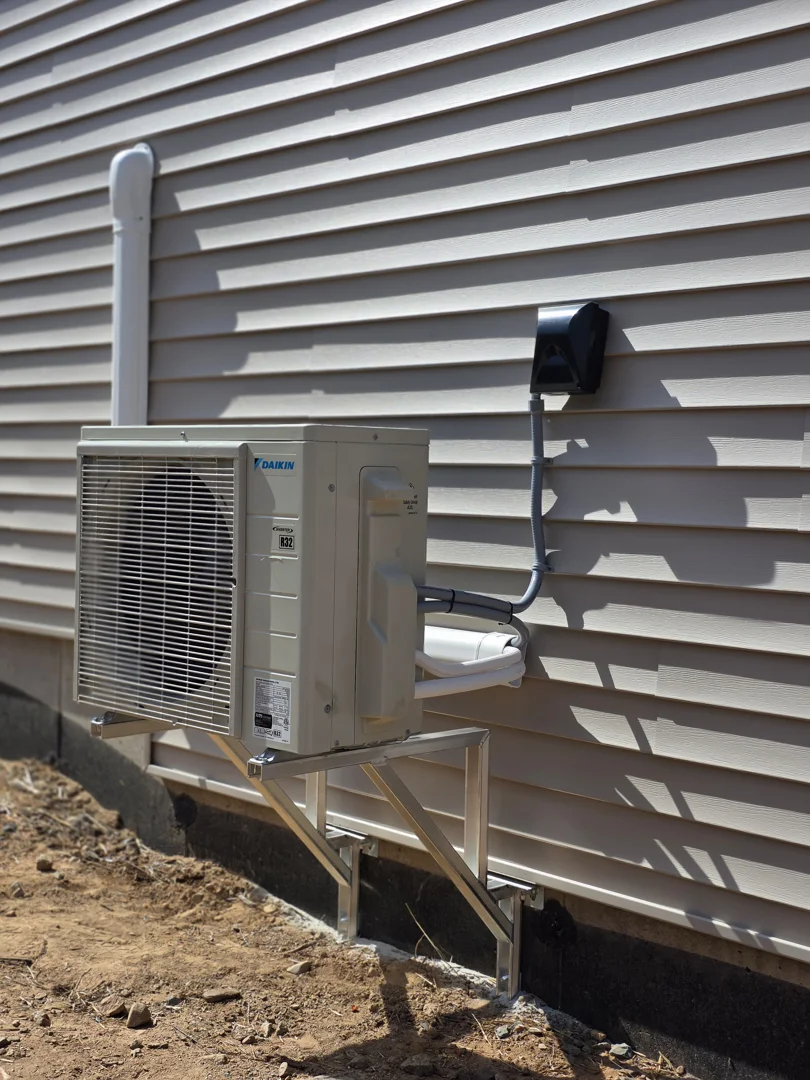
A critical step is the placement of the outdoor unit. In Upper Sackville, we experience significant snowfall. The best installations involve mounting the outdoor unit on a wall bracket or a raised stand to keep it well above the snow line. This prevents snow buildup from choking the airflow and ensures the defrost cycle can function correctly.
We also prioritize the use of protective conduits. These "line-hides" protect the refrigerant lines and electrical wiring from the elements, preventing UV damage and physical wear over time. Proper drainage is equally important; as the system pulls moisture from the air, that water needs a clear path to drain away from the foundation of your home to prevent ice patches in the winter. For a step-by-step look at what a quality installation looks like, see our Heat Pump Replacement Halifax NS page.
When you are looking for the best heat pump replacement in Upper Sackville, NS, you cannot ignore the "heart" of the system: your electrical panel. Modern heat pumps are highly efficient, but they do require dedicated circuits and, in some cases, more power than your existing panel can provide.
Before a new system is installed, a qualified professional must assess your panel capacity. If your home still runs on a 100-amp service, an upgrade to 200 amps might be necessary to support the new HVAC equipment alongside your other appliances. This is also the perfect time to consider safety standards and local codes, ensuring all wiring is up to the latest requirements.
We provide comprehensive support for these upgrades, ensuring that your home’s electrical infrastructure is ready for the long term. Residents in the surrounding areas can find more information on these specific needs through our Electrical Services Upper Sackville NS and Electrical Services Middle Sackville NS service pages.
Once your replacement is complete, the goal shifts to protection. A new heat pump is a significant investment in your home’s value and your family’s comfort. To keep it running at the high efficiency promised by the manufacturer, regular maintenance is non-negotiable.
Homeowners can perform some basic tasks, such as:
• Filter Cleaning: Checking and cleaning indoor filters every 1-3 months to ensure unrestricted airflow.
• Debris Removal: Keeping the outdoor unit clear of leaves, grass clippings, and snow. Aim for at least two feet of clearance around the unit.
• Visual Inspections: Checking for any signs of ice buildup that doesn't melt away during a defrost cycle.
However, professional tuning is required at least once a year. A technician will check refrigerant levels, clean the coils (which can become caked with dust and reduce heat transfer), and inspect electrical connections. This proactive approach prevents small issues from turning into expensive breakdowns. For residents in the wider HRM, our Heat Pump Replacement Williamswood NS Guide offers excellent tips on maintaining durability in coastal environments.
A standard heat pump replacement in Upper Sackville usually takes between one and two days, depending on the complexity of the job. A straightforward ductless split can often be completed in a single day. If we are replacing a central-ducted system that requires modifications to existing ductwork or a significant electrical panel upgrade, it may stretch into a second day. We always start with site preparation to protect your floors and furniture, and we conclude with rigorous system testing to ensure everything is calibrated perfectly before we leave.
Beyond the obvious increase in comfort, a new system offers vastly improved energy efficiency. Modern units use significantly less electricity to move the same amount of heat. You’ll also notice improved indoor air quality thanks to advanced filtration systems that capture more dust and allergens. Furthermore, energy-efficient upgrades are highly desirable to buyers in the Upper Sackville real estate market, potentially increasing your property value.
Our region experiences high humidity in the summer and damp, freezing conditions in the winter. This makes "cold-climate" models essential. These units are specifically designed to provide reliable heat even when outdoor temperatures drop well below -20°C. They also feature sophisticated defrost cycles that manage ice buildup on the outdoor coils more effectively than standard models, ensuring the system doesn't lose efficiency during a winter storm.
Finding the best heat pump replacement in Upper Sackville, NS doesn't have to be a stressful experience. By focusing on certified experts who understand the local geography—from the windy heights of Mount Uniacke to the residential streets of Upper Sackville—you ensure your home remains a sanctuary of comfort regardless of the weather outside.
At Presidential Ventilation Systems, we bring over 30 years of experience to every project. As a leading Daikin Comfort Pro Dealer, we pride ourselves on delivering not just equipment, but long-term energy-saving solutions and exceptional service. Whether you need a full system overhaul or are looking for professional Electrical Services Upper Sackville NS to prep your home for an upgrade, our team is here to help our community stay warm in the winter and cool in the summer. Reach out to us today to schedule your home assessment and take the first step toward a more efficient home.

Standard air conditioning and heating compressors can draw up to five times their running amps on startup—a massive electrical spike that happens in a fraction of a second. At Presidential Ventilation Systems, when assessing solar-ready heat pumps for off-grid properties near Mount Uniacke, NS, we find the most critical factor is preventing that massive electrical spike from instantly overwhelming your standalone solar inverter. If you rely on a battery bank for your daily power, treating a new heating system like a standard household appliance is a recipe for total system shutdowns and cold winter nights.
For homeowners managing rural Mount Uniacke off-grid properties, balancing intense heating demands with limited battery capacity requires specialized equipment and careful electrical planning. A traditional compressor pulls a massive surge of power every time it cycles on. In a grid-tied home, the local utility grid absorbs that heavy hit without you ever noticing. Off the grid, your solar inverter bears the full brunt of that demand. If the surge exceeds the inverter's maximum capacity, the safety mechanisms trigger, the system trips, and your home loses power entirely.
Selecting the right heat pump systems involves looking far beyond standard thermal heating capacity. The focus must shift heavily toward strict electrical load constraints. You have to evaluate exactly how much power the unit requires to start up, how much it needs to maintain temperature, and how those numbers align with your specific battery storage and solar generation capabilities.
Fortunately, heating an off-grid home no longer requires burning through cords of wood or relying exclusively on expensive propane deliveries. Ductless units equipped with specific solar-ready technology offer a highly viable path to reliable off-grid heating, provided they are properly assessed before installation. These specialized units are engineered from the ground up to respect the limitations of standalone power systems.
In our 30+ years of experience evaluating rural Nova Scotia energy systems, our team has learned that off-grid heating is an electrical engineering challenge first and an HVAC challenge second. You need a system that sips power steadily rather than gulping it down all at once. By focusing on equipment designed specifically for off-grid limitations, you can keep your home comfortable year-round without constantly worrying about draining your hard-earned solar reserves.
To understand why standard heating equipment fails so spectacularly on off-grid systems, you have to look at a metric called Locked Rotor Amps (LRA). LRA refers to the massive, instantaneous electrical spike required to break the inertia of a stationary compressor motor and get it spinning. For a brief moment, the motor acts almost like a dead short, pulling an enormous amount of current from your power source.
When a traditional compressor kicks on, that LRA spike hits your solar inverter like a hammer. If you have a solar inverter rated for a specific continuous output, a standard compressor's startup surge can easily double or triple that limit in milliseconds. The physical process of an inverter trip happens because the sudden, massive amp draw forces the inverter to protect itself from overheating and catastrophic failure. It simply shuts down, leaving your entire home in the dark.
One of the most dangerous miscalculations our HVAC and electrical technicians see off-grid homeowners make is sizing their solar array and battery bank based solely on a heat pump's running amps. A standard unit might only draw a modest amount of power while it is actively heating your living room. On paper, that running draw looks perfectly safe for your battery bank. However, the running amps completely ignore the violent electrical demand required to start the cycle.
If your system cycles on and off ten times a day, that is ten separate LRA spikes hitting your inverter. Calculating only the running load gives a false sense of security that shatters the first time the thermostat calls for heat. This is exactly why strict low-amp draw and startup surge limits must dictate safe off-grid HVAC integration. You cannot afford to install equipment that treats your battery bank like an endless utility grid.
This is where specialized ductless heat pumps prove their worth. By understanding the severe threat that LRA poses to your solar infrastructure, you can narrow your focus exclusively to systems engineered to bypass this problem entirely. Protecting your inverter means eliminating the spike before it ever happens.

The solution to the startup surge problem lies in a fundamental shift in how the compressor operates. This shift is what defines a true gridless heat pump. Unlike traditional single-stage units that only know two speeds—100% on or 100% off—solar-ready systems utilize variable speed compressors driven by DC-inverter technology. This completely changes the electrical relationship between your heating system and your battery bank.
Instead of demanding a massive initial spike of power to force the motor into motion, DC-inverter technology gradually ramps up the compressor's speed. It starts slowly, drawing a tiny amount of current, and smoothly accelerates over several minutes until it reaches the necessary heating capacity. This soft-start mechanism effectively eliminates the Locked Rotor Amp spike, fully protecting your solar inverter from sudden overloads.
Once a DC-inverter system reaches the target indoor temperature, it does not shut off completely. Instead, it continuously adjusts its output, slowing down the compressor to maintain the temperature while sipping minimal power from the battery bank. This continuous, low-level operation is incredibly efficient. It avoids the constant stop-and-start cycles that drain batteries and wear out mechanical components.
At Presidential Ventilation Systems, we frequently discuss the benefits of gridless heat pumps for off-grid cabins with our local customers because they provide a steady, predictable electrical draw. When your power consumption is predictable, managing your solar reserves becomes much easier. You know exactly what the system will demand overnight, allowing you to plan your other electrical usage accordingly.
However, simply buying a unit with an inverter label is not enough. It is vital to match the specific DC-inverter electrical specifications with your existing solar array's continuous output capabilities. The maximum ramped-up draw must still fall comfortably within your inverter's safe operating limits, leaving enough headroom for your refrigerator, well pump, and lighting.
Operating an off-grid system in Nova Scotia requires planning for the worst-case scenario, and that scenario arrives in January and February. During these deep winter freezes, off-grid properties face a brutal dual challenge: your home's heating demand reaches its absolute peak at the exact same time your solar generation hours hit their lowest point of the year. Shorter days, lower sun angles, and frequent snow cover mean your battery bank gets less time to recharge just when it needs to work the hardest.
To survive this period without running a backup generator constantly, you must understand the Coefficient of Performance (COP). COP is a measurement of heating efficiency—it tells you how much heat energy the unit produces for every unit of electrical energy it consumes. Standard units lose their efficiency rapidly as temperatures drop, but true cold-climate heat pumps are engineered to maintain a high COP even when the thermometer dips to -20 degrees Celsius.
Why does COP matter so much for an off-grid home? Because a drop in COP directly translates to an increase in electrical draw. If your heat pump becomes less efficient in extreme cold, it has to pull more amps from your battery bank to generate the same amount of heat indoors. If you install a system with a poor cold-weather COP, your battery bank could easily be depleted overnight during a severe cold snap.
Careful load planning requires calculating the system's electrical demand based on its performance at -20 degrees Celsius, not its performance on a mild autumn afternoon. Mount Uniacke's specific microclimate realities—including high summer humidity that requires robust cooling and deep winter freezes that demand maximum heating output—mean you cannot rely on generic, mild-climate equipment. As a Daikin Comfort Pro contractor, we recommend climate-tested units that guarantee high efficiency when the weather is at its worst, protecting both your comfort and your critical solar reserves.
One of the biggest risks off-grid homeowners face is hiring a contractor who treats a heat pump purely as an HVAC appliance. In a standard grid-tied home, a technician can focus primarily on airflow, refrigerant lines, and thermal sizing, assuming the home's electrical panel can handle the load. Off-grid, that assumption is dangerous. An off-grid heat pump must be assessed as a complex, highly restrictive electrical load first and foremost.
With over 30 years of experience integrating complex electrical upgrades with central and ductless heating transitions, our team at Presidential Ventilation Systems has learned that a dual assessment is absolutely mandatory. Before any equipment is purchased or installed, the thermal load of the home must be calculated right alongside the electrical constraints of the solar array, the inverter, and the battery bank. If the person installing your system does not deeply understand off-grid electrical limitations, you are risking catastrophic inverter failure.
Because our company employs approximately 70 skilled professionals, featuring Red Seal electrical, sheet-metal, ventilation, and HVAC expertise under one roof, we assess both the heating requirements and the electrical realities simultaneously. This integrated approach prevents the costly surprises that often derail off-grid projects. For example, during a recent central heat pump installation, an unexpected electrical panel concern threatened to halt the project entirely. Because our team handles both sides of the equation, an in-house electrical team member stepped in immediately to address and work through the panel upgrade concerns, ensuring the new system could function safely without delays.
Relying on an established local contractor with in-house capabilities across multiple skilled trades provides a distinct safety and reliability benefit. It means the person evaluating your solar inverter's surge capacity works directly with the person sizing your compressor. This seamless integration is the only way to guarantee that your new heating system will respect the strict boundaries of your standalone power grid, preventing costly system failures and ensuring long-term reliability.
When planning your off-grid heating strategy, the way you distribute the air throughout your home has a massive impact on your total electrical consumption. The two primary options—ductless mini-splits and central ducted systems—present very different electrical footprints. Understanding these differences is crucial for protecting your battery bank.
Individual ductless wall cassettes utilize small, highly efficient DC motors to quietly push air into a specific room. Because there is no ductwork, there is no air resistance to overcome. In contrast, central ducted systems require a large blower motor to force air through a network of sheet metal or flex ducting throughout the entire house. Overcoming the static pressure of ductwork requires significantly more electrical energy.
• Blower Motor Amp Draw — Ductless Mini-Split Systems: Very low; utilizes small, localized DC fans in each wall cassette. — Central Ducted Systems: Higher; requires a powerful central blower to overcome ductwork static pressure.
• Zoning Capabilities — Ductless Mini-Split Systems: Excellent; you can turn off cassettes in unused rooms to conserve battery power. — Central Ducted Systems: Limited; typically heats the entire home at once, increasing overall electrical demand.
• Air Resistance — Ductless Mini-Split Systems: None; air is delivered directly into the living space. — Central Ducted Systems: High; energy is expended pushing air through long runs of ductwork.
• Off-Grid Viability — Ductless Mini-Split Systems: Highly recommended for most standard battery banks and smaller solar arrays. — Central Ducted Systems: Viable only with highly robust, large-capacity solar arrays and battery banks.
The zoning capabilities of ductless systems offer a massive advantage for off-grid living. By allowing you to heat only the occupied spaces—such as keeping the living room warm during the day and only heating the bedroom at night—you can drastically reduce your overall electrical consumption. This micro-management of your heating load is one of the most effective ways to conserve critical battery power during long winter nights.
While ducted heat pump systems can be successfully integrated into off-grid properties, they require a much more robust electrical infrastructure. If your property features a massive, high-capacity solar array and an oversized battery bank, a central system may be viable. However, for the average rural off-grid setup, the localized, low-draw nature of ductless distribution is almost always the safer and more reliable electrical choice.
Moving forward with a solar-ready heating project requires careful, methodical planning. The very first step is ensuring that an electrical load calculation is completed directly alongside the HVAC thermal sizing. You need a clear, documented understanding of exactly how many continuous amps the new system will pull at -20 degrees Celsius, and you need to verify that your inverter and battery bank can comfortably support that load alongside your other household needs.
Because high-efficiency, cold-climate DC-inverter units represent a significant investment in your home's infrastructure, it is worth exploring your financial options. Professional heat pump financing may be available to help manage the upfront costs of these specialized systems, allowing you to secure the right technology for your off-grid constraints. (Keep in mind that financing terms and eligibility requirements vary, so it is always best to confirm current options directly with our team at Presidential Ventilation Systems).
Additionally, while provincial and federal rebates often exist for energy-efficient heating upgrades, program eligibility for off-grid properties can be complex and subject to change. Some programs have specific requirements regarding grid connectivity. We highly recommend confirming current rebate programs and eligibility criteria during your initial consultation with us to ensure you maximize any available incentives.
Ultimately, the success of your off-grid heating project comes down to proper planning and expert execution. A professional assessment by a certified, dual-trade contractor is the only way to guarantee that your new system will keep your home comfortable without overwhelming your solar array. Do not leave your winter comfort to chance—ensure your system is engineered for the realities of off-grid living.
A gridless heat pump is a heating and cooling system specifically engineered to operate safely on off-grid solar and battery power. These systems utilize DC-inverter technology to eliminate the massive startup electrical surges that typically trip standalone solar inverters. By ramping up power gradually and maintaining a low, continuous amp draw, they provide reliable climate control without overloading limited power reserves.
Yes, you can run a heat pump off the grid, provided you select the correct technology and properly size your solar array. It requires a unit with a variable-speed DC-inverter compressor to prevent startup spikes from tripping your system. Additionally, your battery bank and inverter must be professionally assessed to ensure they can handle the continuous electrical load required during deep winter freezes.
Standard, single-stage heat pumps use a massive amount of amps on startup, often pulling three to five times their normal running current for a fraction of a second. This is known as Locked Rotor Amps (LRA) and is a major problem for off-grid homes. However, specialized solar-ready units use inverter technology to bypass this issue, starting slowly and using very few amps to get running.
The number of solar panels required depends entirely on the specific amp draw of the mini-split, the climate you live in, and the size of your battery bank. A professional electrical load calculation is required to determine the exact generation capacity needed to keep the unit running through cold winter nights. There is no one-size-fits-all number, as winter performance demands significantly more power than summer cooling.
DC-inverter heat pumps prevent power surges by using variable-speed technology rather than a traditional on/off switch. When the system turns on, it draws a very small amount of electricity and gradually speeds up the compressor motor over several minutes. This smooth, controlled acceleration completely eliminates the sudden, hard electrical spike that causes off-grid inverters to trip and shut down.
Mount Uniacke experiences deep winter freezes in January and February, which drastically reduces the heating efficiency of the system while simultaneously occurring during the shortest solar generation days of the year. This requires sizing the battery bank and the heat pump based on its maximum electrical draw at extremely low temperatures (like -20°C). You must plan for the worst-case scenario where heating demand is highest and solar recharge time is lowest.
Heating an off-grid property requires precision, planning, and specialized expertise to protect your vital solar reserves. With over 30 years of experience and in-house Red Seal electrical, ventilation, and HVAC professionals, our team at Presidential Ventilation Systems is equipped to accurately assess your property's unique constraints. Contact us today to request a free estimate and ensure your off-grid home stays reliably warm all winter long.
Why is your system actively chilling your house when you just turned the thermostat up? Diagnosing a heat pump that will not switch from cooling to heating in October usually comes down to one critical, stubborn component. It is incredibly frustrating to experience the first true cold snap of the October fall switchover, adjust your settings for warmth, and feel nothing but an icy breeze coming from your vents.
When this happens, you are immediately faced with a decision: is this a simple thermostat configuration error you can fix yourself, or a mechanical failure buried deep inside the outdoor unit? In most cases, a heat pump stuck in the wrong mode points directly to a malfunctioning reversing valve. This is the exact mechanism responsible for shifting your equipment between its summer and winter duties. If you are relying on heat pump systems to keep your home comfortable, understanding how this valve operates is the first step toward getting your heat back online.
Before you panic about a total system breakdown, it helps to know what you are looking for. Sometimes, the fix is as easy as adjusting a setting or waiting out a normal operational cycle. Other times, the sudden drop in temperature has exposed a hidden mechanical flaw that requires professional attention.
To understand why your system is blowing cold air, you have to look at how a heat pump actually works. Unlike a traditional furnace, a heat pump does not burn fuel or use electrical resistance coils to generate heat out of thin air. Instead, it moves existing heat from one place to another using refrigerant. During the summer, it absorbs heat from inside your house and dumps it outside. During the winter, it absorbs ambient heat from the outdoor air and pumps it inside.
The component that makes this two-way street possible is the reversing valve. It acts as a heavy-duty traffic cop for your refrigerant lines. If this valve fails or gets stuck, the system is physically trapped in one mode, regardless of what the thermostat on your wall says.
The reversing valve is not just a simple switch; it is a complex piece of engineering made up of two primary parts that must work in perfect harmony:
• The 24-volt electrical solenoid coil: This is the electronic brain of the valve. When you adjust your thermostat, it sends a low-voltage electrical signal to this coil.
• The pilot valve and magnetic field: Once energized, the solenoid creates a magnetic field that moves a tiny internal pilot valve.
• The main mechanical slider: The movement of the pilot valve changes the refrigerant pressure inside the main valve body. This pressure differential forces a heavy brass slider to shift from one side to the other, completely reversing the flow of refrigerant.
Interestingly, different manufacturers design their systems with different fail-safes. For example, brands like Daikin or Lennox engineer their reversing valves to default to a specific mode if the solenoid loses electrical power. Some systems are designed to default to heating, meaning a failed electrical coil will leave you warm but unable to cool your home in the summer. Other brands default to cooling, which means an electrical failure in the fall will leave you shivering. If the valve is trapped in the wrong position, your heat pump will continue to run its cooling cycle, blissfully unaware that you are freezing inside.
It might seem like your heat pump broke the very first time you tried to use the heat, but the damage was likely done months ago. In our 30+ years serving Nova Scotia, we see a distinct pattern every single autumn. The humid coastal summers require homeowners to run their air conditioning almost constantly for months on end. During this entire period, the reversing valve is locked tightly into the cooling position.
When October arrives, the weather in Nova Scotia can be notoriously unpredictable. You might have a warm, humid afternoon followed by a sharp drop to near-freezing temperatures overnight. When you switch your thermostat to heat for the first time in six months, you are asking a mechanical slider that has been sitting in one spot all summer to suddenly slide across the valve body.
Several factors contribute to the valve getting stuck during this critical transition:
• Sustained mechanical pressure: Sitting in one position under high refrigerant pressure for months can cause the internal brass slider to become physically jammed or sticky.
• Electrical degradation: The 24-volt solenoid coil sits outside in the harsh elements. Summer humidity, heavy rain, and constant operation can cause the electrical windings inside the coil to short out or degrade.
• Refrigerant charge issues: Because the slider relies on internal refrigerant pressure to move, a slow leak that developed over the summer might leave the system with too little pressure to physically force the valve over.
This is precisely why keeping up with a preventative maintenance plan is so valuable. A thorough inspection at the end of the cooling season can catch a degrading solenoid or a low refrigerant charge before you are left without heat on a cold night.
Before you assume the reversing valve is broken, it is important to rule out simple user errors or normal system behaviors. Heat pumps operate differently than traditional heating systems, and what seems like a breakdown might just be the system doing exactly what it was programmed to do.
Take a few minutes to walk through this basic diagnostic checklist:
• Verify the mode setting: Check your thermostat screen carefully. Is it explicitly set to "Heat"? Sometimes, programmable thermostats are accidentally left in "Auto" mode, or the schedule is still trying to run a summer cooling program.
• Check the fan setting: Ensure the fan is set to "Auto" rather than "On." If the fan is set to "On," it will blow air continuously, even when the heat pump is not actively running a heating cycle. This unheated air will feel cold coming out of the vents.
• Inspect the indoor air filter: A severely clogged air filter restricts airflow across the indoor coil. This can mess with the system's temperature sensors, causing it to behave erratically or shut down its heating cycle prematurely to prevent overheating.
• Wait for the defrost cycle to finish: This is the most common false alarm in the fall and winter. If frost builds up on the outdoor unit, the heat pump will temporarily switch itself back into cooling mode to melt the ice. During this 5-to-15-minute window, it is normal to feel cool air from the vents. Wait 20 minutes; if the hot air returns, the system is perfectly fine.
If you have run through these basic checks, confirmed the thermostat is set correctly, and the system is still blowing cold air after an hour, you have ruled out user error. At this point, the problem is internal, and it is time to call a professional.

Once a professional arrives, their primary job is to determine whether the reversing valve is suffering from a mechanical jam or an electrical failure. Guessing at the symptoms often leads to expensive, unnecessary part replacements.
For example, if you stand near the outdoor unit while someone switches the thermostat from cooling to heating, you might hear a distinct "click." That clicking sound usually means the electrical solenoid is receiving power and trying to do its job. If the system still doesn't switch, the issue is likely a mechanical slider jam or a lack of refrigerant pressure. Conversely, complete silence when switching modes often points to a dead 24-volt solenoid coil or a broken wire between the thermostat and the outdoor unit.
Misdiagnosing these symptoms is a common pitfall for inexperienced technicians. Replacing an entire reversing valve is a massive, labor-intensive job. If a technician replaces the whole valve when only the electrical coil was faulty, you end up paying for a major repair you didn't need.
This is why Presidential Ventilation Systems employs Red Seal tradespeople with dual HVAC and electrical expertise. Having technicians who deeply understand both the refrigeration cycle and complex electrical systems ensures the root cause is accurately identified. Last fall, a local homeowner reached out because their ductless heat pumps were stuck blowing cold air, and a previous technician from another company had failed to resolve it. Our technician arrived promptly, used their dual expertise to quickly diagnose the actual point of failure, verified the warranty coverage for the necessary parts, and fully restored proper operation to the system without unnecessary guesswork.
When your heating system acts up, you likely have immediate questions about what is happening and what you should do next. While you might need to read up on an air conditioner not working if you have issues in the summer, an October heating failure requires specific answers. Here is what our Red Seal technicians typically find when addressing stuck reversing valves.
It could be in a temporary defrost cycle, the thermostat may be misconfigured, or the reversing valve may be stuck in cooling mode. If the cold air only lasts for 10 to 15 minutes, the system is likely just melting frost off the outdoor unit. If it blows cold continuously for hours, the reversing valve has likely failed to shift.
Homeowners should never attempt to unstick a reversing valve themselves. It requires specialized tools to test electrical voltage and refrigerant pressures safely. Hitting the valve or tampering with the electrical connections can cause permanent damage to the compressor or result in severe electrical shock.
Symptoms include the system blowing cold air when set to heat, a clicking noise at the outdoor unit without a mode change, or the system being completely unresponsive to mode switches from the thermostat. You might also notice the outdoor unit icing up excessively if the valve is stuck halfway between modes.
It can be either. The electrical solenoid coil can fail, preventing the signal from reaching the valve, or the internal mechanical slider can become jammed due to wear, internal friction, or a lack of refrigerant pressure to push it over.
This depends entirely on the brand and model of your equipment. Some manufacturers design their reversing valves to default to heating if the solenoid loses power, ensuring you don't freeze in the winter. Others default to cooling when the solenoid is de-energized. A professional can check your specific model's technical data to confirm.
When faced with a cold house, it can be tempting to grab a multimeter or a wrench and try to fix the outdoor unit yourself. However, diagnosing and repairing a reversing valve is not a DIY project. The outdoor unit contains a mix of low-voltage controls (like the 24-volt solenoid) and high-voltage components (like the 240-volt compressor). Probing the wrong wire without proper training and safety equipment poses a severe risk of electrocution.
Furthermore, if the valve itself is mechanically jammed and needs to be replaced, the process is highly technical. A licensed professional must safely recover the existing refrigerant to prevent environmental contamination. Then, they must unbraze the old valve with a torch, carefully braze in a new one while wrapping it in wet rags to prevent heat damage to the new internal slider, pull a deep vacuum on the system, and precisely recharge the refrigerant.
Attempting any of this without the proper Red Seal credentials not only poses severe safety and frostbite risks, but it will also immediately void your manufacturer warranty. If you suspect an internal failure, rely on comprehensive heating services to handle the complex electrical and refrigerant work safely.
A clear understanding of how the reversing valve operates helps you recognize when it is time to stop adjusting the thermostat and call in a professional. Accurate, expert diagnosis prevents unnecessary expenses and ensures your system is truly ready for the long Nova Scotia winter ahead. If your system is struggling to make the switch this fall, contact Presidential Ventilation Systems to schedule a professional inspection and get your home's comfort back on track.