


Proper home ventilation is essential for maintaining a healthy, comfortable living environment. When upgrading your home's air handling systems, ensuring professional installation and precise duct design is critical for system efficiency and longevity.
Here is why professional ventilation design and installation matters:
• Code Compliance: Ventilation systems must meet local building codes and standards, including proper airflow rates and balanced pressure.
• Indoor Air Quality: Properly designed systems effectively remove stale air, moisture, and indoor pollutants, replacing them with fresh, filtered outdoor air.
• Energy Efficiency: Advanced Energy Recovery Ventilators (ERVs) and Heat Recovery Ventilators (HRVs) recover heat from exhaust air, reducing the load on your heating and cooling systems.
• System Longevity: Correctly sized ductwork and balanced airflow prevent strain on ventilation fans, ensuring your equipment operates smoothly for years.
Whether you are looking to install a new HRV or optimize your existing ductwork, working with experienced ventilation specialists ensures your system is tailored to your home's unique layout.
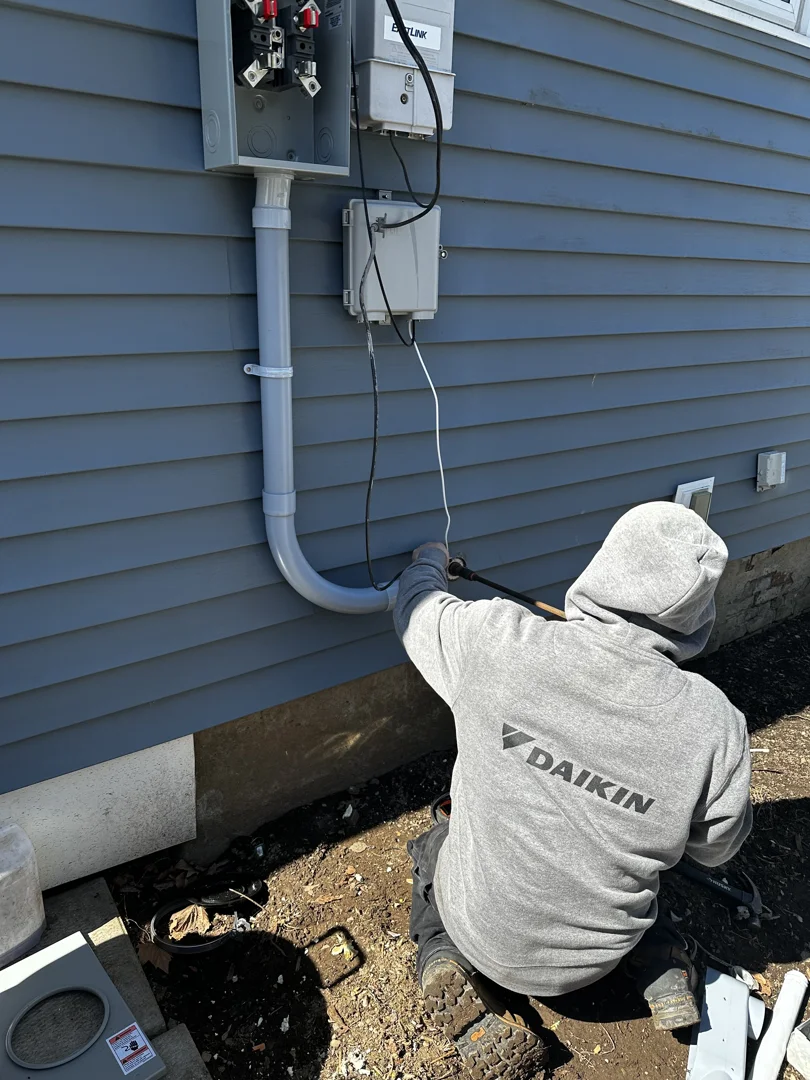
When you decide to transition your home to a highly efficient ventilation and air handling system, the technical details can feel overwhelming. You are not just buying a piece of equipment; you are integrating a sophisticated air distribution network into your home's existing infrastructure. This is where professional duct design and air balancing become incredibly important.
A high-performing ventilation system relies on a continuous, balanced supply of fresh air to maintain indoor air quality. If the ductwork is subpar, the system will not perform efficiently, and in the worst-case scenario, it could lead to stale air pockets or moisture buildup. To ensure your system works flawlessly from day one, you need a professional who understands local building codes and airflow dynamics.
For detailed regional guides on what a proper installation looks like, you can check out our home ventilation and climate systems guide or our central climate control guide. These resources highlight how professional installation protects your investment from the unpredictable maritime weather.
Proper ventilation is the standard for trade excellence. When a system is designed by experienced professionals, it means they have successfully calculated the exact airflow requirements for your home's layout.
For homeowners, this expertise is your guarantee that the system working in your home is qualified to handle complex air distribution tasks. Whether you are seeking ventilation and climate control systems or managing system modernization services, the quality of the duct connections determines how safely and effectively your new system will operate.
An HRV or ERV is a sophisticated machine. Unlike a simple exhaust fan, it uses variable-speed motors, advanced core heat exchangers, and sensitive sensors to optimize energy use.
If an amateur handles the installation, they might use incorrect duct sizing or fail to balance the airflow properly. This can cause pressure imbalances that stress the fan motors, leading to premature failure. Professional ventilation specialists understand how to calculate the exact static pressure required to protect your system's sensitive components.
Additionally, optimizing your setup with a certified professional ensures you can confidently access ventilation efficiency resources and discover how proper planning is key to making home upgrades more accessible.
National building codes have very strict rules regarding how ventilation systems must be integrated into your home. These standards are designed to keep homes safe from moisture damage, mold growth, and poor indoor air quality.
When a non-certified individual attempts to install or modify ventilation ductwork, they often overlook critical airflow requirements. They might connect the unit to undersized ducts, causing excessive noise and restricted airflow. Or they might fail to install proper exhaust hoods, which can lead to moisture being recirculated back into the home.
To handle the demands of a modern ventilation system, some homes require system capacity upgrades or general infrastructure improvements to support the new equipment safely. A professional will perform a precise static pressure calculation of your home before any work begins to determine if your existing ductwork can handle the new system.
One of the most common mistakes made by uncertified installers is matching the wrong duct size with the wrong fan capacity.
• The Danger of Undersized Ducts: If a duct is too small for the volume of air it is carrying, it creates high resistance, leading to noisy operation, reduced airflow, and increased wear on the ventilation motor.
• The Danger of Poor Air Balancing: If the supply and exhaust airflows are not balanced, it can create negative or positive pressure inside your home, drawing in unfiltered outdoor air or forcing moist indoor air into wall cavities.
Professional ventilation technicians are experts in duct design and air balancing. They ensure that every run of ductwork, every register, and every grille is sized perfectly to match the manufacturer's specifications and local building codes. Our team utilizes custom fabrication capabilities to design bespoke ductwork that fits your home's unique layout perfectly.
Most major ventilation manufacturers have strict warranty policies. If a component like an HRV motor fails within the warranty period, the manufacturer will ask for proof of professional installation before shipping a replacement part.
If they discover that the installation was performed by someone without valid professional credentials, they may void your warranty. You could be left paying out of pocket for a replacement part that should have been covered. Hiring a professional is the only way to keep your home, your family, and your investment fully protected.
Before you let anyone modify your home's ductwork or install a new ventilation system, you have every right to verify their credentials. A qualified contractor will always be happy to provide proof of licensing, liability insurance, and professional training in residential ventilation design.
To learn more about professional standards, explore our commercial ventilation services page or our dedicated portal for ventilation services in Halifax.
We are proud to serve communities across the region with top-tier ventilation and air handling services. If you are looking for certified professionals near you, we provide localized support in several key areas:
• ventilation services in Bedford
• ventilation services in Dartmouth
• ventilation services in Kentville
• ventilation services in Mount Uniacke
• ventilation services in Truro
Our local teams ensure that every installation complies perfectly with the specific municipal building codes and regional climate demands of your community.
To help you make an informed decision for your home, we have compiled a comparison of what you can expect when hiring a professional ventilation specialist versus an uncertified alternative.
• Code Compliance — Professional Ventilation Specialist: Guaranteed compliance with local building codes — Uncertified / DIY Alternative: High risk of code violations and poor airflow
• Manufacturer Warranty — Professional Ventilation Specialist: Fully protected; documentation provided — Uncertified / DIY Alternative: Often voided due to lack of professional installation
• Home Comfort — Professional Ventilation Specialist: Balanced airflow and optimal humidity control — Uncertified / DIY Alternative: Risk of draftiness, stale air, and moisture issues
• System Performance — Professional Ventilation Specialist: Optimized static pressure and energy recovery — Uncertified / DIY Alternative: Risk of noisy operation and premature motor wear
Standard ventilation (like bathroom exhaust fans) only removes air, creating negative pressure. Balanced ventilation (using an HRV or ERV) simultaneously exhausts stale air and introduces fresh air in equal amounts, maintaining neutral pressure and optimizing indoor air quality.
While some systems can integrate with existing forced-air heating ducts, dedicated ductwork is highly recommended for maximum efficiency. This ensures fresh air is delivered directly to living spaces and stale air is drawn directly from high-moisture areas like kitchens and bathrooms.
While some DIY enthusiasts attempt this, professional installation is highly recommended. Proper installation requires precise duct design, air balancing equipment, and knowledge of local building codes to ensure the system operates safely and efficiently.
Investing in a high-efficiency ventilation system is a fantastic way to improve your home's indoor air quality and reduce your energy footprint. However, the system is only as reliable as the ductwork and design supporting it.
By ensuring your system is designed and installed by a professional ventilation specialist, you gain peace of mind knowing that the work meets the highest safety standards, complies fully with local building codes, and keeps your manufacturer warranty completely intact.
At Presidential Ventilation Systems Ltd., our experienced team is dedicated to providing safe, reliable, and professional installations. Ready to ensure your home's air quality is optimized? Contact us today to learn more about our professional ventilation services and schedule a consultation with one of our experts.
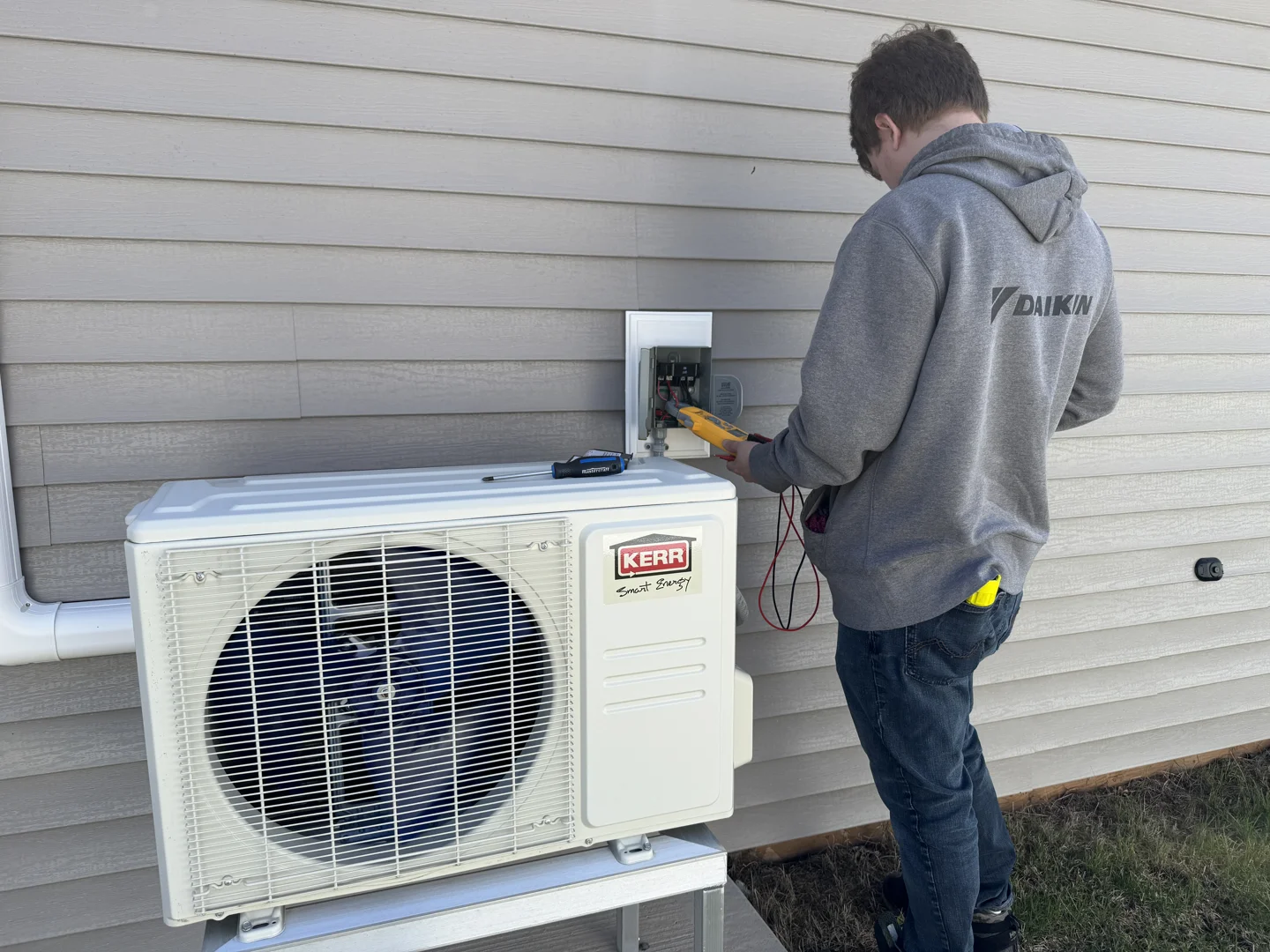

Proper home ventilation is essential for maintaining a healthy, comfortable living environment. When upgrading your home's air handling systems, ensuring professional installation and precise duct design is critical for system efficiency and longevity.
Here is why professional ventilation design and installation matters:
• Code Compliance: Ventilation systems must meet local building codes and standards, including proper airflow rates and balanced pressure.
• Indoor Air Quality: Properly designed systems effectively remove stale air, moisture, and indoor pollutants, replacing them with fresh, filtered outdoor air.
• Energy Efficiency: Advanced Energy Recovery Ventilators (ERVs) and Heat Recovery Ventilators (HRVs) recover heat from exhaust air, reducing the load on your heating and cooling systems.
• System Longevity: Correctly sized ductwork and balanced airflow prevent strain on ventilation fans, ensuring your equipment operates smoothly for years.
Whether you are looking to install a new HRV or optimize your existing ductwork, working with experienced ventilation specialists ensures your system is tailored to your home's unique layout.
When you decide to transition your home to a highly efficient ventilation and air handling system, the technical details can feel overwhelming. You are not just buying a piece of equipment; you are integrating a sophisticated air distribution network into your home's existing infrastructure. This is where professional duct design and air balancing become incredibly important.
A high-performing ventilation system relies on a continuous, balanced supply of fresh air to maintain indoor air quality. If the ductwork is subpar, the system will not perform efficiently, and in the worst-case scenario, it could lead to stale air pockets or moisture buildup. To ensure your system works flawlessly from day one, you need a professional who understands local building codes and airflow dynamics.
For detailed regional guides on what a proper installation looks like, you can check out our home ventilation and climate systems guide or our central climate control guide. These resources highlight how professional installation protects your investment from the unpredictable maritime weather.
Proper ventilation is the standard for trade excellence. When a system is designed by experienced professionals, it means they have successfully calculated the exact airflow requirements for your home's layout.
For homeowners, this expertise is your guarantee that the system working in your home is qualified to handle complex air distribution tasks. Whether you are seeking ventilation and climate control systems or managing system modernization services, the quality of the duct connections determines how safely and effectively your new system will operate.
An HRV or ERV is a sophisticated machine. Unlike a simple exhaust fan, it uses variable-speed motors, advanced core heat exchangers, and sensitive sensors to optimize energy use.
If an amateur handles the installation, they might use incorrect duct sizing or fail to balance the airflow properly. This can cause pressure imbalances that stress the fan motors, leading to premature failure. Professional ventilation specialists understand how to calculate the exact static pressure required to protect your system's sensitive components.
Additionally, optimizing your setup with a certified professional ensures you can confidently access ventilation efficiency resources and discover how proper planning is key to making home upgrades more accessible.
National building codes have very strict rules regarding how ventilation systems must be integrated into your home. These standards are designed to keep homes safe from moisture damage, mold growth, and poor indoor air quality.
When a non-certified individual attempts to install or modify ventilation ductwork, they often overlook critical airflow requirements. They might connect the unit to undersized ducts, causing excessive noise and restricted airflow. Or they might fail to install proper exhaust hoods, which can lead to moisture being recirculated back into the home.
To handle the demands of a modern ventilation system, some homes require system capacity upgrades or general infrastructure improvements to support the new equipment safely. A professional will perform a precise static pressure calculation of your home before any work begins to determine if your existing ductwork can handle the new system.
One of the most common mistakes made by uncertified installers is matching the wrong duct size with the wrong fan capacity.
• The Danger of Undersized Ducts: If a duct is too small for the volume of air it is carrying, it creates high resistance, leading to noisy operation, reduced airflow, and increased wear on the ventilation motor.
• The Danger of Poor Air Balancing: If the supply and exhaust airflows are not balanced, it can create negative or positive pressure inside your home, drawing in unfiltered outdoor air or forcing moist indoor air into wall cavities.
Professional ventilation technicians are experts in duct design and air balancing. They ensure that every run of ductwork, every register, and every grille is sized perfectly to match the manufacturer's specifications and local building codes. Our team utilizes custom fabrication capabilities to design bespoke ductwork that fits your home's unique layout perfectly.
Most major ventilation manufacturers have strict warranty policies. If a component like an HRV motor fails within the warranty period, the manufacturer will ask for proof of professional installation before shipping a replacement part.
If they discover that the installation was performed by someone without valid professional credentials, they may void your warranty. You could be left paying out of pocket for a replacement part that should have been covered. Hiring a professional is the only way to keep your home, your family, and your investment fully protected.
Before you let anyone modify your home's ductwork or install a new ventilation system, you have every right to verify their credentials. A qualified contractor will always be happy to provide proof of licensing, liability insurance, and professional training in residential ventilation design.
To learn more about professional standards, explore our commercial ventilation services page or our dedicated portal for ventilation services in Halifax.
We are proud to serve communities across the region with top-tier ventilation and air handling services. If you are looking for certified professionals near you, we provide localized support in several key areas:
• ventilation services in Bedford
• ventilation services in Dartmouth
• ventilation services in Kentville
• ventilation services in Mount Uniacke
• ventilation services in Truro
Our local teams ensure that every installation complies perfectly with the specific municipal building codes and regional climate demands of your community.
To help you make an informed decision for your home, we have compiled a comparison of what you can expect when hiring a professional ventilation specialist versus an uncertified alternative.
• Code Compliance — Professional Ventilation Specialist: Guaranteed compliance with local building codes — Uncertified / DIY Alternative: High risk of code violations and poor airflow
• Manufacturer Warranty — Professional Ventilation Specialist: Fully protected; documentation provided — Uncertified / DIY Alternative: Often voided due to lack of professional installation
• Home Comfort — Professional Ventilation Specialist: Balanced airflow and optimal humidity control — Uncertified / DIY Alternative: Risk of draftiness, stale air, and moisture issues
• System Performance — Professional Ventilation Specialist: Optimized static pressure and energy recovery — Uncertified / DIY Alternative: Risk of noisy operation and premature motor wear
Standard ventilation (like bathroom exhaust fans) only removes air, creating negative pressure. Balanced ventilation (using an HRV or ERV) simultaneously exhausts stale air and introduces fresh air in equal amounts, maintaining neutral pressure and optimizing indoor air quality.
While some systems can integrate with existing forced-air heating ducts, dedicated ductwork is highly recommended for maximum efficiency. This ensures fresh air is delivered directly to living spaces and stale air is drawn directly from high-moisture areas like kitchens and bathrooms.
While some DIY enthusiasts attempt this, professional installation is highly recommended. Proper installation requires precise duct design, air balancing equipment, and knowledge of local building codes to ensure the system operates safely and efficiently.
Investing in a high-efficiency ventilation system is a fantastic way to improve your home's indoor air quality and reduce your energy footprint. However, the system is only as reliable as the ductwork and design supporting it.
By ensuring your system is designed and installed by a professional ventilation specialist, you gain peace of mind knowing that the work meets the highest safety standards, complies fully with local building codes, and keeps your manufacturer warranty completely intact.
At Presidential Ventilation Systems Ltd., our experienced team is dedicated to providing safe, reliable, and professional installations. Ready to ensure your home's air quality is optimized? Contact us today to learn more about our professional ventilation services and schedule a consultation with one of our experts.
Are you struggling with decoding the paperwork for heat pump upgrades through Efficiency Nova Scotia, only to find yourself buried in technical jargon and confusing forms? You are not alone. Many homeowners start the process of upgrading their heating systems excited about the potential energy savings, only to hit a wall when it comes time to submit the actual rebate application. Navigating provincial grant portals, tracking down specific equipment ratings, and ensuring every signature is in the right place can quickly turn a home improvement project into a part-time administrative job.
The frustration is incredibly common. Efficiency Nova Scotia requires highly detailed documentation to prove that your new system meets their strict energy-saving criteria. Missing a single form, submitting an invoice without the proper breakdown, or failing to secure pre-approval can delay your application by weeks—or even jeopardize your valuable provincial grants entirely. Homeowners often find themselves bouncing between different contractors trying to gather the right paperwork, leading to unnecessary stress.
This is the exact moment many realize the value of relying on an established, full-service contractor who handles the entire administrative burden for them. In our 30+ years serving Nova Scotia, we have seen firsthand how proper documentation management makes or breaks the rebate experience. Instead of leaving you to figure out the technical forms on your own, a comprehensive team manages the submission seamlessly from start to finish.
To learn more about our high-efficiency heat pumps and how we simplify the process, our team is ready to help you navigate every step of your upgrade.
Filing a successful rebate claim requires much more than just a basic receipt. The provincial reviewers need concrete proof that the equipment installed in your home performs at the specific efficiency levels required by the program. Demystifying these technical requirements is the first step toward a successful application.
It is important to note that rebate programs and eligibility criteria are subject to change at any time. Homeowners should always confirm current programs, requirements, and qualifying equipment directly with Presidential Ventilation Systems before beginning any project.
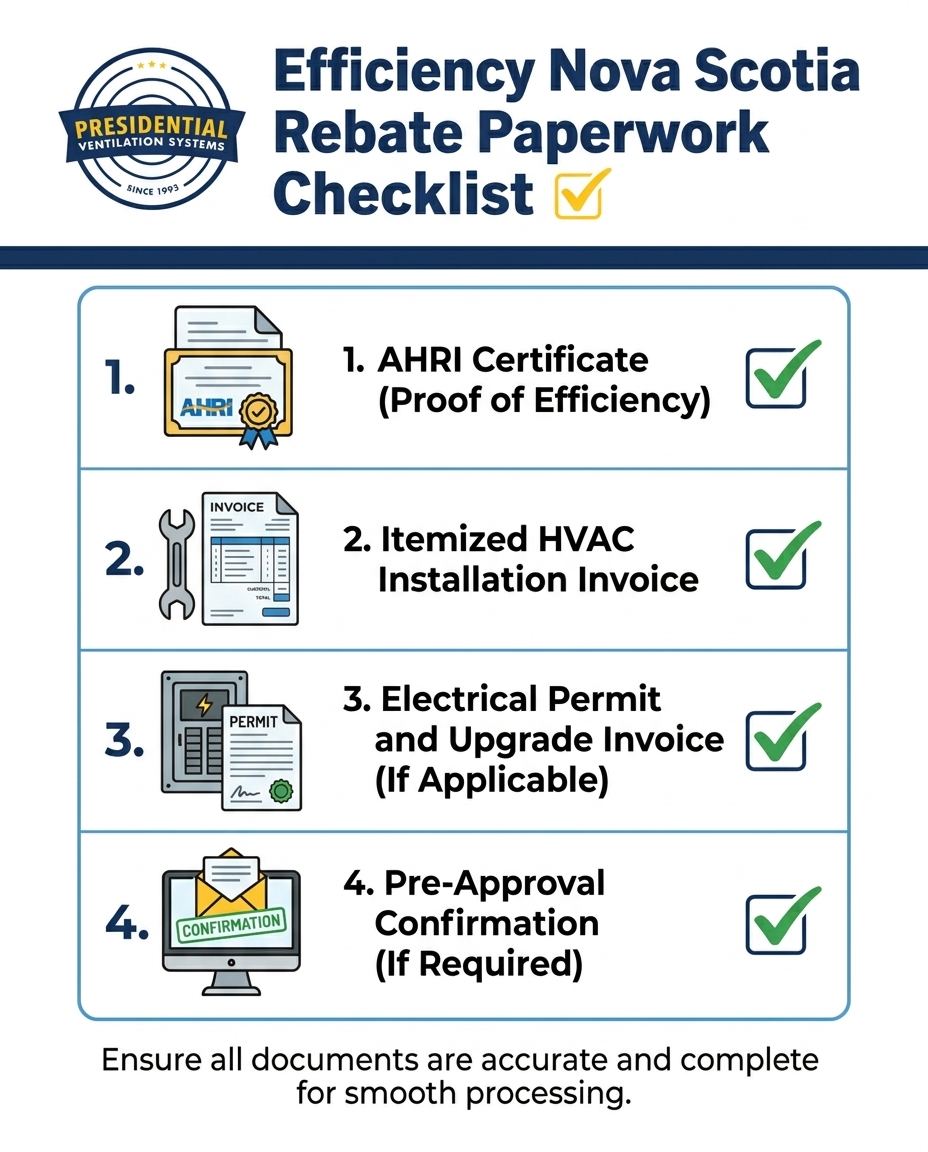
The essential documents you must gather include:
• Itemized HVAC Invoices: A generic invoice that simply says "heat pump installation" will be rejected. Your invoice must clearly break down the cost of labor versus the cost of the equipment. It must also list the exact make, model numbers, and serial numbers for both the indoor and outdoor units.
• Pre-Approval Confirmations: Certain provincial and federal programs require your project to be approved before any work begins. If you install the system first and ask for permission later, you will likely be disqualified from receiving the grant.
• Proof of Electrical Permits: If your home required an electrical panel upgrade to support the new heating system, the rebate program will want to see the documentation proving that this work was completed legally and safely by certified professionals.
• Contractor Certifications: Efficiency Nova Scotia requires that the work be completed by an approved, professional contractor. DIY installations completely void your eligibility for these programs.
The most confusing document for many homeowners is the AHRI (Air-Conditioning, Heating, and Refrigeration Institute) certificate. This single piece of paper is the ultimate proof to Efficiency Nova Scotia that your system meets their energy-saving thresholds.
The AHRI certificate defines the verified performance ratings of your specific unit combination. It proves the SEER (Seasonal Energy Efficiency Ratio) and HSPF (Heating Seasonal Performance Factor) ratings. Because we are a Daikin Comfort Pro, our team automatically matches your indoor and outdoor units to ensure they generate a valid AHRI certificate that meets the provincial criteria. If a contractor installs a mismatched system, an AHRI certificate cannot be generated, and your rebate will be denied.
Whether you are installing a ductless unit or exploring ducted heat pump systems, having these technical documents perfectly organized is non-negotiable for a successful claim.
The complication: Transitioning from an older oil furnace to a modern, high-efficiency heating system often requires more than just swapping out equipment. In many older homes, the existing electrical panel simply cannot handle the load of a new system. This means an electrical panel upgrade (often from a 100-amp to a 200-amp service) is required to meet current building codes.
The cause of the friction: When homeowners hire separate, independent contractors for the HVAC installation and the electrical work, the paperwork quickly becomes a tangled mess. You end up with separate invoices, different permit numbers, and misaligned project dates. If the electrical invoice does not clearly reference the heating project, or if the electrical contractor delays sending their final sign-off, your entire HVAC rebate application stalls. Efficiency Nova Scotia needs to see a clear, unified paper trail that proves the entire project was completed safely and up to code.
The multi-trade solution: Having one unified team handle both aspects simplifies the documentation trail dramatically. Last summer, a local homeowner reached out with concerns about their existing heat pump system's efficiency. Our team inspected the system, explained the pros and cons of their setup, and offered helpful advice and alternatives for a replacement. Because they needed a significant electrical upgrade to support the new system, we handled both the installation and the electrical work. Since we have in-house electrical and HVAC capabilities, we generated a single, cohesive documentation package. The homeowner never had to play middleman between two different companies.
Managing this coordination perfectly is a major part of the Efficiency Nova Scotia rebate process. When the HVAC technicians and electricians work for the same company, the invoices match, the permits align, and the rebate application moves forward without raising red flags for the reviewers.
Paperwork bottlenecks do more than just delay your check—they can actually push back your installation dates. When pre-approval paperwork gets stuck in the system due to errors or missing information, reputable contractors cannot begin the physical installation. If you proceed without that approval, you forfeit the grant.
This creates a very real risk for your home's comfort. With Nova Scotia's damp shoulder seasons and notoriously cold winters, entering the harsh weather months without a reliable heating system because of an administrative hold-up is a stressful position to be in. If an application is rejected in late October because an invoice lacked a serial number, the back-and-forth correction process could mean your system isn't installed until December.
Common causes of administrative delays include:
• Mismatched addresses: The address on the contractor invoice doesn't perfectly match the address on the homeowner's property tax assessment.
• Missing serial numbers: The invoice lists the model number but forgets the unique serial number of the outdoor unit.
• Unapproved contractors: The homeowner used a contractor who is not actively registered and approved by the provincial program.
• Expired pre-approvals: The homeowner received pre-approval but waited too long to schedule the installation, allowing the approval window to lapse.
In our 30+ years serving Nova Scotia, we have learned that submitting accurate forms the very first time is the only way to avoid the frustrating back-and-forth correction cycle. Utilizing an approved, highly experienced local contractor is often a strict requirement for timely processing, ensuring your home stays warm when the temperature drops.
Upgrading your home's efficiency shouldn't require a degree in administration. The most significant advantage of working with a large, established company is having an administrative project manager who relieves you of the paperwork burden entirely. Our in-house, 70-employee multi-trade team ensures seamless, error-free submissions to Efficiency Nova Scotia without you ever having to chase down a single form.
Here is how our "done-for-you" process works:
1. Initial Assessment & Program Matching: During your consultation, we assess your home and identify exactly which provincial programs you qualify for based on current guidelines. We ensure the recommended equipment meets the required efficiency ratings.
2. Pre-Approval Management: If your specific grant requires pre-approval, our administrative team submits the initial load calculations, AHRI certificates, and project scopes on your behalf before a single tool is lifted.
3. Unified Multi-Trade Execution: Because we handle both the HVAC and electrical work under one roof, there is no disconnect. The permits are pulled together, the work is executed concurrently, and the final invoices are generated as a cohesive package.
4. Comprehensive Documentation Gathering: After the installation, our office team compiles the itemized invoices, the electrical permit sign-offs, and the final AHRI certificates into one perfect submission packet.
5. Concurrent Submission: We submit the warranty registrations to the manufacturer and the rebate applications to Efficiency Nova Scotia at the same time. After a recent summer installation, a customer needed help with the rebate process and warranty submission. Our team took care of the warranty and walked the customer through the entire rebate process, ensuring everything was filed correctly and promptly.
This streamlined approach to paperwork also facilitates smoother applications for related financial options. If you are exploring heat pump financing options, having clean, professional documentation makes securing those terms much easier.
You need a highly detailed, itemized contractor invoice, a valid AHRI certificate, and proof of electrical permits if panel upgrades were performed. The invoice must clearly separate labor and equipment costs while listing all model and serial numbers. Without these specific details, Efficiency Nova Scotia will reject the application. Always confirm current required documents with your contractor, as program rules change.
The easiest way to coordinate this paperwork is to avoid managing separate contractors entirely by hiring a multi-trade company. If you do use separate companies, you must ensure both the HVAC installation invoice and the electrical upgrade invoice clearly reference the exact same project and property. Any discrepancy in dates or project descriptions can trigger a manual review and delay your grant.
Not all contractors offer this service, but established, full-service contractors typically manage the entire submission process on your behalf. In our 30+ years serving Nova Scotia, we have found that handling the submission for the homeowner ensures technical documents like AHRI certificates are perfectly accurate. This "done-for-you" approach prevents frustrating rejections.
Processing times vary heavily depending on the season and the current application volume at the provincial office. However, submitting an accurate, error-free application initially is the best way to prevent lengthy delays. When paperwork is missing serial numbers or electrical permits, the back-and-forth correction process can add months to your wait time.
No, Efficiency Nova Scotia strictly requires proof of installation by an approved, professional contractor. Attempting a DIY installation will void your equipment warranties and completely disqualify you from receiving any provincial grants. Licensed professionals must handle both the refrigerant lines and the electrical connections to meet code and program requirements.
Upgrading your home's heating efficiency is a major investment, but it shouldn't come with the headache of managing technical provincial applications. The paperwork required by Efficiency Nova Scotia is complex for a reason—it protects the integrity of the program—but that doesn't mean you have to navigate it alone.
By choosing a comprehensive contractor with in-house electrical and HVAC capabilities, you ensure that every invoice, AHRI certificate, and electrical permit is perfectly aligned. We handle the documentation and grant submissions for you, turning a stressful administrative chore into a smooth, hands-off experience. Please remember to confirm current rebate programs directly with our team, as criteria and funding can change frequently.
If you are ready for a professional assessment and a seamless ductless heat pump installation, reach out to our team today to request a free estimate and let us handle the paperwork for you.

The fall shoulder season in maritime Nova Scotia is fast approaching, and your retail store's climate control is about to face its toughest test of the year. Preparing your Dartmouth retail store's HVAC for the fall shoulder season means navigating freezing mornings that demand heat, followed by busy, sunlit afternoons that require active cooling. This extreme daily temperature swing creates a unique concrete problem for commercial spaces: the building requires robust heating at dawn, but rapid cooling just a few hours later when the store fills with customers.
If your commercial thermostat controls are not configured correctly, this dramatic shift causes your heating and cooling systems to fight each other. The core decision point for facility managers is how to properly configure commercial thermostat deadband settings to handle these rapid daily temperature shifts without causing excessive mechanical strain. Ensure you have reliable commercial heating services on standby before the unpredictable coastal weather takes a toll on your equipment.
Managing a commercial retail space is vastly different from controlling a residential home. In a residential setting, you might simply switch the thermostat from "Cool" to "Heat" once October arrives. In a Dartmouth retail environment, doing so will almost certainly result in an uncomfortably hot store by 2:00 PM. The challenge lies in balancing the natural climate fluctuations of maritime fall weather with the heavy internal heat loads generated by retail operations. When commercial systems are left on standard factory settings during this transition, the resulting inefficiency leads to massive energy waste and significant wear on expensive commercial electrical components.
Retail stores struggle with temperature regulation during the fall significantly more than standard office buildings or warehouses. This difficulty stems from the concept of latent and sensible heat loads. Even when the outside air is crisp and cool, the inside of a retail store generates a massive amount of its own heat.
Consider the typical heat sources present in a busy retail environment:
• High-intensity lighting: Large arrays of display lights, track lighting, and illuminated signage generate continuous radiant heat throughout business hours.
• Electronic displays: Point-of-sale systems, digital advertising screens, and massive refrigeration units (which exhaust heat into the aisles) constantly raise the ambient temperature.
• Foot traffic: Every customer walking through the door introduces body heat and moisture into the space, rapidly changing the indoor climate during peak shopping hours.
Dartmouth's coastal proximity exacerbates rapid temperature and humidity shifts during the fall transition period, stressing improperly configured commercial HVAC systems. The frequent opening and closing of main entry doors allows cold, damp maritime air to rush in, confusing the thermostat sensors located deeper inside the store. The system detects a sudden drop in temperature and triggers the furnace or heating mode.
However, within minutes, the massive internal heat loads from lights and bodies warm that air back up, pushing the indoor temperature past the comfort zone. This dynamic triggers the need for active cooling even when outdoor temperatures begin to drop into the single digits. Standard residential thermostat practices simply do not apply to commercial retail environments because residential homes do not experience this rapid, intense fluctuation of internal heat generation. Commercial spaces require specialized control strategies to manage this chaotic thermal environment.
To resolve the issue of systems fighting each other, commercial HVAC relies on a specific control setting known as a thermostat deadband. A thermostat deadband is defined as the specific temperature range where neither heating nor cooling is activated. It is a neutral zone, or a buffer, programmed into the commercial control system to give the mechanical equipment a rest.
Without a proper deadband, a commercial HVAC system can experience "overlap." This happens when the heating setpoint and the cooling setpoint are too close together. For example, if the heat is set to turn on at 20°C and the AC is set to turn on at 21°C, the system will constantly bounce back and forth. The furnace runs, overshoots the target slightly to 21.5°C, which immediately triggers the air conditioning to turn on. The AC then cools the space down to 19.5°C, which immediately triggers the heat again. The systems are literally fighting each other, wasting massive amounts of energy.
According to ASHRAE (American Society of Heating, Refrigerating and Air-Conditioning Engineers) commercial building temperature guidelines, establishing a proper deadband is critical for energy efficiency and occupant comfort. A typical thermostat deadband variance of 3-5 degrees is recommended to prevent this overlap.
• Zero Deadband (Incorrect) — Heating Setpoint: 21°C — Cooling Setpoint: 21°C — System Behavior: Constant switching between heat and AC; rapid component failure.
• Narrow Deadband (Risky) — Heating Setpoint: 20°C — Cooling Setpoint: 21°C — System Behavior: Frequent cycling during fall shoulder season temperature swings.
• Optimized Deadband (Correct) — Heating Setpoint: 19°C — Cooling Setpoint: 23°C — System Behavior: System rests in the 4-degree neutral zone; saves energy and wear.
Configuring these advanced deadband controls requires a professional understanding of commercial electrical and mechanical systems. Facility managers should never attempt to rewire internal commercial thermostats, adjust electrical contactors, or bypass safety limits, as commercial voltage can be highly dangerous and improper settings can instantly damage heavy rooftop units (RTUs).
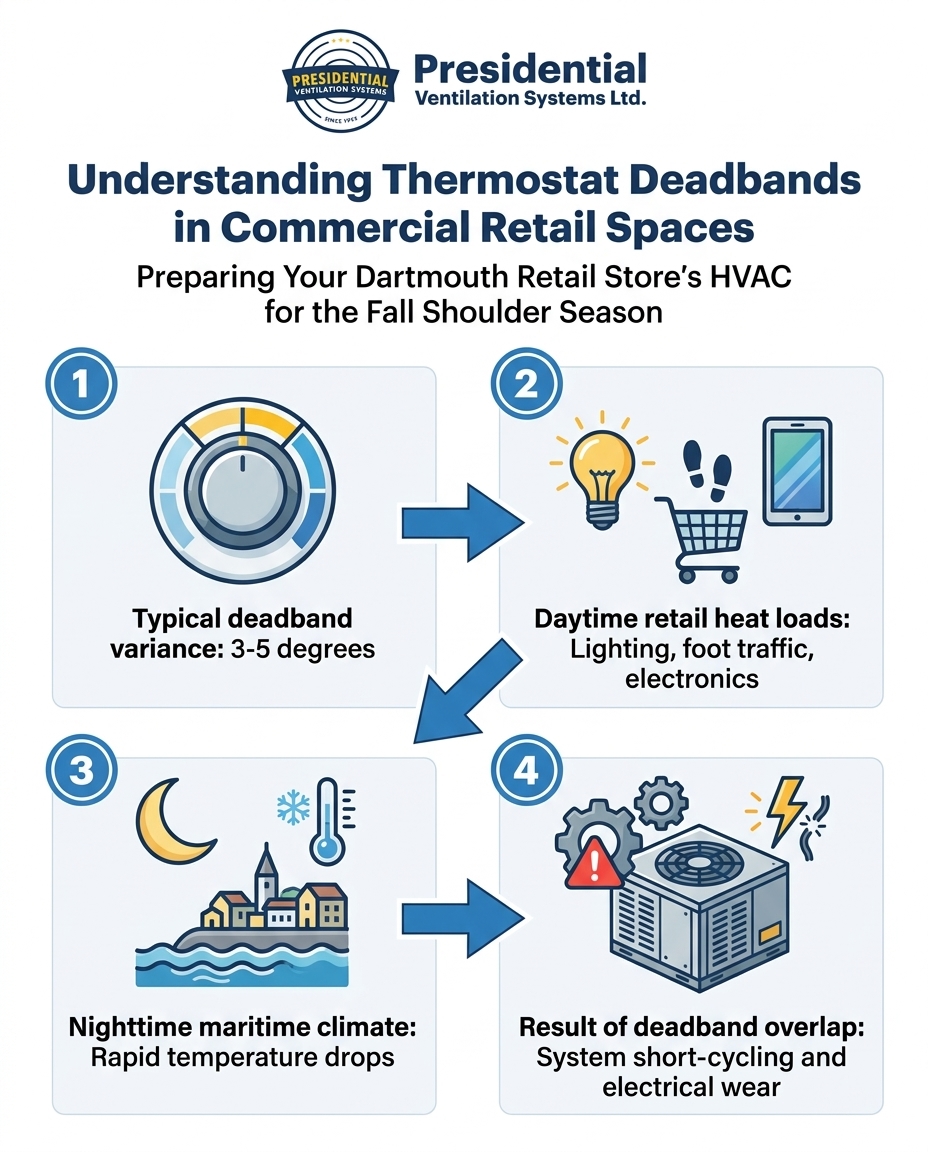
When a deadband is improperly configured during the fall shoulder season, the most immediate consequence is short-cycling. In a commercial context, short-cycling occurs when a massive piece of HVAC equipment turns on, runs for only a few minutes, and then abruptly shuts off, only to restart moments later. Fall weather frequently causes this because the ambient temperature hovers right on the edge of the thermostat's setpoints.
Rapid daily temperature shifts lead to excessive mechanical wear and tear on commercial compressors. A compressor is designed to run in long, steady cycles to efficiently move refrigerant and allow lubricating oils to circulate properly. When the system short-cycles, the oil never fully returns to the compressor, leading to increased friction, overheating, and eventual catastrophic mechanical failure. The constant starting and stopping grinds down bearings and stresses the blower motor belts.
Beyond the mechanical parts, short-cycling places immense strain on commercial electrical components. Every time a heavy commercial rooftop unit starts up, it draws a massive surge of power known as inrush current. This current is often several times higher than the running current. When heavy machinery cycles on and off too frequently, this repeated surge overheats electrical contactors, degrades capacitors, and can even cause phase imbalances in the building's electrical panel.
Establishing a proper thermostat deadband variance (typically 3-5 degrees) allows the system to rest. By widening the gap between the heating and cooling triggers, the indoor temperature is allowed to drift naturally within a comfortable range. This simple optimization drastically reduces the number of startup cycles, extending the equipment lifespan and protecting the building's electrical infrastructure.
Facility managers and store owners need to know how to identify if their current deadband settings are incorrect before the equipment suffers permanent damage. Because the fall shoulder season in maritime Nova Scotia forces systems to work in both modes daily, symptoms of deadband overlap become highly visible.
Watch for these common warning signs that your retail HVAC system is fighting itself:
• Noticeable temperature swings: Customers or staff complain that the store feels freezing near the entrance but boiling hot near the back displays, changing rapidly by the hour.
• Constant blower fan operation: The air never stops rushing through the vents, yet the temperature never seems to stabilize.
• Unusually high energy bills: A sudden, unexplained spike in commercial electrical costs during September or October often indicates the heat and AC are running simultaneously.
• Rapid clicking noises: Hearing the thermostat or the rooftop unit constantly clicking on and off every ten minutes.
One of the most frustrating scenarios for a retail manager is when the air conditioner not working during warm afternoons becomes a daily disruption, despite the system functioning perfectly to heat the store that very same morning. This usually means the safety sensors have locked the cooling system out due to short-cycling or frozen coils caused by improper fall settings.
Always observe the operational cycles by listening to the vents and monitoring the thermostat readouts, but never attempt internal electrical diagnostics. Instead, document these specific issues—noting the time of day the temperature swings occur and how often the system cycles—to share with a commercial HVAC technician upon arrival.
Optimizing your commercial controls is not just about preventing breakdowns; it is directly tied to your retail store's bottom line. The relationship between reduced short-cycling and overall energy consumption in retail spaces is profound. Every unnecessary startup surge avoided is electricity saved.
When you optimize commercial HVAC controls, you reduce unnecessary mechanical wear, which lowers your long-term maintenance costs. However, the immediate financial benefit comes from reduced monthly utility bills. By allowing the store's temperature to drift naturally within that 3-5 degree deadband, the system relies on the building's thermal mass rather than active mechanical heating or cooling.
Furthermore, upgrading to advanced commercial thermostats or building automation controls can help businesses qualify for provincial energy efficiency rebates. Programs designed to reduce grid strain often reward commercial properties that upgrade from outdated, manual thermostats to smart, deadband-capable control systems. Reviewing Efficiency Nova Scotia commercial rebate literature is a smart first step, as many of these incentives require professional installation and verification. Seeking a professional system assessment not only ensures your deadbands are set perfectly for the maritime fall, but it also provides the documentation needed to pursue construction, electrical, and energy efficiency rebates.
Transitioning from a technical understanding of deadbands to actual implementation requires professional support. A professional fall inspection for a commercial system entails much more than changing a filter. Technicians must test the advanced controls, verify the deadband variance, inspect the electrical contactors for pitting caused by summer short-cycling, and perform a deep cleaning of the coils to ensure proper airflow.
Preventative maintenance avoids costly downtime during peak retail shopping seasons. If a rooftop unit fails on Black Friday because the compressor finally gave out after weeks of fall short-cycling, the loss of foot traffic and inventory damage far outweighs the cost of a routine inspection. This highlights the absolute necessity of having a structured maintenance plan for complex commercial equipment.
One local commercial customer reached out during the spring when their heat pump system failed entirely, and previous technicians from other companies could not resolve the issue. A skilled technician properly diagnosed the complex control problem, explained the underlying cause to the facility manager, and successfully fixed the heat pump after previous failed attempts. This level of insight is crucial when dealing with commercial ducted heat pump systems that require precise calibration.
Presidential Ventilation's expertise in commercial HVAC systems ensures retail businesses avoid costly downtime and maintain perfect customer comfort through advanced thermostat deadband optimization. Working with technicians who deeply understand local maritime climate challenges across various local HVAC service areas means your system will be tailored to handle the exact humidity and temperature swings unique to the coast.
The fall shoulder season in maritime Nova Scotia is the optimal time to configure your controls, well before the deep winter freeze sets in. Stabilizing your indoor temperatures now protects sensitive retail inventory, keeps your staff productive, and ensures every customer experiences a comfortable shopping environment the moment they walk through the doors.
Don't wait until the system locks itself out from excessive short-cycling. Schedule a professional assessment of your store's HVAC controls today and secure an HVAC maintenance plan to keep your commercial electrical and mechanical systems running safely and efficiently all year long.
What is a thermostat deadband?
A thermostat deadband is a specific temperature range programmed into an HVAC control system where neither heating nor cooling is activated. This neutral zone, typically 3-5 degrees, gives the mechanical equipment time to rest and prevents the heating and cooling systems from fighting each other.
How do I stop my commercial HVAC from short-cycling during the fall?
The most effective way to stop short-cycling during the fall shoulder season is to have a professional widen the thermostat deadband variance. This prevents the system from rapidly turning on and off in response to minor temperature fluctuations, reducing strain on the electrical components and compressor.
What temperature should a retail store be kept at?
While exact temperatures depend on the inventory, ASHRAE guidelines generally suggest a heating setpoint around 19°C to 20°C and a cooling setpoint around 23°C to 24°C. Maintaining this gap ensures energy efficiency and keeps the environment comfortable for shoppers moving through the store.
Why is my commercial AC running in the fall?
Your commercial AC runs in the fall because retail spaces generate massive latent heat loads from high-intensity lighting, electronic displays, and heavy foot traffic. Even when it is cold outside, this internal heat can quickly push the indoor temperature past the cooling setpoint, requiring the AC to engage.
Can improper deadband settings damage commercial electrical components?
Yes, improper deadband settings cause the system to short-cycle, which forces heavy commercial equipment to restart constantly. Each startup draws a massive surge of inrush current that can overheat electrical contactors, degrade capacitors, and eventually lead to catastrophic mechanical failure.
How do commercial HVAC rebates work in Nova Scotia?
Commercial HVAC rebates, such as those offered by Efficiency Nova Scotia, provide financial incentives for businesses that upgrade to high-efficiency equipment and advanced control systems. Qualifying for these rebates typically requires a professional assessment and installation to verify that the new systems significantly reduce electrical grid strain.