


Knowing how to find a licensed electrician for new construction or commercial work in nova scotia is one of the most important steps you can take before breaking ground or starting a commercial build. Hire the wrong person and you risk failed inspections, voided insurance, serious safety hazards, and costly rework. In Nova Scotia, electrical work is a compulsory certified trade — meaning only properly qualified, licensed contractors can legally perform and permit this work.
Here is a quick overview of how to find the right licensed electrician for your project:
1. Confirm certification - Ask to see the electrician's Certificate of Qualification as a Construction Electrician issued under Nova Scotia's Apprenticeship and Trades Qualifications Act.
2. Verify the contractor license - The company must hold a valid Nova Scotia electrical contractor license, which requires $1 million in liability insurance and $10,000 in bonding.
3. Check Red Seal status - Red Seal certification confirms the electrician passed the national interprovincial exam, but always confirm they are also provincially licensed in Nova Scotia.
4. Use the NS Power Preferred Contractor Network - Nova Scotia Power vets and lists certified contractors at nspower.ca — a reliable starting point for finding qualified tradespeople.
5. Ask about permits - Only licensed electrical contractors can pull wiring permits in Nova Scotia. If an electrician can't obtain permits, they can't legally do the work.
6. Request proof of insurance - Always get written confirmation of liability insurance and bonding before signing any agreement.
7. Contact the Nova Scotia Apprenticeship Agency or your local electrical inspection department - These bodies can confirm whether a contractor or journeyperson is in good standing.
Whether you are building a new home in Eastern Passage or managing a large commercial project, getting this process right from the start saves time, money, and stress.
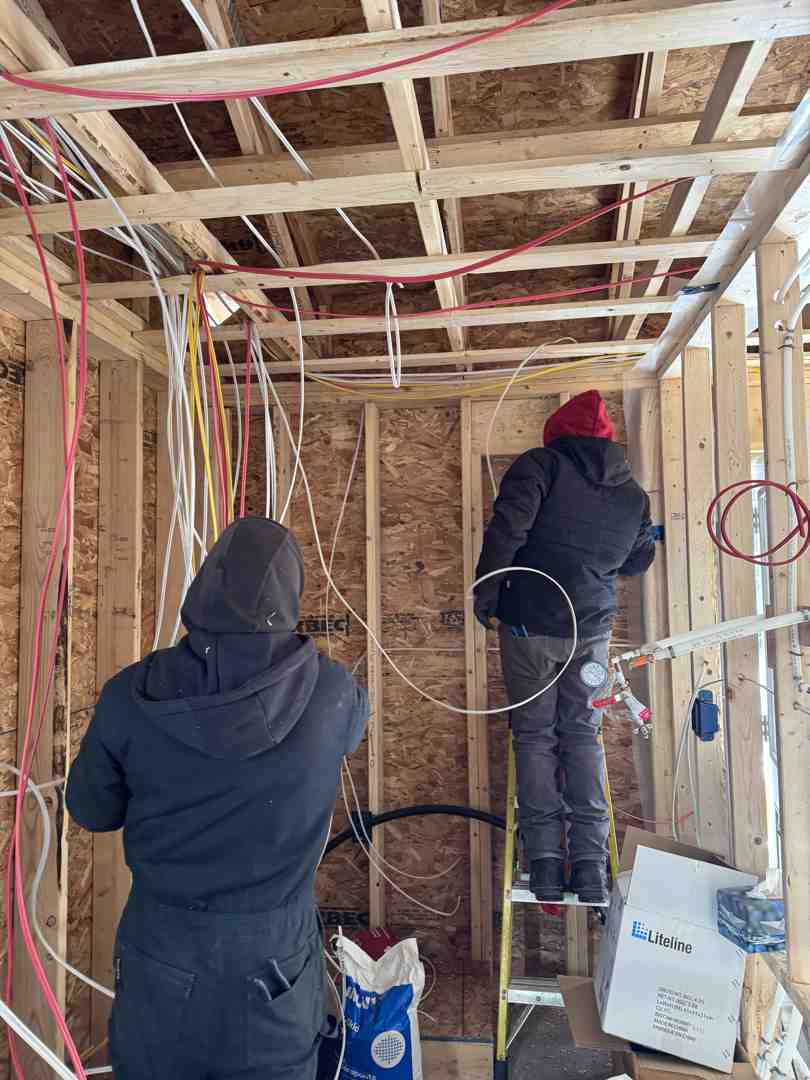
Before we dive into the search process, it helps to understand how the trade is regulated in our province. In Nova Scotia, the construction electrician trade is designated as a compulsory certified trade. This means it is legally mandatory for anyone performing electrical installations, repairs, or alterations in residential, commercial, or industrial buildings to hold active, valid certification.
Under the Construction Electrician Trade Regulations and the Apprenticeship and Trades Qualifications Act, there are very strict rules about who can pick up tools on a job site:
• The Apprenticeship Pathway: To become a certified journeyperson, an apprentice must complete a rigorous program requiring 7,200 hours of documented practical experience, alongside multiple levels of technical training and a final certification exam.
• The Trade Qualification Pathway: Individuals who have gained extensive practical experience without going through the formal apprenticeship program must prove at least 10,800 hours of active employment in the trade before they are even allowed to sit for the certification exam.
• The Apprentice-to-Journeyperson Ratio: To ensure safety and proper training on active job sites, Nova Scotia law requires a strict ratio: for every three apprentices working on a site, there must be at least one certified journeyperson actively supervising them. Every apprentice and journeyperson on a commercial construction site is legally required to carry their official identity card at all times.
You have likely heard the term "Red Seal" used as a badge of honor in the construction world. The Red Seal program is a national standard across Canada. Achieving a Red Seal means the electrician scored 75% or higher on the interprovincial exam, demonstrating they meet a high national benchmark of knowledge and skill.
However, there is an important nuance to keep in mind: while a Red Seal shows excellent theoretical knowledge and allows for easier interprovincial mobility, it does not automatically grant an out-of-province electrician the right to pull permits in Nova Scotia. If a contractor moved here from Alberta or Ontario, they must still obtain a Certificate of Qualification Equivalency from the Nova Scotia Apprenticeship Agency before they can legally operate. If you are coordinating projects across different regions, you can learn more about how professional standards apply in our Licensed Electrician in Truro, NS guide.
Now that you know the strict rules governing the trade, how do you actually find a qualified partner for your build? Whether you are coordinating a commercial development in Burnside or a custom home build in Bedford, following a systematic verification process is key.
A great place to start is the Nova Scotia Power Preferred Contractor Network. Contractors in this network are vetted to ensure they meet high industry standards and hold active provincial certifications. This saves you the headache of cold-calling random listings and hoping for the best.
Do not be shy about asking for credentials. Any legitimate electrician will gladly show you their Journeyman Certificate and provide their certificate number. If they hesitate or offer excuses, take that as a major red flag.
There is a massive legal difference between a "journeyperson electrician" and a "licensed electrical contractor." A certified journeyperson is legally qualified to perform the physical work, but they cannot contract services directly to the public or pull permits unless they hold a company-level electrical contractor license.
To obtain this contractor license in Nova Scotia, a company must pay the required licensing fees (which cover electrical, communications cabling, and electrical sign installation categories) and meet strict protection requirements:
• They must carry commercial liability insurance.
• They must hold a surety bond.
This insurance and bonding protect you, the property owner, in the event of accidental property damage or structural issues caused by the installation. If you hire a "freelance" licensed electrician who does not have an active contractor license, they cannot legally pull a permit, and their personal insurance will likely not cover commercial-scale liabilities.
For a deeper look at what to expect during a professional setup, check out our Electrical System Installation Truro NS Guide or explore the Electrical System Installation Guide Kentville NS for local insights.
No matter how skilled an electrician is, their work must be permitted and inspected to be considered legal and safe. In Nova Scotia, the regulatory standard is the Canadian Electrical Code Part I (CSA C22.1-18).
Only a licensed electrical contractor employing a certified construction electrician (or an industrial electrician for specific maintenance environments) is authorized to obtain electrical permits. Homeowners and general project managers cannot pull these permits themselves.
For new construction and major renovations, the work must be inspected at multiple stages by a Nova Scotia Power wiring inspector. Do not cover up any walls or connect power until these inspections are signed off:
1. Rough-In Inspection: This occurs after all the boxes, cabling, and conduit have been run through the studs, but before the drywall is hung. The inspector verifies that wire sizes, box depths, and routing meet the Canadian Electrical Code.
2. Service Entrance Inspection: This focuses on the main electrical panel, the meter socket, and the connection point where utility power enters the building. The inspector ensures the grounding is perfect and the service capacity matches the permit.
3. Final Inspection: Once the drywall is painted, the fixtures are hung, and the outlets are finished, the final inspection takes place. The inspector tests the circuits, checks for proper GFCI/AFCI protection, and places an official final inspection sticker on the electrical meter.
If you are planning a commercial development, you can read more about specific commercial regulations in our Commercial Electrical Bedford NS Guide and our Commercial Electrical Guide Burnside NS.
If you are building a new home or commercial facility, getting power from the street to your building requires careful coordination between your licensed electrical contractor and Nova Scotia Power.
Here is the step-by-step process we follow to ensure a smooth utility connection:
Before Nova Scotia Power can even schedule a planning appointment, you must submit your building plans to your local municipal office and secure a municipal building permit.
Contact Nova Scotia Power's customer care team to book an appointment with a utility planner. The planner will meet with you and your electrical contractor on-site to determine the best route for the power lines, locate the approved attachment point, and confirm your service size in amperes.
You are responsible for preparing the site so utility crews can safely string lines. Nova Scotia Power has strict clearance requirements:
• High-voltage lines require a cleared path of at least 12 meters (6 meters on either side of the line).
• Service lines (the low-voltage lines running directly to your building) require a cleared path of at least 5 meters.All tall trees, overhanging branches, and dense brush must be cleared before the crew arrives.
Under normal circumstances, Nova Scotia Power provides up to 92 meters of pole and service line installation from the nearest existing utility pole to your approved attachment point. If your building sits further back from the road than 92 meters, you will be responsible for additional poles, line extensions, and potentially clearing easements.
If your power lines must cross a neighbor's property, or if a multi-pole line extension is required on your own land, you must secure a legal Grant of Easement. This document must be accompanied by a property sketch certified by a licensed member of the Association of Nova Scotia Land Surveyors and officially registered at the Land Registration Office.
To run tools, heaters, and equipment during construction, your electrician can install a temporary power pole. This temporary setup must be inspected and approved by a wiring inspector before Nova Scotia Power will energize it.
If you are renovating an existing commercial space instead of building a new one, you might need to modify your existing setup. Read our guide on Commercial Electrical Repairs to see how we handle upgrades and maintenance.
To help make your planning easier, we have compiled a quick comparison of how electrical requirements differ depending on your project type:
• Compulsory Certification — Residential New Construction: Yes (Construction Electrician) — Commercial New Construction: Yes (Construction Electrician)
• Wiring Permit Required — Residential New Construction: Yes, before work begins — Commercial New Construction: Yes, before work begins
• Permit Purchaser — Residential New Construction: Licensed Electrical Contractor only — Commercial New Construction: Licensed Electrical Contractor only
• Standard Code Book — Residential New Construction: Canadian Electrical Code Part I — Commercial New Construction: Canadian Electrical Code Part I (with stricter commercial occupancy rules)
• Standard Service Size — Residential New Construction: Typically 100A to 200A (Single-Phase) — Commercial New Construction: Varies widely, often 400A+ (Three-Phase)
• Required Inspections — Residential New Construction: Rough-in, Service, Final — Commercial New Construction: Rough-in, Service, Final (often multi-phase audits)
The risks of using unlicensed or uncertified individuals are massive:
• Safety Hazards: Substandard wiring is a leading cause of structural fires and electrical shock hazards.
• Voided Insurance: If a fire or electrical failure occurs and the insurance company discovers the work was performed without a permit or by an unlicensed contractor, they can legally deny your claim.
• Severe Financial Penalties: Performing electrical work without a permit in Nova Scotia carries strict penalties. Violations can result in substantial financial assessments based on the permit requirements.
• Project Delays: If a municipal or utility inspector discovers unpermitted work, they can issue a stop-work order, force you to tear down drywall to expose the wiring, and order the utility to disconnect your power.
Modern commercial and residential builds often require specialized systems beyond standard outlets and light fixtures. When vetting your contractor, ensure they have proven experience in:
• EV Charger Installations: Commercial properties and new homes increasingly require dedicated Level 2 or Level 3 charging stations, which require precise load calculations.
• Generator Panels: Installing a dedicated generator panel allows a building to safely run essential systems during winter storms without back-feeding the main grid.
• Smart Home & Automation: Integrating smart lighting, automated climate controls, and security systems requires low-voltage expertise.
• Aluminum Wiring Remediation: If you are renovating an older commercial building, your electrician must use proper COPALUM or AlumiConn connectors to ensure safe, code-compliant connections.
If you want to double-check a contractor's status, use these official channels:
1. Nova Scotia Power: You can contact their wiring inspection department to verify if a contractor is registered and in good standing to pull permits.
2. Nova Scotia Apprenticeship Agency: They can verify the status of a journeyperson's Certificate of Qualification.
3. Registry of Joint Stocks: Confirm the business is actively registered to operate in Nova Scotia.
4. Reporting Unlicensed Work: If you suspect someone is advertising or performing electrical work without a license, you can report them directly to the Department of Labour, Skills and Immigration's Chief Electrical Inspector to protect public safety.
Finding the right licensed electrical contractor is the foundation of a safe, successful, and stress-free construction project. By verifying credentials, demanding proof of insurance and bonding, and ensuring all permits are pulled through Nova Scotia Power, you protect your investment and keep your job site safe.
At Presidential Ventilation Systems Ltd., we bring over 30 years of local experience to residential and commercial projects across Nova Scotia. Whether you are building in Halifax, Dartmouth, Bedford, or Mount Uniacke, our team is committed to delivering professional, code-compliant, and energy-efficient solutions.
If you are ready to partner with a trusted team for your next build, explore our services and reach out to us today through our Presidential Ventilation Systems Electrical Services portal. Let's build something safe and reliable together!
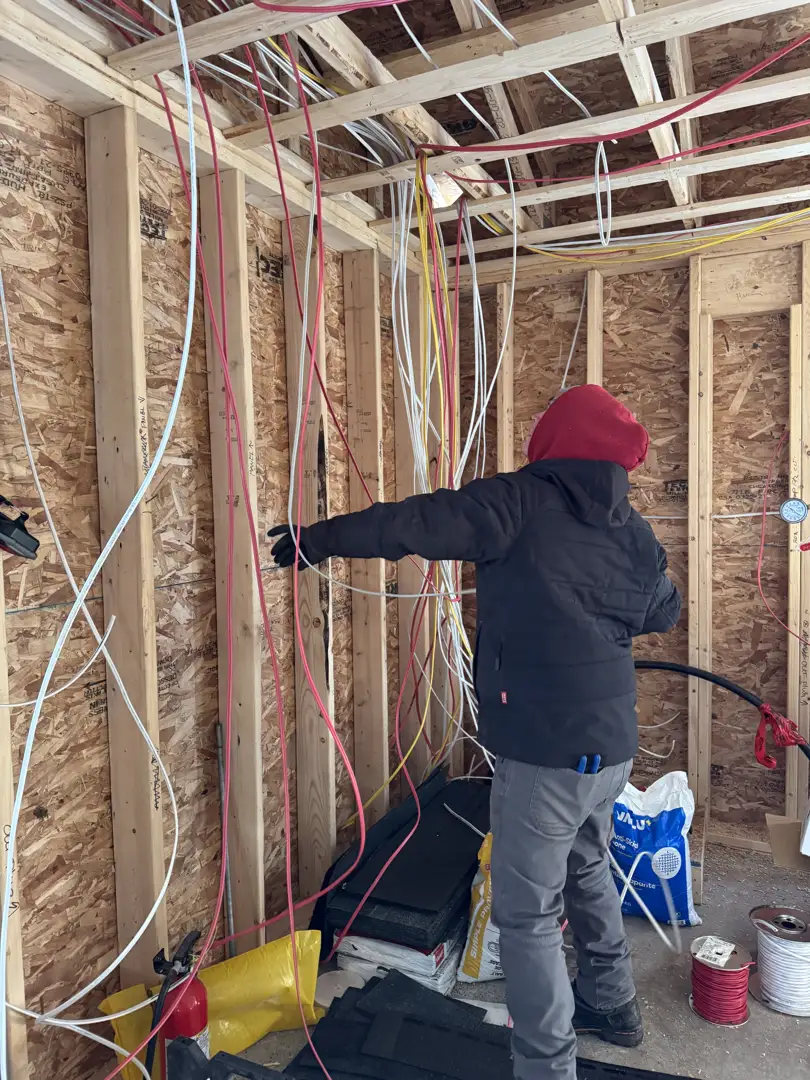

Knowing how to find a licensed electrician for new construction or commercial work in nova scotia is one of the most important steps you can take before breaking ground or starting a commercial build. Hire the wrong person and you risk failed inspections, voided insurance, serious safety hazards, and costly rework. In Nova Scotia, electrical work is a compulsory certified trade — meaning only properly qualified, licensed contractors can legally perform and permit this work.
Here is a quick overview of how to find the right licensed electrician for your project:
1. Confirm certification - Ask to see the electrician's Certificate of Qualification as a Construction Electrician issued under Nova Scotia's Apprenticeship and Trades Qualifications Act.
2. Verify the contractor license - The company must hold a valid Nova Scotia electrical contractor license, which requires $1 million in liability insurance and $10,000 in bonding.
3. Check Red Seal status - Red Seal certification confirms the electrician passed the national interprovincial exam, but always confirm they are also provincially licensed in Nova Scotia.
4. Use the NS Power Preferred Contractor Network - Nova Scotia Power vets and lists certified contractors at nspower.ca — a reliable starting point for finding qualified tradespeople.
5. Ask about permits - Only licensed electrical contractors can pull wiring permits in Nova Scotia. If an electrician can't obtain permits, they can't legally do the work.
6. Request proof of insurance - Always get written confirmation of liability insurance and bonding before signing any agreement.
7. Contact the Nova Scotia Apprenticeship Agency or your local electrical inspection department - These bodies can confirm whether a contractor or journeyperson is in good standing.
Whether you are building a new home in Eastern Passage or managing a large commercial project, getting this process right from the start saves time, money, and stress.
Before we dive into the search process, it helps to understand how the trade is regulated in our province. In Nova Scotia, the construction electrician trade is designated as a compulsory certified trade. This means it is legally mandatory for anyone performing electrical installations, repairs, or alterations in residential, commercial, or industrial buildings to hold active, valid certification.
Under the Construction Electrician Trade Regulations and the Apprenticeship and Trades Qualifications Act, there are very strict rules about who can pick up tools on a job site:
• The Apprenticeship Pathway: To become a certified journeyperson, an apprentice must complete a rigorous program requiring 7,200 hours of documented practical experience, alongside multiple levels of technical training and a final certification exam.
• The Trade Qualification Pathway: Individuals who have gained extensive practical experience without going through the formal apprenticeship program must prove at least 10,800 hours of active employment in the trade before they are even allowed to sit for the certification exam.
• The Apprentice-to-Journeyperson Ratio: To ensure safety and proper training on active job sites, Nova Scotia law requires a strict ratio: for every three apprentices working on a site, there must be at least one certified journeyperson actively supervising them. Every apprentice and journeyperson on a commercial construction site is legally required to carry their official identity card at all times.
You have likely heard the term "Red Seal" used as a badge of honor in the construction world. The Red Seal program is a national standard across Canada. Achieving a Red Seal means the electrician scored 75% or higher on the interprovincial exam, demonstrating they meet a high national benchmark of knowledge and skill.
However, there is an important nuance to keep in mind: while a Red Seal shows excellent theoretical knowledge and allows for easier interprovincial mobility, it does not automatically grant an out-of-province electrician the right to pull permits in Nova Scotia. If a contractor moved here from Alberta or Ontario, they must still obtain a Certificate of Qualification Equivalency from the Nova Scotia Apprenticeship Agency before they can legally operate. If you are coordinating projects across different regions, you can learn more about how professional standards apply in our Licensed Electrician in Truro, NS guide.
Now that you know the strict rules governing the trade, how do you actually find a qualified partner for your build? Whether you are coordinating a commercial development in Burnside or a custom home build in Bedford, following a systematic verification process is key.
A great place to start is the Nova Scotia Power Preferred Contractor Network. Contractors in this network are vetted to ensure they meet high industry standards and hold active provincial certifications. This saves you the headache of cold-calling random listings and hoping for the best.
Do not be shy about asking for credentials. Any legitimate electrician will gladly show you their Journeyman Certificate and provide their certificate number. If they hesitate or offer excuses, take that as a major red flag.
There is a massive legal difference between a "journeyperson electrician" and a "licensed electrical contractor." A certified journeyperson is legally qualified to perform the physical work, but they cannot contract services directly to the public or pull permits unless they hold a company-level electrical contractor license.
To obtain this contractor license in Nova Scotia, a company must pay the required licensing fees (which cover electrical, communications cabling, and electrical sign installation categories) and meet strict protection requirements:
• They must carry commercial liability insurance.
• They must hold a surety bond.
This insurance and bonding protect you, the property owner, in the event of accidental property damage or structural issues caused by the installation. If you hire a "freelance" licensed electrician who does not have an active contractor license, they cannot legally pull a permit, and their personal insurance will likely not cover commercial-scale liabilities.
For a deeper look at what to expect during a professional setup, check out our Electrical System Installation Truro NS Guide or explore the Electrical System Installation Guide Kentville NS for local insights.
No matter how skilled an electrician is, their work must be permitted and inspected to be considered legal and safe. In Nova Scotia, the regulatory standard is the Canadian Electrical Code Part I (CSA C22.1-18).
Only a licensed electrical contractor employing a certified construction electrician (or an industrial electrician for specific maintenance environments) is authorized to obtain electrical permits. Homeowners and general project managers cannot pull these permits themselves.
For new construction and major renovations, the work must be inspected at multiple stages by a Nova Scotia Power wiring inspector. Do not cover up any walls or connect power until these inspections are signed off:
1. Rough-In Inspection: This occurs after all the boxes, cabling, and conduit have been run through the studs, but before the drywall is hung. The inspector verifies that wire sizes, box depths, and routing meet the Canadian Electrical Code.
2. Service Entrance Inspection: This focuses on the main electrical panel, the meter socket, and the connection point where utility power enters the building. The inspector ensures the grounding is perfect and the service capacity matches the permit.
3. Final Inspection: Once the drywall is painted, the fixtures are hung, and the outlets are finished, the final inspection takes place. The inspector tests the circuits, checks for proper GFCI/AFCI protection, and places an official final inspection sticker on the electrical meter.
If you are planning a commercial development, you can read more about specific commercial regulations in our Commercial Electrical Bedford NS Guide and our Commercial Electrical Guide Burnside NS.
If you are building a new home or commercial facility, getting power from the street to your building requires careful coordination between your licensed electrical contractor and Nova Scotia Power.
Here is the step-by-step process we follow to ensure a smooth utility connection:
Before Nova Scotia Power can even schedule a planning appointment, you must submit your building plans to your local municipal office and secure a municipal building permit.
Contact Nova Scotia Power's customer care team to book an appointment with a utility planner. The planner will meet with you and your electrical contractor on-site to determine the best route for the power lines, locate the approved attachment point, and confirm your service size in amperes.
You are responsible for preparing the site so utility crews can safely string lines. Nova Scotia Power has strict clearance requirements:
• High-voltage lines require a cleared path of at least 12 meters (6 meters on either side of the line).
• Service lines (the low-voltage lines running directly to your building) require a cleared path of at least 5 meters.All tall trees, overhanging branches, and dense brush must be cleared before the crew arrives.
Under normal circumstances, Nova Scotia Power provides up to 92 meters of pole and service line installation from the nearest existing utility pole to your approved attachment point. If your building sits further back from the road than 92 meters, you will be responsible for additional poles, line extensions, and potentially clearing easements.
If your power lines must cross a neighbor's property, or if a multi-pole line extension is required on your own land, you must secure a legal Grant of Easement. This document must be accompanied by a property sketch certified by a licensed member of the Association of Nova Scotia Land Surveyors and officially registered at the Land Registration Office.
To run tools, heaters, and equipment during construction, your electrician can install a temporary power pole. This temporary setup must be inspected and approved by a wiring inspector before Nova Scotia Power will energize it.
If you are renovating an existing commercial space instead of building a new one, you might need to modify your existing setup. Read our guide on Commercial Electrical Repairs to see how we handle upgrades and maintenance.
To help make your planning easier, we have compiled a quick comparison of how electrical requirements differ depending on your project type:
• Compulsory Certification — Residential New Construction: Yes (Construction Electrician) — Commercial New Construction: Yes (Construction Electrician)
• Wiring Permit Required — Residential New Construction: Yes, before work begins — Commercial New Construction: Yes, before work begins
• Permit Purchaser — Residential New Construction: Licensed Electrical Contractor only — Commercial New Construction: Licensed Electrical Contractor only
• Standard Code Book — Residential New Construction: Canadian Electrical Code Part I — Commercial New Construction: Canadian Electrical Code Part I (with stricter commercial occupancy rules)
• Standard Service Size — Residential New Construction: Typically 100A to 200A (Single-Phase) — Commercial New Construction: Varies widely, often 400A+ (Three-Phase)
• Required Inspections — Residential New Construction: Rough-in, Service, Final — Commercial New Construction: Rough-in, Service, Final (often multi-phase audits)
The risks of using unlicensed or uncertified individuals are massive:
• Safety Hazards: Substandard wiring is a leading cause of structural fires and electrical shock hazards.
• Voided Insurance: If a fire or electrical failure occurs and the insurance company discovers the work was performed without a permit or by an unlicensed contractor, they can legally deny your claim.
• Severe Financial Penalties: Performing electrical work without a permit in Nova Scotia carries strict penalties. Violations can result in substantial financial assessments based on the permit requirements.
• Project Delays: If a municipal or utility inspector discovers unpermitted work, they can issue a stop-work order, force you to tear down drywall to expose the wiring, and order the utility to disconnect your power.
Modern commercial and residential builds often require specialized systems beyond standard outlets and light fixtures. When vetting your contractor, ensure they have proven experience in:
• EV Charger Installations: Commercial properties and new homes increasingly require dedicated Level 2 or Level 3 charging stations, which require precise load calculations.
• Generator Panels: Installing a dedicated generator panel allows a building to safely run essential systems during winter storms without back-feeding the main grid.
• Smart Home & Automation: Integrating smart lighting, automated climate controls, and security systems requires low-voltage expertise.
• Aluminum Wiring Remediation: If you are renovating an older commercial building, your electrician must use proper COPALUM or AlumiConn connectors to ensure safe, code-compliant connections.
If you want to double-check a contractor's status, use these official channels:
1. Nova Scotia Power: You can contact their wiring inspection department to verify if a contractor is registered and in good standing to pull permits.
2. Nova Scotia Apprenticeship Agency: They can verify the status of a journeyperson's Certificate of Qualification.
3. Registry of Joint Stocks: Confirm the business is actively registered to operate in Nova Scotia.
4. Reporting Unlicensed Work: If you suspect someone is advertising or performing electrical work without a license, you can report them directly to the Department of Labour, Skills and Immigration's Chief Electrical Inspector to protect public safety.
Finding the right licensed electrical contractor is the foundation of a safe, successful, and stress-free construction project. By verifying credentials, demanding proof of insurance and bonding, and ensuring all permits are pulled through Nova Scotia Power, you protect your investment and keep your job site safe.
At Presidential Ventilation Systems Ltd., we bring over 30 years of local experience to residential and commercial projects across Nova Scotia. Whether you are building in Halifax, Dartmouth, Bedford, or Mount Uniacke, our team is committed to delivering professional, code-compliant, and energy-efficient solutions.
If you are ready to partner with a trusted team for your next build, explore our services and reach out to us today through our Presidential Ventilation Systems Electrical Services portal. Let's build something safe and reliable together!

Verifying Red Seal certification when hiring HVAC technicians in Nova Scotia is the single most important step you can take to protect your home, your safety, and your financial investment. You are looking at a competitive quote for your new heating system, but there is a crucial detail that might be missing from the paperwork. Many homeowners assume that any general contractor offering installation services is fully qualified to handle the complex requirements of modern HVAC systems. Unfortunately, a pattern we see often in our service calls is that this assumption frequently leads to unsafe installations, voided warranties, and systems that fail long before their time.
When you are planning a major home upgrade and need professional heating services, the critical moment occurs when you are reviewing estimates. This is the exact point when verifying credentials becomes your strongest defense against sub-par workmanship. Whether you are looking into a ductless mini-split or a comprehensive central heat pump installation, ensuring the team has the legal authority and technical training to perform the work is non-negotiable.
A proper installation is not simply a matter of bolting a piece of equipment to a wall and plugging it in. Modern heat pumps are highly sophisticated machines that require specialized knowledge of refrigerant pressures, precise airflow dynamics, and high-voltage electrical systems. Drawing on our 30+ years of experience across residential retrofits, new construction, and commercial projects in Mount Uniacke and beyond, we frequently see the costly downstream consequences of uncertified installations. When an unqualified individual attempts to balance refrigerant lines or wire a high-draw compressor, the results range from poor energy efficiency to severe fire hazards.
Homeowners often trust a general contractor because that individual has done excellent carpentry, plumbing, or renovation work for them in the past. However, HVAC is a distinct, highly regulated field. Without the proper training, even the most well-intentioned handyman cannot properly commission a heat pump to manufacturer specifications. By understanding what to look for on an estimate, you can ensure your system is installed safely and optimized for long-term performance.
To make an informed decision, it is essential to understand the vast difference between a general contractor and a certified refrigeration mechanic. A general contractor manages broad construction projects, coordinating various trades to build or renovate a space. While they are highly skilled in project management and general carpentry, they rarely hold the specialized licensing required for handling regulated refrigerants.
The Refrigeration and Air Conditioning Mechanic designation is a highly regulated trade in Canada. Earning a Red Seal refrigeration mechanic certification requires thousands of hours of hands-on apprenticeship, rigorous classroom instruction, and passing a comprehensive interprovincial examination. Only professionals who have earned this specific credential possess the legal authority and technical expertise to handle refrigerants safely.
At Presidential Ventilation Systems, we maintain a roster of approximately 70 employees, which allows us to deploy dedicated, skilled Red Seal tradespeople for every phase of a project. Hiring a multi-trade team—encompassing HVAC, electrical, ventilation, and sheet-metal experts—ensures that the specific complexities of your heating system are managed by dedicated specialists rather than generalists. When you work with certified HVAC technicians, you are paying for an uncompromising standard of technical proficiency.
• Refrigerant Handling — General Contractor: Legally prohibited without specific certification. — Red Seal Refrigeration Mechanic: Fully licensed and trained to handle, recover, and charge refrigerants safely.
• System Commissioning — General Contractor: Relies on basic manufacturer manuals, often missing technical nuances. — Red Seal Refrigeration Mechanic: Uses specialized gauges to calculate superheat and subcooling for exact performance.
• Warranty Authorization — General Contractor: Installations often result in immediate warranty denial by major brands. — Red Seal Refrigeration Mechanic: Recognized by premium manufacturers to validate and register full warranties.
• Environmental Compliance — General Contractor: High risk of accidental venting due to lack of specialized recovery equipment. — Red Seal Refrigeration Mechanic: Strict adherence to provincial and federal environmental protection laws.
Handling refrigerants without proper certification is a direct violation of environmental regulations and poses severe safety risks to your property. Beyond the legal implications, the physical behavior of refrigerant inside your heat pump dictates how well the system will heat and cool your home. Inaccurate refrigerant charges lead to immediate efficiency losses, causing the system to overwork, consume excess electricity, and eventually fail prematurely.
Nova Scotia's freezing Maritime winters and humid summers demand absolute precision in refrigerant charging to prevent system failure during extreme temperature swings. When a heat pump is extracting ambient heat from sub-zero winter air, the refrigerant must be balanced perfectly. If the system is undercharged, the compressor will overheat trying to meet the thermostat's demand. If it is overcharged, liquid refrigerant can flood back into the compressor, destroying the internal valves.
Certified technicians use specialized digital gauges, temperature probes, and mathematical formulas to achieve the exact charge required by the manufacturer. A pattern we see often across the province is systems completely breaking down because the initial installer lacked the training to correctly balance the refrigerant lines. Last summer, one Nova Scotia homeowner reached out to our team during a heat wave after going without a working heat pump since the previous August. Previous uncertified technicians had failed to diagnose and fix the broken system. A skilled technician from our team properly diagnosed the issue—which was completely different from what was previously claimed—and accurately repaired the system.
Installing a modern heating system is not just a plumbing or refrigeration job; it requires integrating high-voltage electrical components safely into your home's existing infrastructure. A heat pump requires dedicated circuits, properly sized breakers, and specific wire gauges to handle the significant electrical draw of the compressor and auxiliary heating elements.
Because our team handles comprehensive electrical panel upgrades and installations daily, we know firsthand that improperly sized wiring or incorrect breaker installations by uncertified workers pose severe fire hazards. If an installer uses a wire gauge that is too small for the circuit's amperage, the wire will generate extreme heat inside your walls, potentially melting the insulation and sparking an electrical fire. Furthermore, failing to install the required outdoor disconnect switches violates local building codes and puts future service technicians at risk of electrocution.
A true HVAC contractor provides a seamless integration of both refrigeration and electrical expertise to ensure the system operates safely. Because the installation spans multiple disciplines, homeowners must ensure that the electrical portion of the hookup is performed by appropriately licensed professionals to meet provincial building codes. Understanding the Red Seal electrician requirements for heat pump hookups is just as critical as verifying the refrigeration credentials. When a multi-trade company handles the installation, both the mechanical and electrical permits are pulled and executed by specialized tradespeople, leaving no room for dangerous guesswork.
Premium equipment manufacturers, such as Daikin and Lennox, strictly mandate that their systems be installed by licensed professionals. These companies invest heavily in engineering highly efficient equipment, and they know that the lifespan of that equipment is entirely dependent on the quality of the installation. If a system fails and the manufacturer discovers it was installed by an uncertified general contractor, the warranty claim is instantly denied.
Working with recognized, certified dealers ensures that your investment is protected for the full duration of the warranty period. For example, maintaining our Daikin Comfort Pro status requires strict adherence to manufacturer installation guidelines, continuous factory training, and a proven track record of technical excellence. When an installation is completed by a contractor holding this status, the manufacturer registers the equipment with full confidence.
Last fall, a homeowner contacted us because their mini-split heat pumps were not working properly after a poor initial service by a different company. The previous company had failed to identify the root problem. One of our certified technicians quickly diagnosed the issue and confirmed warranty coverage for the necessary parts, completely solving the problem and restoring the system to proper operation. Proper diagnostics by a certified technician can often salvage a system and restore its warranty standing after a poor initial installation, but we always recommend preventing the issue entirely by hiring a certified professional from day one.
Government and provincial rebate programs are designed to make energy-efficient upgrades more accessible to homeowners. Programs like Efficiency Nova Scotia offer significant incentives for upgrading to modern heating systems, particularly for oil-to-heat-pump conversions. However, these programs almost universally require that the installation be completed by an approved, certified contractor.
Submitting an invoice from an uncertified handyman or general contractor will result in a rejected rebate application. The administrative bodies governing these funds require strict proof of compliance, including the contractor's credentials, the exact AHRI (Air-Conditioning, Heating, and Refrigeration Institute) matching numbers of the equipment, and detailed commissioning reports. An uncertified installer simply cannot provide the necessary documentation to satisfy the auditors.
Because rebate programs, funding caps, and eligibility criteria can change frequently, we strongly recommend confirming current programs with Presidential Ventilation Systems before starting work. A reputable HVAC company will not only hold the necessary Red Seal certifications to keep you eligible, but their administrative team will also be familiar with the latest program updates. They can guide you through the required pre-approval steps, ensure the equipment selected qualifies for the highest possible incentive, and provide the exact invoicing format the provincial programs demand.
Protecting yourself during the estimate phase requires asking direct questions and requesting physical proof of credentials. Do not wait until the equipment is sitting in your driveway to confirm the installer's qualifications. Follow these actionable steps to verify a contractor's Red Seal certification before signing any agreements:
1. Ask for the Nova Scotia Apprenticeship Agency certification number: During the initial consultation, request the lead technician's certification number. Legitimate contractors are proud of their credentials and will provide this information without hesitation.
2. Request proof of dedicated Red Seal refrigeration mechanics: Ensure the company actually employs technicians with a Red Seal refrigeration mechanic certification on staff, rather than sub-contracting the work to unverified third parties.
3. Verify specialized liability insurance: Check that the contractor carries appropriate liability insurance and workers' compensation coverage specifically rated for HVAC and electrical work, not just general carpentry or landscaping.
4. Review the written estimate for trade specifics: Ensure the written quote clearly outlines who will be handling the electrical integration, who will be pulling the electrical permits, and who is responsible for the refrigerant charging.
5. Plan for ongoing professional care: Once verified and installed, ongoing care by these same certified professionals ensures the system maintains its efficiency. Securing preventative HVAC maintenance from a credentialed team extends the lifespan of your investment.

Yes, Refrigeration and Air Conditioning Mechanic is a designated Red Seal trade across Canada. It requires extensive apprenticeship hours and passing a rigorous interprovincial examination. This designation ensures the technician has mastered the complex thermodynamics, electrical troubleshooting, and environmental safety protocols required to work on modern heating and cooling systems.
Homeowners can ask the contractor directly for their certification card before the project begins. Credentials can also be cross-referenced with the Nova Scotia Apprenticeship Agency to ensure they are current and valid. A reputable HVAC company will always be transparent about the qualifications of the technicians they send to your home.
Yes, handling the refrigerants within a heat pump requires a certified refrigeration mechanic by law. Additionally, the electrical connections required to power the unit demand appropriate electrical licensing and permits. Attempting to bypass these licensing requirements can result in severe fines, voided warranties, and dangerous operating conditions.
It can lead to unsafe operation, voided manufacturer warranties, and rejected provincial rebate applications. Improper refrigerant handling can also cause premature system failure, meaning you may have to replace the entire unit years before its expected lifespan. Furthermore, uncertified electrical work poses a significant fire hazard to your property.
No, unless the general contractor personally holds a valid Red Seal refrigeration certification or directly employs someone who does. Environmental regulations strictly prohibit uncertified individuals from handling, recovering, or charging regulated refrigerants due to the severe environmental impact of accidental venting and the technical precision required for safe operation.
Protecting your home, your warranty, and your investment starts with asking the right questions during the estimate process. In our 30+ years of experience serving Mount Uniacke and greater Nova Scotia, we have found that transparency regarding credentials is the foundation of a trustworthy contractor relationship. You deserve the peace of mind that comes from knowing your equipment is being handled by professionals who respect the trade and adhere to all provincial safety standards.
Choosing a multi-trade team with verified tradespeople ensures your system is installed safely, efficiently, and in full compliance with warranty and rebate requirements. If you are planning an upgrade, explore your options with a team that prioritizes certification and ongoing education. Contact Presidential Ventilation Systems today to request a free estimate for your heat pump installation.
