


Why your airtight home needs an HRV system comes down to one simple problem: when you seal a home tightly enough to save energy, you also trap everything inside it — stale air, moisture, carbon dioxide, VOCs, and other pollutants with nowhere to go.
Here is a quick summary:
• Airtight homes trap pollutants — cooking fumes, VOCs, radon, and CO2 build up without fresh air exchange
• Moisture has no escape route — leading to condensation, mold risk, and structural damage over time
• CO2 levels rise overnight — causing poor sleep, morning fatigue, and reduced focus
• Natural infiltration is unreliable — leaky homes don't guarantee good air quality; they just let in uncontrolled air from garages, crawl spaces, and wall cavities
• An HRV solves all of this — it continuously exchanges stale indoor air for fresh outdoor air while recovering up to 90% of the heat from the outgoing air, so you don't lose the energy used to condition the air
Modern homes are built better than ever. Tighter building envelopes, advanced insulation, and high-performance windows have made homes far more comfortable and energy efficient. But that progress comes with a trade-off. As contractor and home renovation expert Mike Holmes has pointed out, air leaks in older homes are not a sign of a healthy home — they just mean you have lost control of where your air comes from. A truly healthy home is airtight and properly ventilated. One without the other creates problems.
Think of it this way: living in an airtight home without mechanical ventilation is a bit like living in a sealed plastic bag. The bag keeps the cold out perfectly. But eventually, the air inside becomes stale, damp, and full of everything your household produces just by existing — breathing, cooking, showering, cleaning. Without a controlled way to flush that air out and bring clean air in, your home's indoor air quality quietly deteriorates, often without you noticing until the symptoms show up.
Building science professionals use a simple principle to describe the right approach: build tight, ventilate right. A Heat Recovery Ventilator (HRV) is the "ventilate right" half of that equation.

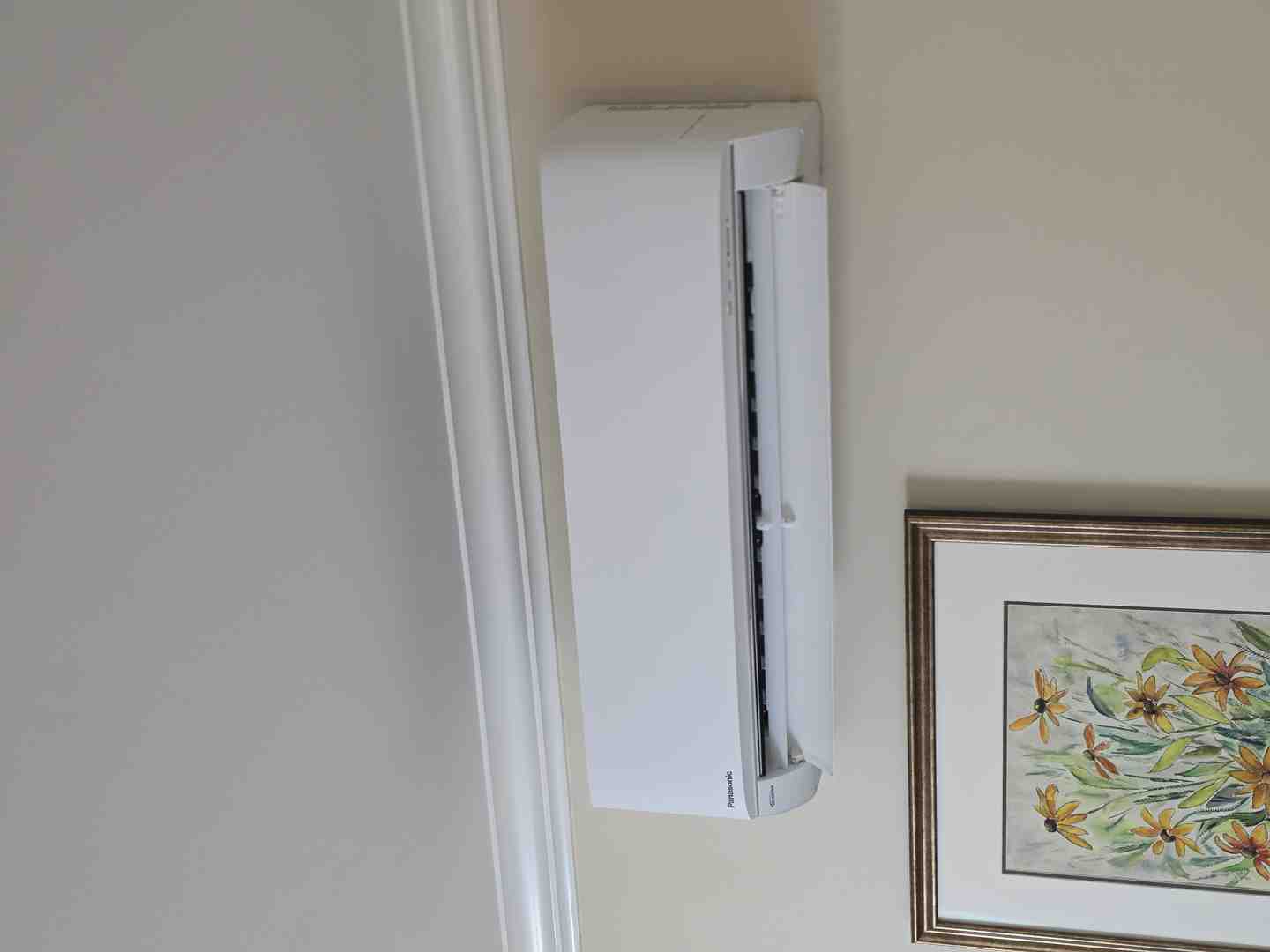
When we talk about the "building envelope," we are referring to the physical separator between the conditioned environment of your home and the wild weather of Nova Scotia. In the past, homes were "leaky." Air whistled through gaps in floorboards, around window frames, and through electrical outlets. While this provided natural ventilation, it was incredibly inefficient and often brought in air from "dirty" sources like crawl spaces or damp basements.
Today, we use advanced air sealing to ensure we aren't heating the great outdoors. However, this airtightness means we are trapping Volatile Organic Compounds (VOCs) from furniture and cleaning products, radon gas that may seep from the ground, and carbon dioxide from our own breath. Without a mechanical "lung," these pollutants reach concentrations that are often two to five times higher than outdoor levels.
Understanding HRV System Benefits is the first step toward reclaiming your home's health. An HRV provides a controlled path for air exchange, ensuring that the air you breathe is fresh, filtered, and safe, rather than just whatever happened to leak through a crack in the foundation.
One of the biggest concerns homeowners have is that ventilation means throwing away thermal energy. If you open a window in January in Halifax, you are losing the heat contained in that air. This is where Mechanical Ventilation Design Prospect NS becomes a game-changer.
An HRV system uses a specialized heat exchange core to reclaim up to 90% of the heat from the stale air it exhausts. As the warm indoor air exits, it passes by the cold incoming fresh air (without mixing). The heat is transferred to the fresh air, pre-warming it before it even reaches your living spaces. This high thermal performance ensures that your home stays fresh without causing your heating system to work overtime.
In Nova Scotia, moisture is a constant battle. In an airtight home, daily activities like showering, cooking, and even breathing add significant amounts of water vapor to the air. Without proper ventilation, this moisture hits cold surfaces—like window glass or the corners of exterior walls—and turns into condensation.
Excessive relative humidity is a recipe for mold growth and structural rot. By continuously exhausting damp air from "wet" rooms like kitchens and bathrooms and replacing it with drier outdoor air, an HRV keeps your home’s humidity in the ideal 40–60% range. Regular HRV Maintenance Bedford NS ensures the system continues to manage these moisture levels effectively, protecting both your health and your home's structural integrity.
To understand why your airtight home needs an hrv system, you have to look at the "magic" happening inside the box. Most modern units utilize a crossflow design. Inside the unit, there are two separate air streams. One stream pulls stale, humid air from your home (typically from the bathroom and kitchen), while the other pulls fresh, oxygen-rich air from outside.
These streams pass through the heat exchanger core. Because the air streams never actually mix, you don't have to worry about "recycling" odors or contaminants. High-performance models can move up to 231 cubic feet per minute (CFM) of air, ensuring that even larger homes receive a complete air change several times a day. You can explore different models and how they fit into your home's layout by looking at HRV Systems.
Many older homes rely on "exhaust-only" ventilation, such as a simple bathroom fan. The problem with this in an airtight home is pressure balance. If you suck air out of a tight house without providing a way for it to get back in, you create a vacuum. This "negative pressure" can cause "parasitic infiltration," pulling air in through the chimney (backdrafting), the garage, or through the soil (bringing in radon).
A balanced system like an HRV provides an equal amount of "supply" and "exhaust" air. This keeps the pressure inside your home neutral. For homeowners in the HRM, Residential Ventilation Installation Dartmouth NS focuses on creating this perfect equilibrium, ensuring the air you get is the air you want, not just air that was forced through a gap in the floorboards.
How do you know if your home is struggling? The signs are often subtle at first. You might notice that cooking odors—like last night's fish or garlic—seem to linger for days. You might wake up feeling groggy, with a "stuffy" head or a dry throat, which are classic signs of high CO2 levels in bedrooms.
The most visible warning sign is window condensation. If you see water pooling on your windowsills during a cold snap, your home is literally crying for fresh air. If your system is already installed but you're still seeing these signs, it might be a technical issue. Checking for HRV Systems Broken in Berwick NS can help you identify if a failing motor or a clogged intake is the culprit.
If you aren't sure how tight your home actually is, a professional energy assessment is the best place to start. This usually involves a "blower door test." A technician mounts a large fan into an exterior door frame to depressurize the house. This measures "Air Changes per Hour at 50 Pascals" (ACH50).
Industry standards, like ASHRAE 62.2, generally suggest that any home testing at or below 3 ACH50 is "tight" enough to require mechanical ventilation. If your home is in this range, you can no longer rely on natural leaks to provide fresh air. For those in rural areas, HRV Systems Broken Ellershouse NS Tips provides great insight into how these metrics affect system performance.
One of the most common questions we hear in Nova Scotia is whether to choose an HRV or an ERV (Energy Recovery Ventilator). While they look similar, they handle moisture differently.
• Heat Transfer — HRV (Heat Recovery): Transfers heat only — ERV (Energy Recovery): Transfers heat and some moisture
• Moisture Control — HRV (Heat Recovery): Exhausts excess indoor humidity — ERV (Energy Recovery): Keeps some moisture inside
• Best Climate — HRV (Heat Recovery): Cold, humid winters (Nova Scotia) — ERV (Energy Recovery): Hot, humid summers or very dry winters
• Core Material — HRV (Heat Recovery): Usually aluminum or plastic — ERV (Energy Recovery): Specially treated paper or polymer
In our region, an HRV is often the preferred choice because we tend to have high indoor humidity during the winter. An HRV is excellent at "dumping" that moisture outside, which prevents those pesky condensation issues on your windows. You can learn more about the moisture-transferring capabilities of the alternative in our guide to Energy Recovery Ventilation Halifax NS.
For most Halifax homeowners, the primary goal in winter is to get rid of damp, stale air. Because our winters are cold but often damp, we create a lot of internal moisture from our daily lives. An HRV acts as a dehumidifier and air exchanger rolled into one. If you're planning a new build or a major renovation, Heat Recovery Ventilator Installation in Bedford NS is a standard recommendation to keep the air crisp and the windows dry.
An HRV is only as good as its installation. If the ducts are crushed, or if the intake and exhaust hoods outside are too close together, the system won't perform. Professional installation ensures that the system is "balanced"—meaning the airflow coming in exactly matches the airflow going out.
A well-installed system should be integrated into your home's existing ductwork or have its own dedicated "fresh air" vents in bedrooms and living areas. For a deep dive into what a proper setup looks like, check out the Heat Recovery Ventilator Installation Halifax Guide.
Maintenance is the secret to a long-lasting system. You should check your filters every two to three months—especially during the spring pollen season or the winter heating peak. A clogged filter makes the motor work harder and reduces the amount of fresh air you actually get.
Beyond the filters, the heat exchanger core itself needs an annual cleaning (usually just a rinse with soap and water), and the outdoor hoods must be kept clear of snow, leaves, and bird nests. We often recommend professional HRV Duct Cleaning every few years to ensure the air traveling through your home stays pristine. If you're in the Sackville area, we offer specialized HRV Maintenance in Lower Sackville NS to keep your "house lungs" in top shape.
Yes! To get the full benefits of air exchange and energy recovery, your HRV should run 24/7. Most systems have a "low" or "intermittent" setting for normal daily use and a "high" or "boost" setting for when you're cooking, showering, or having a large group of people over. Running it continuously ensures a steady supply of oxygen and prevents the "slug" of stale air that happens when a system is turned off.
If your home was built after 2000, there is a very high chance it is airtight enough to benefit from an HRV. Modern building codes in Nova Scotia have strict requirements for air sealing. If you've recently upgraded your windows, added spray foam insulation, or performed extensive weatherstripping, you have likely moved your home into the "tight" category. A blower door test resulting in less than 3 ACH50 is the definitive proof that you need mechanical ventilation.
While some homeowners are handy, HRV installation is complex. It requires specialized airflow meters to balance the system correctly. If the system is unbalanced, it can cause "positive pressure" (pushing moist air into your wall cavities, where it can rot the wood) or "negative pressure" (pulling in radon). Furthermore, professional installation is usually required to maintain your manufacturer's warranty. For those looking for the right way to do it, our HRV Installation Halifax Guide 2025 covers the professional standards we uphold.
At Presidential Ventilation Systems, we believe that you shouldn't have to choose between a warm home and a healthy one. With over 30 years of experience serving Nova Scotia—from the busy streets of Burnside to the coastal homes of Peggy's Cove—we've seen how the right ventilation can transform a "stuffy" house into a vibrant, healthy home.
Stop living in a plastic bag. By choosing a balanced HRV System, you are prioritizing your family's respiratory health, your home's structural longevity, and your own everyday comfort. Whether you are in Halifax, Dartmouth, or Lower Sackville, we are here to help you breathe easier. Reach out to us today to ensure your airtight home is truly a healthy one.


Why your airtight home needs an HRV system comes down to one simple problem: when you seal a home tightly enough to save energy, you also trap everything inside it — stale air, moisture, carbon dioxide, VOCs, and other pollutants with nowhere to go.
Here is a quick summary:
• Airtight homes trap pollutants — cooking fumes, VOCs, radon, and CO2 build up without fresh air exchange
• Moisture has no escape route — leading to condensation, mold risk, and structural damage over time
• CO2 levels rise overnight — causing poor sleep, morning fatigue, and reduced focus
• Natural infiltration is unreliable — leaky homes don't guarantee good air quality; they just let in uncontrolled air from garages, crawl spaces, and wall cavities
• An HRV solves all of this — it continuously exchanges stale indoor air for fresh outdoor air while recovering up to 90% of the heat from the outgoing air, so you don't lose the energy used to condition the air
Modern homes are built better than ever. Tighter building envelopes, advanced insulation, and high-performance windows have made homes far more comfortable and energy efficient. But that progress comes with a trade-off. As contractor and home renovation expert Mike Holmes has pointed out, air leaks in older homes are not a sign of a healthy home — they just mean you have lost control of where your air comes from. A truly healthy home is airtight and properly ventilated. One without the other creates problems.
Think of it this way: living in an airtight home without mechanical ventilation is a bit like living in a sealed plastic bag. The bag keeps the cold out perfectly. But eventually, the air inside becomes stale, damp, and full of everything your household produces just by existing — breathing, cooking, showering, cleaning. Without a controlled way to flush that air out and bring clean air in, your home's indoor air quality quietly deteriorates, often without you noticing until the symptoms show up.
Building science professionals use a simple principle to describe the right approach: build tight, ventilate right. A Heat Recovery Ventilator (HRV) is the "ventilate right" half of that equation.
When we talk about the "building envelope," we are referring to the physical separator between the conditioned environment of your home and the wild weather of Nova Scotia. In the past, homes were "leaky." Air whistled through gaps in floorboards, around window frames, and through electrical outlets. While this provided natural ventilation, it was incredibly inefficient and often brought in air from "dirty" sources like crawl spaces or damp basements.
Today, we use advanced air sealing to ensure we aren't heating the great outdoors. However, this airtightness means we are trapping Volatile Organic Compounds (VOCs) from furniture and cleaning products, radon gas that may seep from the ground, and carbon dioxide from our own breath. Without a mechanical "lung," these pollutants reach concentrations that are often two to five times higher than outdoor levels.
Understanding HRV System Benefits is the first step toward reclaiming your home's health. An HRV provides a controlled path for air exchange, ensuring that the air you breathe is fresh, filtered, and safe, rather than just whatever happened to leak through a crack in the foundation.
One of the biggest concerns homeowners have is that ventilation means throwing away thermal energy. If you open a window in January in Halifax, you are losing the heat contained in that air. This is where Mechanical Ventilation Design Prospect NS becomes a game-changer.
An HRV system uses a specialized heat exchange core to reclaim up to 90% of the heat from the stale air it exhausts. As the warm indoor air exits, it passes by the cold incoming fresh air (without mixing). The heat is transferred to the fresh air, pre-warming it before it even reaches your living spaces. This high thermal performance ensures that your home stays fresh without causing your heating system to work overtime.
In Nova Scotia, moisture is a constant battle. In an airtight home, daily activities like showering, cooking, and even breathing add significant amounts of water vapor to the air. Without proper ventilation, this moisture hits cold surfaces—like window glass or the corners of exterior walls—and turns into condensation.
Excessive relative humidity is a recipe for mold growth and structural rot. By continuously exhausting damp air from "wet" rooms like kitchens and bathrooms and replacing it with drier outdoor air, an HRV keeps your home’s humidity in the ideal 40–60% range. Regular HRV Maintenance Bedford NS ensures the system continues to manage these moisture levels effectively, protecting both your health and your home's structural integrity.
To understand why your airtight home needs an hrv system, you have to look at the "magic" happening inside the box. Most modern units utilize a crossflow design. Inside the unit, there are two separate air streams. One stream pulls stale, humid air from your home (typically from the bathroom and kitchen), while the other pulls fresh, oxygen-rich air from outside.
These streams pass through the heat exchanger core. Because the air streams never actually mix, you don't have to worry about "recycling" odors or contaminants. High-performance models can move up to 231 cubic feet per minute (CFM) of air, ensuring that even larger homes receive a complete air change several times a day. You can explore different models and how they fit into your home's layout by looking at HRV Systems.
Many older homes rely on "exhaust-only" ventilation, such as a simple bathroom fan. The problem with this in an airtight home is pressure balance. If you suck air out of a tight house without providing a way for it to get back in, you create a vacuum. This "negative pressure" can cause "parasitic infiltration," pulling air in through the chimney (backdrafting), the garage, or through the soil (bringing in radon).
A balanced system like an HRV provides an equal amount of "supply" and "exhaust" air. This keeps the pressure inside your home neutral. For homeowners in the HRM, Residential Ventilation Installation Dartmouth NS focuses on creating this perfect equilibrium, ensuring the air you get is the air you want, not just air that was forced through a gap in the floorboards.
How do you know if your home is struggling? The signs are often subtle at first. You might notice that cooking odors—like last night's fish or garlic—seem to linger for days. You might wake up feeling groggy, with a "stuffy" head or a dry throat, which are classic signs of high CO2 levels in bedrooms.
The most visible warning sign is window condensation. If you see water pooling on your windowsills during a cold snap, your home is literally crying for fresh air. If your system is already installed but you're still seeing these signs, it might be a technical issue. Checking for HRV Systems Broken in Berwick NS can help you identify if a failing motor or a clogged intake is the culprit.
If you aren't sure how tight your home actually is, a professional energy assessment is the best place to start. This usually involves a "blower door test." A technician mounts a large fan into an exterior door frame to depressurize the house. This measures "Air Changes per Hour at 50 Pascals" (ACH50).
Industry standards, like ASHRAE 62.2, generally suggest that any home testing at or below 3 ACH50 is "tight" enough to require mechanical ventilation. If your home is in this range, you can no longer rely on natural leaks to provide fresh air. For those in rural areas, HRV Systems Broken Ellershouse NS Tips provides great insight into how these metrics affect system performance.
One of the most common questions we hear in Nova Scotia is whether to choose an HRV or an ERV (Energy Recovery Ventilator). While they look similar, they handle moisture differently.
• Heat Transfer — HRV (Heat Recovery): Transfers heat only — ERV (Energy Recovery): Transfers heat and some moisture
• Moisture Control — HRV (Heat Recovery): Exhausts excess indoor humidity — ERV (Energy Recovery): Keeps some moisture inside
• Best Climate — HRV (Heat Recovery): Cold, humid winters (Nova Scotia) — ERV (Energy Recovery): Hot, humid summers or very dry winters
• Core Material — HRV (Heat Recovery): Usually aluminum or plastic — ERV (Energy Recovery): Specially treated paper or polymer
In our region, an HRV is often the preferred choice because we tend to have high indoor humidity during the winter. An HRV is excellent at "dumping" that moisture outside, which prevents those pesky condensation issues on your windows. You can learn more about the moisture-transferring capabilities of the alternative in our guide to Energy Recovery Ventilation Halifax NS.
For most Halifax homeowners, the primary goal in winter is to get rid of damp, stale air. Because our winters are cold but often damp, we create a lot of internal moisture from our daily lives. An HRV acts as a dehumidifier and air exchanger rolled into one. If you're planning a new build or a major renovation, Heat Recovery Ventilator Installation in Bedford NS is a standard recommendation to keep the air crisp and the windows dry.
An HRV is only as good as its installation. If the ducts are crushed, or if the intake and exhaust hoods outside are too close together, the system won't perform. Professional installation ensures that the system is "balanced"—meaning the airflow coming in exactly matches the airflow going out.
A well-installed system should be integrated into your home's existing ductwork or have its own dedicated "fresh air" vents in bedrooms and living areas. For a deep dive into what a proper setup looks like, check out the Heat Recovery Ventilator Installation Halifax Guide.
Maintenance is the secret to a long-lasting system. You should check your filters every two to three months—especially during the spring pollen season or the winter heating peak. A clogged filter makes the motor work harder and reduces the amount of fresh air you actually get.
Beyond the filters, the heat exchanger core itself needs an annual cleaning (usually just a rinse with soap and water), and the outdoor hoods must be kept clear of snow, leaves, and bird nests. We often recommend professional HRV Duct Cleaning every few years to ensure the air traveling through your home stays pristine. If you're in the Sackville area, we offer specialized HRV Maintenance in Lower Sackville NS to keep your "house lungs" in top shape.
Yes! To get the full benefits of air exchange and energy recovery, your HRV should run 24/7. Most systems have a "low" or "intermittent" setting for normal daily use and a "high" or "boost" setting for when you're cooking, showering, or having a large group of people over. Running it continuously ensures a steady supply of oxygen and prevents the "slug" of stale air that happens when a system is turned off.
If your home was built after 2000, there is a very high chance it is airtight enough to benefit from an HRV. Modern building codes in Nova Scotia have strict requirements for air sealing. If you've recently upgraded your windows, added spray foam insulation, or performed extensive weatherstripping, you have likely moved your home into the "tight" category. A blower door test resulting in less than 3 ACH50 is the definitive proof that you need mechanical ventilation.
While some homeowners are handy, HRV installation is complex. It requires specialized airflow meters to balance the system correctly. If the system is unbalanced, it can cause "positive pressure" (pushing moist air into your wall cavities, where it can rot the wood) or "negative pressure" (pulling in radon). Furthermore, professional installation is usually required to maintain your manufacturer's warranty. For those looking for the right way to do it, our HRV Installation Halifax Guide 2025 covers the professional standards we uphold.
At Presidential Ventilation Systems, we believe that you shouldn't have to choose between a warm home and a healthy one. With over 30 years of experience serving Nova Scotia—from the busy streets of Burnside to the coastal homes of Peggy's Cove—we've seen how the right ventilation can transform a "stuffy" house into a vibrant, healthy home.
Stop living in a plastic bag. By choosing a balanced HRV System, you are prioritizing your family's respiratory health, your home's structural longevity, and your own everyday comfort. Whether you are in Halifax, Dartmouth, or Lower Sackville, we are here to help you breathe easier. Reach out to us today to ensure your airtight home is truly a healthy one.
Are you struggling with identifying the source of vibration noises in your heat pump before winter, wondering if that loud hum is normal or a sign of trouble? You are not alone. When the temperature drops and the first real chill sets in, outdoor units have to work significantly harder to extract warmth from the freezing air. This sudden shift in operation often brings new, unfamiliar sounds to the surface, causing understandable anxiety for homeowners who rely on these systems to keep their families warm.
The core problem you face is distinguishing between safe, normal cold-weather operation and dangerous mechanical issues that require immediate attention. Ignoring a serious problem could leave you without heat during the worst weather, but panicking over a normal defrost cycle causes unnecessary stress. Knowing when to simply let the system run and when to call for a professional diagnostic before winter weather causes a total breakdown is essential for protecting your equipment.
In our 30+ years serving Nova Scotia, our team has seen exactly how harsh our maritime climate impacts both the mechanical and electrical components of heat pump systems. During Nova Scotia late autumn and pre-winter cold snaps, we receive countless calls from homeowners concerned about outdoor unit vibrations. The good news is that by learning a few descriptive cues, you can better understand what your equipment is doing and make informed decisions about your home comfort.
Before assuming your equipment is failing, it helps to understand how modern cold-climate heat pumps, such as Daikin and Lennox cold-climate systems, actually operate. These units utilize advanced variable-speed compressors. Unlike older, single-stage units that simply turn on and off, variable-speed compressors ramp up and down based on heating demand. When the temperature plummets, the compressor naturally changes pitch, running at a higher capacity and producing a louder, steady hum. This is entirely normal.
Another common sound that startles homeowners is the defrost cycle. As your unit extracts heat from cold air, frost naturally builds up on the outdoor coils. To clear this frost, the system temporarily reverses the flow of refrigerant. You might hear a sudden "swoosh" or a loud whooshing noise, followed by a deeper humming sound and even see steam rising from the outdoor unit. This cycle usually lasts only a few minutes before the system returns to normal heating mode.
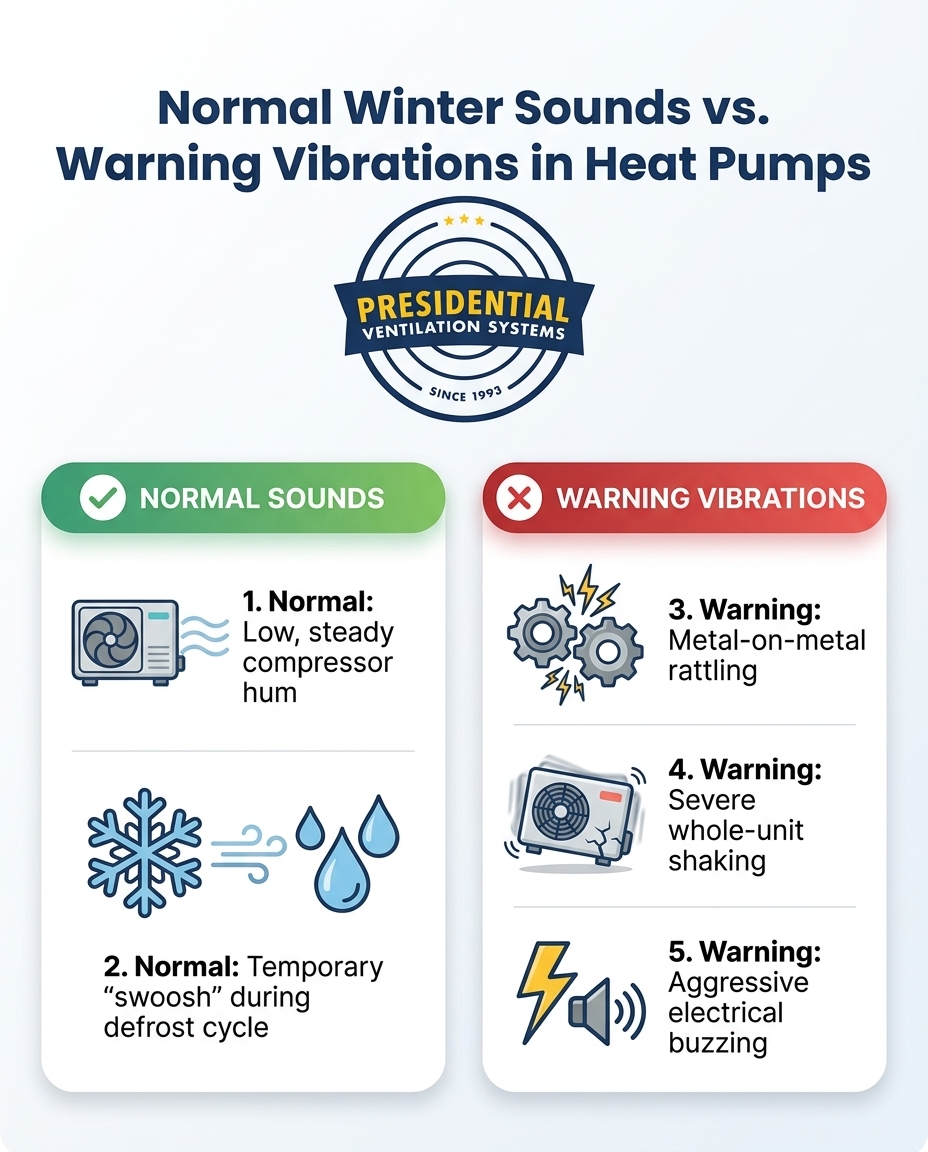
However, because the system runs at a higher capacity in cold weather, it often exposes underlying mechanical wear that simply wasn't audible during the summer cooling season. To help you tell the difference, here is a breakdown of normal sounds versus warning signs:
• Low, steady compressor hum — Likely Cause: Variable-speed compressor ramping up in cold weather. — Action Required: None. This is normal operation.
• Temporary "swoosh" or whoosh — Likely Cause: System entering the defrost cycle to melt coil frost. — Action Required: None. Wait 5-15 minutes for the cycle to end.
• Metal-on-metal rattling — Likely Cause: Loose access panels, screws, or failing internal components. — Action Required: Requires professional inspection.
• Severe whole-unit shaking — Likely Cause: Unbalanced fan blade (often ice-related) or failing motor. — Action Required: Turn off unit and call a technician.
• Aggressive electrical buzzing — Likely Cause: Failing contactor or struggling capacitor. — Action Required: Requires professional electrical/HVAC diagnostic.
If you hear the warning signs listed above, relying on a proactive heat pump maintenance plan ensures a professional catches these issues before they escalate into costly mid-winter breakdowns.
One of the most common causes of severe vibration in our region is directly tied to the weather. Weave in Nova Scotia's wet, freezing maritime climate, and you have the perfect recipe for rapid ice accumulation. Our rapid temperature drops and high humidity levels increase the frequency of defrost cycles, but they also bring freezing rain and sleet that can coat the outdoor unit.
When freezing rain or heavy, wet snow enters the top of the outdoor chassis, it can freeze directly onto the fan blades. The physics of an unbalanced fan blade are unforgiving: even a small, uneven amount of ice throws the entire assembly out of balance. Because the fan spins at high speeds, this slight imbalance translates into violent shaking and loud, aggressive vibration noises that can echo throughout the house. If left running, this violent shaking can quickly destroy the motor bearings or cause the fan to strike the protective metal grate.
It is important to differentiate between an ice-induced imbalance and an internal motor bearing failure. Ice buildup is usually visible from the outside, whereas a failing motor will vibrate even when the blades are completely clear. Whether you have a central system or ductless heat pumps, observing the unit safely is your best first step during Nova Scotia late autumn and pre-winter cold snaps.
1. Perform a visual inspection: Look through the top grate of the outdoor unit with a flashlight. Check for uneven chunks of ice clinging to the fan blades or heavy buildup around the internal coils.
2. Check for clearance: Ensure there is no snow drift or debris blocking the sides or base of the unit, which can prevent proper drainage during the defrost cycle.
3. Never chip or hack at ice: Do not use screwdrivers, shovels, or hot water to remove ice from the fan or coils. You risk puncturing the fragile refrigerant lines or bending the aluminum fins, causing severe permanent damage.
4. Turn off the unit if shaking is severe: If the unit is visibly rocking or shaking violently, turn it off at the thermostat to prevent mechanical damage and call for professional service.
Not all vibrations are caused by external factors like ice. Purely mechanical wear and tear is a major culprit for loud noises, especially as systems age. Inside the outdoor unit, the fan motor relies on sealed bearings to spin smoothly. Over time, these motor bearings wear out. What starts as a faint, almost unnoticeable hum in the summer can escalate to a loud, vibrating grind in cold weather as the metal contracts and the motor works harder.
Furthermore, seasonal temperature fluctuations cause the metal chassis of the unit to expand and contract continually. Over several seasons, this movement can cause access panels, internal mounting screws, and rubber anti-vibration pads to loosen or degrade. When the variable-speed compressor ramps up to meet the heating demand of Daikin and Lennox cold-climate systems, these loose components rattle against each other, creating a harsh, metallic vibration.
The resonance effect: One thing we see often is that these vibrations don't just stay outside. The outdoor unit is connected to your indoor air handler via copper refrigerant lines. When the outdoor chassis vibrates heavily, that physical shaking travels down the copper lines, causing the walls or floors inside your home to hum or buzz loudly.
Getting a rapid, accurate diagnosis is critical before a minor vibration turns into a seized motor. One Nova Scotia homeowner reached out to us in the fall when their mini splits were vibrating and not heating properly, having been previously misdiagnosed by another company. Our technician diagnosed the actual mechanical issue within minutes, arranged for the necessary warranty parts, and resolved the problem entirely. Addressing common heat pump issues early prevents a domino effect of mechanical failures.
A common knowledge gap for many homeowners is the intersection of electrical and mechanical systems. Not all vibrations are mechanical in nature; electrical components can create loud, aggressive buzzing or vibrating sounds that easily mimic a failing motor or loose panel.
Inside the electrical panel of your outdoor unit sits a component called a contactor. The contactor acts as a heavy-duty switch that controls the flow of high-voltage electricity to the compressor and fan. It uses a magnetic coil to pull the switch closed. As the contactor ages, dirt, bugs, or pitting on the electrical contacts can prevent it from closing smoothly. When this happens, the magnetic coil struggles, creating a loud, aggressive electrical chattering or buzzing sound that vibrates the entire access panel.
Similarly, a failing run capacitor—which stores electricity to help start and run the motors—can cause serious acoustic symptoms. If the capacitor is weak, the compressor motor will struggle to start, drawing excessive amperage and producing a deep, vibrating hum before the system eventually trips an internal overload and shuts down.
The danger of ignoring electrical hums: Ignoring these electrical vibrations is incredibly risky. A failing contactor can weld itself shut, causing the system to run continuously until it burns out. A weak capacitor forces the compressor to work dangerously hard, which can lead to blown fuses, damaged wiring, or a completely destroyed compressor.
During a routine fall visit, another local customer had us out because their heat pump required a thorough inspection and deep cleaning. The service technician performed a comprehensive check, tested both the electrical and mechanical systems, and provided detailed care information. Catching a weak electrical component during routine maintenance on ducted heat pump systems is far better than dealing with a burned-out compressor in January. This is exactly why having Red Seal HVAC and electrical tradespeople who understand both the mechanical and electrical sides of the system is so vital.
When a homeowner hears a rattling panel or a buzzing component, the temptation to grab a screwdriver and fix it themselves is strong. However, while checking for visible ice or clearing away exterior debris is perfectly safe, opening the unit to tighten screws, inspect motors, or test electrical parts is incredibly dangerous.
The mechanical risks: Tightening random internal components without understanding the system layout can lead to disastrous results. The internal cabinet houses delicate aluminum fins and highly pressurized copper refrigerant coils. A slipped screwdriver or an over-tightened mounting bracket can easily puncture a coil, instantly venting all your refrigerant and turning a minor vibration fix into a major, expensive repair. Furthermore, misaligning fan assemblies by improperly tightening motor mounts will cause the fan to strike the housing the next time it turns on.
The electrical risks: The electrical dangers are even more severe. The outdoor unit runs on 240-volt high-voltage electricity. Even if you turn the power off at the main breaker, components like the capacitor hold lethal electrical charges for a significant amount of time. Touching the wrong terminal can result in a severe or fatal shock.
As a multi-trade contractor with 30+ years of experience, Presidential Ventilation Systems brings a unique diagnostic perspective to every service call. Our Red Seal HVAC and electrical tradespeople prioritize professional safety over DIY guesswork. Diagnosing the root cause of a vibration requires specialized multimeters, acoustic knowledge, and multi-trade expertise to ensure your system operates safely, efficiently, and quietly throughout its lifespan.
Yes, a low, steady hum or slight vibration is completely normal as the variable-speed compressor works harder in freezing temperatures. Because the system has to extract heat from very cold air, it runs at a higher capacity than it does in the summer. However, aggressive shaking, loud metal-on-metal rattling, or violent vibrations are not normal and indicate a mechanical or electrical problem.
Loud vibrations are typically caused by an unbalanced fan blade (often due to ice buildup), worn motor bearings, loose internal access panels, or failing electrical contactors. As components age and experience seasonal temperature fluctuations, anti-vibration pads can degrade, causing the entire metal chassis to rattle. A professional diagnostic is required to pinpoint the exact source of the noise.
Never attempt to stop internal vibrations yourself by opening the cabinet or tightening internal screws. You can safely clear away any external snow, ice, or debris from the outside of the unit to ensure proper airflow. For any internal mechanical or electrical faults, rely on a licensed technician to diagnose and repair the system safely.
A failing compressor often produces a loud, metal-on-metal grinding noise, a high-pitched screech, or a hard clunking sound when starting up or shutting down. You might also hear a deep, struggling hum if the compressor is trying to start but is being held back by a weak electrical capacitor. If you hear these sounds, turn the unit off to prevent further damage.
Yes, absolutely. Uneven ice accumulation on the fan blades throws the entire fan assembly out of balance, leading to severe shaking that mimics a failing motor. This is especially common in maritime climates where freezing rain and high humidity frequently coat the outdoor unit before or during a cold snap.
Call a professional if the vibration is new, excessively loud, sounds like metal grinding, or is accompanied by a loss of heating performance inside the home. It is always better to have a strange noise investigated early rather than waiting for the system to completely break down during a winter freeze.
Knowing the difference between a normal operational hum and a dangerous mechanical rattle saves homeowners from stressful, freezing winter breakdowns. While a steady hum simply means your system is working hard to keep you warm, severe shaking, grinding, or buzzing requires immediate professional attention. Identifying the source of vibration noises in your heat pump before winter ensures your equipment is ready to handle whatever the maritime climate throws at it.
Don't wait until the first major snowstorm to find out if that rattling noise is a failing motor bearing or a weak capacitor. Enjoy the peace of having a quiet, reliable system when the deep freeze hits. If you are concerned about unusual noises coming from your outdoor unit during Nova Scotia late autumn and pre-winter cold snaps, reach out to Presidential Ventilation Systems to schedule a professional diagnostic inspection or maintenance visit with our local experts.
Are you struggling with decoding the paperwork for heat pump upgrades through Efficiency Nova Scotia, only to find yourself buried in technical jargon and confusing forms? You are not alone. Many homeowners start the process of upgrading their heating systems excited about the potential energy savings, only to hit a wall when it comes time to submit the actual rebate application. Navigating provincial grant portals, tracking down specific equipment ratings, and ensuring every signature is in the right place can quickly turn a home improvement project into a part-time administrative job.
The frustration is incredibly common. Efficiency Nova Scotia requires highly detailed documentation to prove that your new system meets their strict energy-saving criteria. Missing a single form, submitting an invoice without the proper breakdown, or failing to secure pre-approval can delay your application by weeks—or even jeopardize your valuable provincial grants entirely. Homeowners often find themselves bouncing between different contractors trying to gather the right paperwork, leading to unnecessary stress.
This is the exact moment many realize the value of relying on an established, full-service contractor who handles the entire administrative burden for them. In our 30+ years serving Nova Scotia, we have seen firsthand how proper documentation management makes or breaks the rebate experience. Instead of leaving you to figure out the technical forms on your own, a comprehensive team manages the submission seamlessly from start to finish.
To learn more about our high-efficiency heat pumps and how we simplify the process, our team is ready to help you navigate every step of your upgrade.
Filing a successful rebate claim requires much more than just a basic receipt. The provincial reviewers need concrete proof that the equipment installed in your home performs at the specific efficiency levels required by the program. Demystifying these technical requirements is the first step toward a successful application.
It is important to note that rebate programs and eligibility criteria are subject to change at any time. Homeowners should always confirm current programs, requirements, and qualifying equipment directly with Presidential Ventilation Systems before beginning any project.
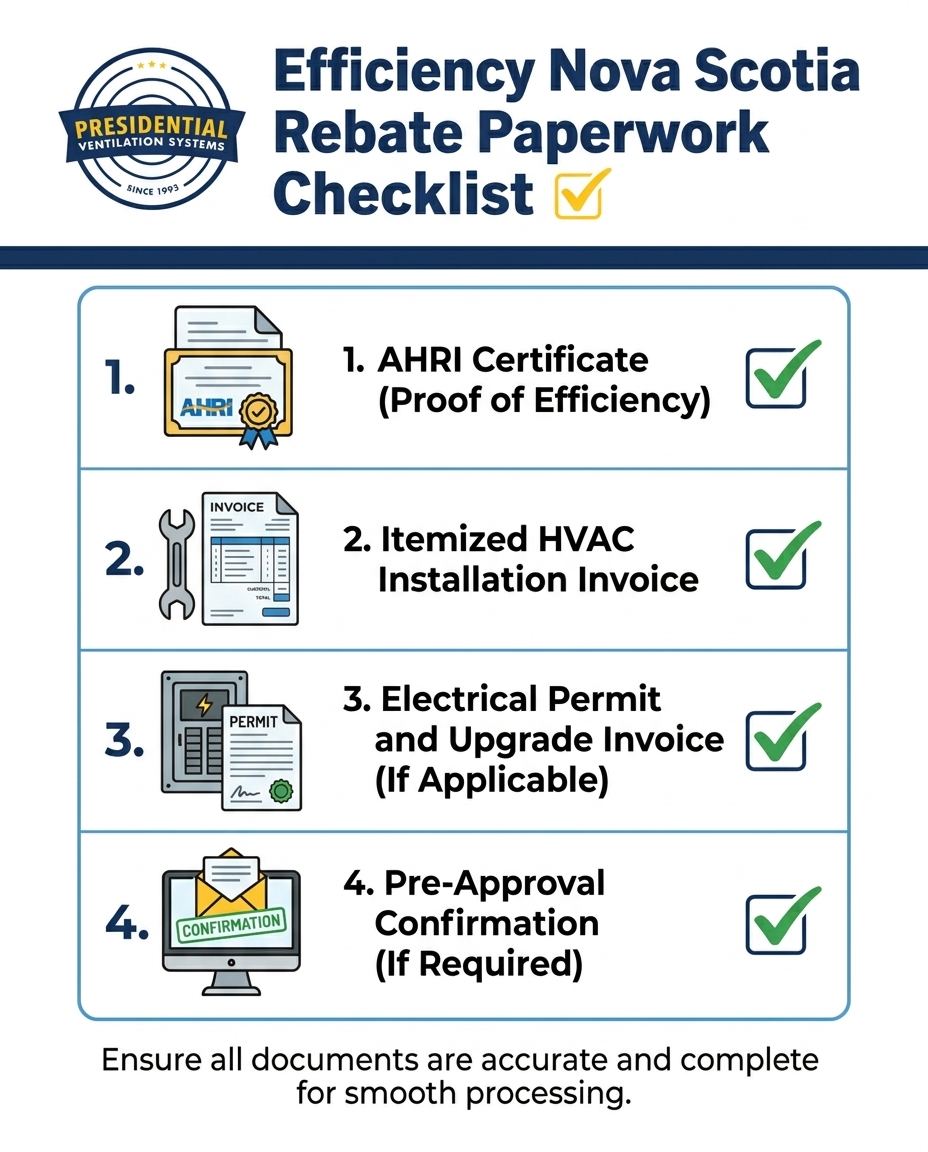
The essential documents you must gather include:
• Itemized HVAC Invoices: A generic invoice that simply says "heat pump installation" will be rejected. Your invoice must clearly break down the cost of labor versus the cost of the equipment. It must also list the exact make, model numbers, and serial numbers for both the indoor and outdoor units.
• Pre-Approval Confirmations: Certain provincial and federal programs require your project to be approved before any work begins. If you install the system first and ask for permission later, you will likely be disqualified from receiving the grant.
• Proof of Electrical Permits: If your home required an electrical panel upgrade to support the new heating system, the rebate program will want to see the documentation proving that this work was completed legally and safely by certified professionals.
• Contractor Certifications: Efficiency Nova Scotia requires that the work be completed by an approved, professional contractor. DIY installations completely void your eligibility for these programs.
The most confusing document for many homeowners is the AHRI (Air-Conditioning, Heating, and Refrigeration Institute) certificate. This single piece of paper is the ultimate proof to Efficiency Nova Scotia that your system meets their energy-saving thresholds.
The AHRI certificate defines the verified performance ratings of your specific unit combination. It proves the SEER (Seasonal Energy Efficiency Ratio) and HSPF (Heating Seasonal Performance Factor) ratings. Because we are a Daikin Comfort Pro, our team automatically matches your indoor and outdoor units to ensure they generate a valid AHRI certificate that meets the provincial criteria. If a contractor installs a mismatched system, an AHRI certificate cannot be generated, and your rebate will be denied.
Whether you are installing a ductless unit or exploring ducted heat pump systems, having these technical documents perfectly organized is non-negotiable for a successful claim.
The complication: Transitioning from an older oil furnace to a modern, high-efficiency heating system often requires more than just swapping out equipment. In many older homes, the existing electrical panel simply cannot handle the load of a new system. This means an electrical panel upgrade (often from a 100-amp to a 200-amp service) is required to meet current building codes.
The cause of the friction: When homeowners hire separate, independent contractors for the HVAC installation and the electrical work, the paperwork quickly becomes a tangled mess. You end up with separate invoices, different permit numbers, and misaligned project dates. If the electrical invoice does not clearly reference the heating project, or if the electrical contractor delays sending their final sign-off, your entire HVAC rebate application stalls. Efficiency Nova Scotia needs to see a clear, unified paper trail that proves the entire project was completed safely and up to code.
The multi-trade solution: Having one unified team handle both aspects simplifies the documentation trail dramatically. Last summer, a local homeowner reached out with concerns about their existing heat pump system's efficiency. Our team inspected the system, explained the pros and cons of their setup, and offered helpful advice and alternatives for a replacement. Because they needed a significant electrical upgrade to support the new system, we handled both the installation and the electrical work. Since we have in-house electrical and HVAC capabilities, we generated a single, cohesive documentation package. The homeowner never had to play middleman between two different companies.
Managing this coordination perfectly is a major part of the Efficiency Nova Scotia rebate process. When the HVAC technicians and electricians work for the same company, the invoices match, the permits align, and the rebate application moves forward without raising red flags for the reviewers.
Paperwork bottlenecks do more than just delay your check—they can actually push back your installation dates. When pre-approval paperwork gets stuck in the system due to errors or missing information, reputable contractors cannot begin the physical installation. If you proceed without that approval, you forfeit the grant.
This creates a very real risk for your home's comfort. With Nova Scotia's damp shoulder seasons and notoriously cold winters, entering the harsh weather months without a reliable heating system because of an administrative hold-up is a stressful position to be in. If an application is rejected in late October because an invoice lacked a serial number, the back-and-forth correction process could mean your system isn't installed until December.
Common causes of administrative delays include:
• Mismatched addresses: The address on the contractor invoice doesn't perfectly match the address on the homeowner's property tax assessment.
• Missing serial numbers: The invoice lists the model number but forgets the unique serial number of the outdoor unit.
• Unapproved contractors: The homeowner used a contractor who is not actively registered and approved by the provincial program.
• Expired pre-approvals: The homeowner received pre-approval but waited too long to schedule the installation, allowing the approval window to lapse.
In our 30+ years serving Nova Scotia, we have learned that submitting accurate forms the very first time is the only way to avoid the frustrating back-and-forth correction cycle. Utilizing an approved, highly experienced local contractor is often a strict requirement for timely processing, ensuring your home stays warm when the temperature drops.
Upgrading your home's efficiency shouldn't require a degree in administration. The most significant advantage of working with a large, established company is having an administrative project manager who relieves you of the paperwork burden entirely. Our in-house, 70-employee multi-trade team ensures seamless, error-free submissions to Efficiency Nova Scotia without you ever having to chase down a single form.
Here is how our "done-for-you" process works:
1. Initial Assessment & Program Matching: During your consultation, we assess your home and identify exactly which provincial programs you qualify for based on current guidelines. We ensure the recommended equipment meets the required efficiency ratings.
2. Pre-Approval Management: If your specific grant requires pre-approval, our administrative team submits the initial load calculations, AHRI certificates, and project scopes on your behalf before a single tool is lifted.
3. Unified Multi-Trade Execution: Because we handle both the HVAC and electrical work under one roof, there is no disconnect. The permits are pulled together, the work is executed concurrently, and the final invoices are generated as a cohesive package.
4. Comprehensive Documentation Gathering: After the installation, our office team compiles the itemized invoices, the electrical permit sign-offs, and the final AHRI certificates into one perfect submission packet.
5. Concurrent Submission: We submit the warranty registrations to the manufacturer and the rebate applications to Efficiency Nova Scotia at the same time. After a recent summer installation, a customer needed help with the rebate process and warranty submission. Our team took care of the warranty and walked the customer through the entire rebate process, ensuring everything was filed correctly and promptly.
This streamlined approach to paperwork also facilitates smoother applications for related financial options. If you are exploring heat pump financing options, having clean, professional documentation makes securing those terms much easier.
You need a highly detailed, itemized contractor invoice, a valid AHRI certificate, and proof of electrical permits if panel upgrades were performed. The invoice must clearly separate labor and equipment costs while listing all model and serial numbers. Without these specific details, Efficiency Nova Scotia will reject the application. Always confirm current required documents with your contractor, as program rules change.
The easiest way to coordinate this paperwork is to avoid managing separate contractors entirely by hiring a multi-trade company. If you do use separate companies, you must ensure both the HVAC installation invoice and the electrical upgrade invoice clearly reference the exact same project and property. Any discrepancy in dates or project descriptions can trigger a manual review and delay your grant.
Not all contractors offer this service, but established, full-service contractors typically manage the entire submission process on your behalf. In our 30+ years serving Nova Scotia, we have found that handling the submission for the homeowner ensures technical documents like AHRI certificates are perfectly accurate. This "done-for-you" approach prevents frustrating rejections.
Processing times vary heavily depending on the season and the current application volume at the provincial office. However, submitting an accurate, error-free application initially is the best way to prevent lengthy delays. When paperwork is missing serial numbers or electrical permits, the back-and-forth correction process can add months to your wait time.
No, Efficiency Nova Scotia strictly requires proof of installation by an approved, professional contractor. Attempting a DIY installation will void your equipment warranties and completely disqualify you from receiving any provincial grants. Licensed professionals must handle both the refrigerant lines and the electrical connections to meet code and program requirements.
Upgrading your home's heating efficiency is a major investment, but it shouldn't come with the headache of managing technical provincial applications. The paperwork required by Efficiency Nova Scotia is complex for a reason—it protects the integrity of the program—but that doesn't mean you have to navigate it alone.
By choosing a comprehensive contractor with in-house electrical and HVAC capabilities, you ensure that every invoice, AHRI certificate, and electrical permit is perfectly aligned. We handle the documentation and grant submissions for you, turning a stressful administrative chore into a smooth, hands-off experience. Please remember to confirm current rebate programs directly with our team, as criteria and funding can change frequently.
If you are ready for a professional assessment and a seamless ductless heat pump installation, reach out to our team today to request a free estimate and let us handle the paperwork for you.