


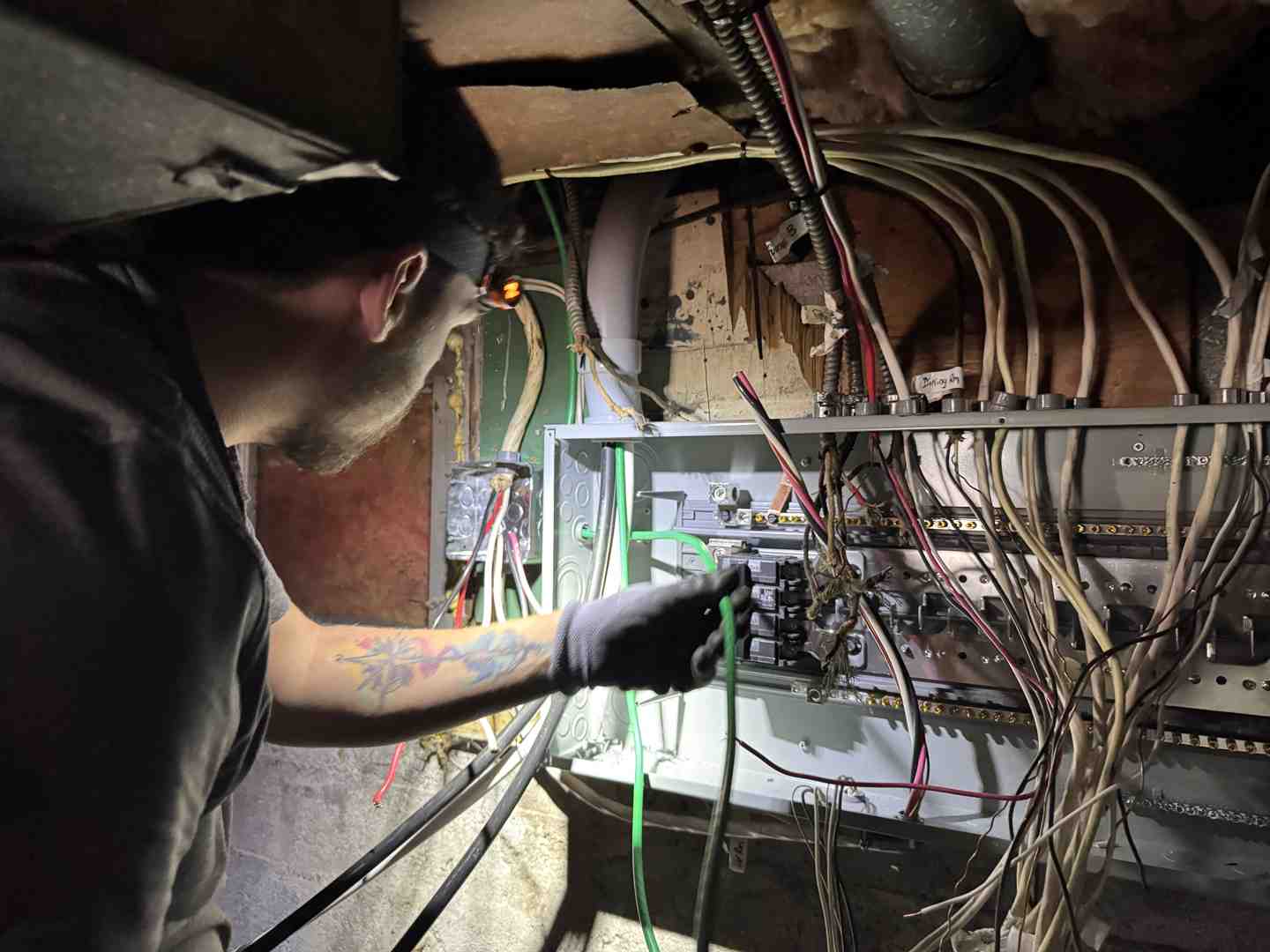
Electrical beaver bank ns services are essential for homeowners and businesses dealing with aging wiring, outdated panels, and the increased power demands of modern living. Beaver Bank properties—many built decades ago—often struggle with electrical systems that weren't designed for today's appliances, heating systems, and technology. Whether you're experiencing flickering lights, frequent breaker trips, or planning a major renovation, professional electrical work ensures your property meets current safety codes while delivering reliable, efficient power.
Quick Answer: If you're looking for electrical services in Beaver Bank, NS:
• Residential services include panel upgrades, rewiring, lighting installation, and troubleshooting
• Commercial services cover system installations, maintenance, and code compliance
• Safety upgrades feature GFCI/AFCI protection, surge protection, and grounding improvements
• Licensed electricians handle permits, inspections, and compliance with Nova Scotia regulations
• Local expertise ensures work meets provincial codes and community standards
For broader electrical safety information, see our Electrical Safety Services Canada guide, or contact us for your electrical service needs in Beaver Bank, NS.
Outdated electrical systems pose serious risks. Many older homes in Beaver Bank operate with panels that can't handle modern loads, wiring that doesn't meet current safety standards, or circuits lacking essential protections. Presidential Ventilation Systems Ltd. provides comprehensive electrical solutions for both residential and commercial customers, from simple repairs to complete system upgrades. Working with certified, local electricians means transparent pricing, honest assessments, and work that's backed by warranty and code compliance.
Just like a car needs regular tune-ups, your home or business electrical system in Beaver Bank requires attention, especially as it ages and demands grow. We often find that properties in our service areas, including Beaver Bank, face a range of electrical challenges. These can stem from general wear and tear, outdated infrastructure, or simply the increased power consumption of modern devices.
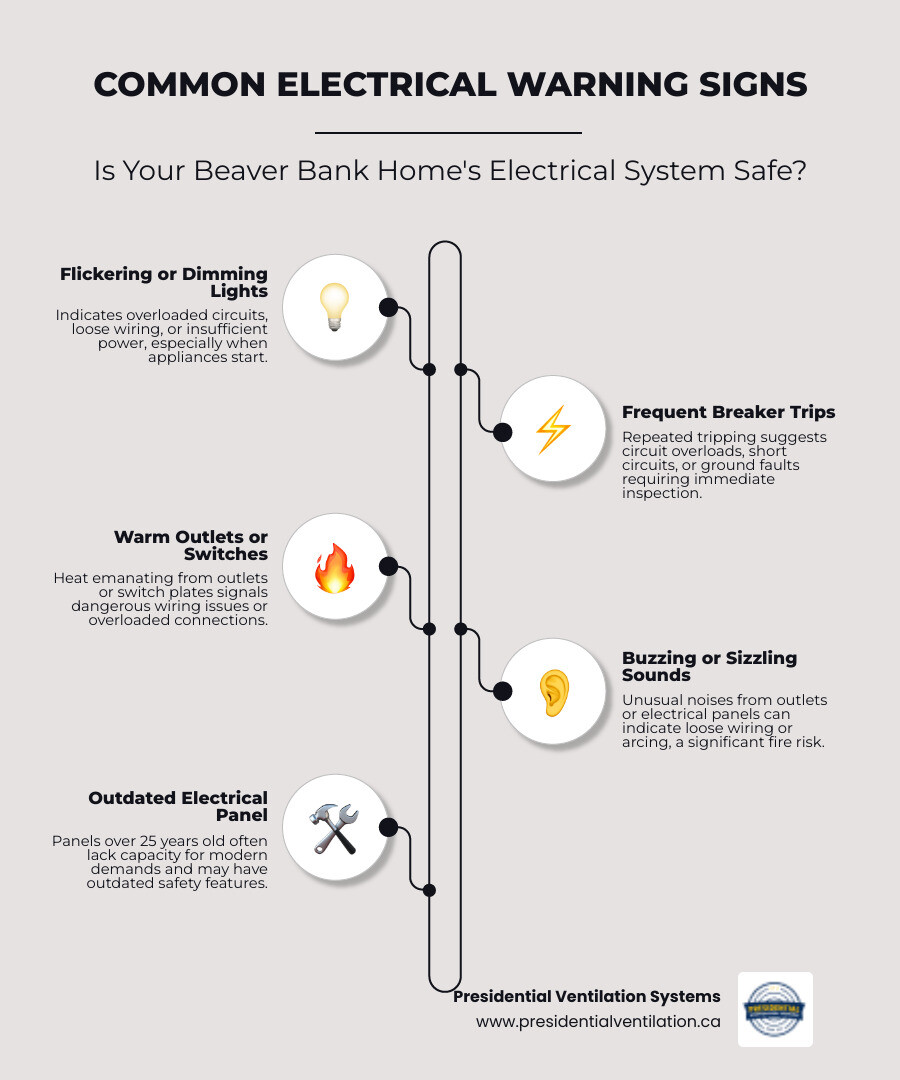
What are some of the most common electrical issues we encounter? One of the most telling signs of electrical distress is flickering lights. This isn't just annoying; it can indicate loose wiring, circuit overload, or issues with your main electrical service. Another frequent complaint is frequent breaker trips. While breakers are designed to trip to prevent overloading, if it happens regularly, it's a clear signal that your system is struggling to meet demand.
We also pay close attention to warm outlets or switch plates. Any heat emanating from these points is a serious red flag for potential overheating, which can lead to fire hazards. Similarly, buzzing sounds coming from outlets, switches, or your electrical panel are not normal and suggest loose connections or faulty components. Many older homes in Beaver Bank still rely on outdated panels that simply can't handle the electrical load of today's appliances and electronics. These panels might be more than 25 years old and lack modern safety features.
Beyond these common indicators, we often find issues with outdated wiring types, such as aluminum wiring, which was used in some homes built between the mid-1960s and mid-1970s. This type of wiring can pose unique fire hazards if not properly remediated. For more information on addressing this, you can read our guide on Aluminum Wiring Remediation.
Here are the Top 5 Signs Your Electrical System Needs a Professional Inspection:
• Flickering or Dimming Lights: Especially when appliances turn on, this indicates your system is struggling with the load.
• Frequent Breaker Trips: If your circuit breakers are constantly tripping, it means circuits are overloaded or there's a fault.
• Warm Outlets or Switches: Any warmth or discoloration around electrical outlets or light switches is a critical sign of overheating.
• Buzzing or Sizzling Sounds: Strange noises coming from your electrical panel or outlets suggest loose wiring or damaged components.
• Outdated Electrical Panel: If your panel is over 25 years old, or uses fuses instead of breakers, it likely needs an upgrade to safely handle modern electrical demands.
Addressing these issues promptly not only ensures the safety of your property and loved ones but also contributes to the overall efficiency and longevity of your electrical system.
When it comes to maintaining a safe and efficient property in Beaver Bank, comprehensive electrical services are non-negotiable. Whether you own a cozy family home or manage a busy local business, your electrical needs are unique and require expert attention. We are proud to offer a full spectrum of electrical services designed to meet the diverse demands of both residential and commercial customers in Beaver Bank, NS.
Our team handles everything from routine maintenance and minor repairs to complex system installations and significant upgrades. For our residential clients, this means ensuring your home's electrical system is safe, reliable, and up-to-date with current codes. For commercial enterprises, we focus on minimizing downtime, enhancing operational efficiency, and ensuring compliance with all industry regulations.
Key services available for residential and commercial customers include:
• Panel Upgrades & Service Changes: Modernizing your electrical panel to handle increased power demands.
• Full & Partial Rewiring: Replacing outdated or hazardous wiring to improve safety and performance.
• Lighting Installation & Retrofitting: From energy-efficient LED upgrades to landscape and security lighting.
• Troubleshooting & Repairs: Diagnosing and fixing electrical faults, from flickering lights to non-functional outlets.
• Surge Protection: Installing whole-home or facility-level surge protectors to safeguard electronics.
• Generator Installation: Ensuring you have backup power when you need it most.
• Electrical Maintenance: Proactive check-ups to prevent future problems and extend system life.
• Grounding & Bonding: Critical safety measures to prevent electrical shocks.
• GFCI/AFCI Protection: Installing specialized outlets and breakers for improved safety against shocks and fires.
• Electric Vehicle Charger Installation: Setting up convenient charging solutions for your EV.
Our goal is to provide reliable and efficient electrical solutions that contribute to the safety and comfort of your property.
The electrical panel is the heart of your property's electrical system. In many older properties across Beaver Bank, these panels are simply not equipped to handle the power demands of today's homes and businesses. Think about all the devices we use daily—multiple computers, large screen TVs, advanced kitchen appliances, and perhaps even electric vehicle chargers. An outdated panel can lead to frequent breaker trips, flickering lights, and even potential fire hazards.
Upgrading your electrical panel to a modern breaker panel is one of the most impactful improvements you can make. It significantly increases your system's capacity, allowing for more efficient and stable power distribution throughout your property. These modern panels also come with improved safety features, providing better protection against overloads and short circuits. The benefits are clear: improved safety, greater reliability, and the ability to seamlessly integrate new technologies and appliances.
If you're noticing signs like frequent breaker trips, a panel that feels warm to the touch, or if your panel is over 25 years old, it's time to consider an upgrade. We provide thorough assessments and professional Panel Upgrade services. Furthermore, an Electrical Service Upgrade can improve the overall electrical service entering your property, ensuring your system can handle the demands of modern living.
The wiring within your walls is the circulatory system of your electrical network. In older properties, especially those in Beaver Bank, you might find outdated wiring systems that simply don't meet current safety standards. Common culprits include knob and tube wiring, often found in homes built before the 1950s, and aluminum wiring, prevalent in some homes from the mid-1960s to mid-1970s. Both types can pose significant safety risks, including fire hazards, if not properly inspected and remediated.
Upgrading your wiring through professional rewiring services is a crucial step in ensuring the safety and reliability of your electrical system. This process involves replacing old, deteriorated, or hazardous wiring with new, code-compliant materials. The benefits extend beyond just safety; new wiring can improve electrical flow, reduce the risk of power fluctuations, and ensure your system can handle modern electrical loads without strain. We offer comprehensive rewiring solutions, from partial upgrades to full home rewiring, depending on the condition and age of your existing system.
Staying up-to-date with electrical codes is paramount. When we undertake a rewiring project, we ensure that all work adheres to the latest Canadian Electrical Code and provincial regulations, including coordinating with local inspectors for permits. For a deeper dive into modern wiring practices, you might find our Electrical Wiring Guide 2025 insightful. We also provide extensive electrical services beyond Beaver Bank, including in areas like Electrical Services Bedford NS.
Lighting plays a pivotal role in the ambiance, functionality, and security of any property. Gone are the days when lighting was just about illumination; today, it's about energy efficiency, smart control, and aesthetic appeal. In Beaver Bank, we help residential and commercial clients transform their spaces with modern lighting solutions.
One of the most significant advancements in lighting is the rise of energy-efficient options, particularly LED technology. Upgrading to LED lighting through retrofitting can dramatically reduce your energy consumption and lower your utility bills. LEDs also have a much longer lifespan, meaning less frequent bulb replacements and maintenance. Beyond efficiency, we install a wide range of lighting types custom to your specific needs:
• Interior Ambiance: From recessed lighting to neat fixtures that improve your home's decor.
• Task Lighting: Focused illumination for kitchens, home offices, and workshops.
• Landscape Lighting: Highlighting architectural features, pathways, and garden elements to boost curb appeal and usability.
• Security Lighting: Motion-activated lights and strategically placed fixtures to deter intruders and improve safety around your property.
Whether you're looking to brighten up your living room, illuminate your commercial storefront, or add a layer of security to your backyard, our team can handle all aspects of lighting and fixture installation. We also provide Electrical Hookup Services for new installations, ensuring everything is connected safely and correctly.
Ensuring your electrical systems are safe and up to code is paramount for any homeowner or business in Beaver Bank. Safety isn't just about avoiding hazards; it's also about peace of mind. Moreover, an efficient electrical system can lead to significant energy savings, benefiting both your wallet and the environment.
In Canada, all electrical work must comply with the Canadian Electrical Code, and in Nova Scotia, there are additional provincial regulations that govern electrical installations and repairs. We ensure all our work meets these stringent standards. Regular safety inspections are crucial for identifying potential issues before they become serious problems. These inspections can uncover outdated wiring, overloaded circuits, improper grounding, or a lack of essential safety devices.
Energy efficiency also ties directly into safety. An inefficient system might be working harder than it needs to, generating excess heat and putting strain on components, which can lead to premature failure or even hazards. By optimizing your electrical setup, we help you reduce energy waste and contribute to a safer, more sustainable property.
Electrical upgrades are not just about convenience; they are vital investments in the safety and efficiency of your property. Many older homes in Beaver Bank have electrical systems that simply aren't designed to handle modern power demands, leading to a host of potential problems.
One of the most critical safety benefits of upgrades is preventing electrical fires. Outdated wiring, overloaded circuits, and faulty panels are leading causes of residential fires. Modernizing these components, particularly through panel and wiring upgrades, drastically reduces this risk. We also install specialized safety devices like Ground Fault Circuit Interrupters (GFCIs) and Arc Fault Circuit Interrupters (AFCIs). GFCIs are crucial in areas near water, like bathrooms and kitchens, protecting against severe electric shock. AFCIs are designed to detect dangerous electrical arcs that can cause fires, offering protection throughout your home.
Upgrades also play a significant role in protecting your valuable electronics. Voltage spikes, often caused by lightning or utility grid fluctuations, can severely damage sensitive equipment. Installing whole-home surge protection diverts these excess voltages away from your devices, safeguarding everything from your computer to your smart appliances.
From an energy efficiency standpoint, upgrading your electrical system can lead to substantial savings. Modern breaker panels distribute power more effectively, reducing energy waste. Replacing old, inefficient lighting with LED retrofits, as mentioned earlier, is another straightforward way to cut down on electricity consumption. By ensuring your system is running optimally, we help you reduce energy waste, which translates directly into lower utility bills and a smaller carbon footprint. For a comprehensive overview of electrical safety, refer to our Electrical Safety Services Canada page.
They say an ounce of prevention is worth a pound of cure, and this certainly holds true for your electrical system. Proactive electrical maintenance is the key to preventing future problems, extending the lifespan of your system, and ensuring ongoing safety. Just like you wouldn't skip oil changes for your car, you shouldn't neglect the health of your property's electrical infrastructure.
Regular maintenance allows us to identify and address minor issues before they escalate into major, costly, or dangerous failures. Our maintenance plans for your electrical beaver bank ns property typically include:
• Yearly System Checkups: A thorough inspection of your entire electrical system, from the service entrance to outlets and switches.
• Outlet and Switch Testing: Ensuring all components are functioning correctly and safely.
• Safety Evaluations: Checking for proper grounding, bonding, and the functionality of GFCI and AFCI devices.
• Circuit Labeling and Testing: Verifying that circuits are correctly identified and performing as expected.
By performing these regular checks, we can catch loose connections, worn-out wiring, and early signs of component failure. This not only prevents inconvenient power outages but also reduces the risk of electrical fires and shocks. The result? A more reliable electrical system, improved safety for everyone on the property, and the peace of mind that comes from knowing your electrical infrastructure is in top condition. This proactive approach helps you avoid unexpected issues and keeps your power flowing smoothly. We offer similar dedicated services across the region, including Electrical Services Dartmouth NS.
When it comes to something as critical as your electrical system, choosing the right professional is paramount. You wouldn't trust your health to an unqualified doctor, so why would you trust your home or business's electrical safety to just anyone? Vetting professionals ensures you receive quality work that's safe, reliable, and up to code. Given that there are 334 electricians and electrical contractors listed near Beaver Bank, NS, making an informed choice is essential.
Selecting an electrician for your electrical beaver bank ns project requires careful consideration. Here are the key factors we believe you should always look for:
• Certified and Licensed: This is non-negotiable. Ensure any electrician you consider holds valid provincial certification and licensing. This confirms they have met the necessary training and competency standards.
• Insured: Accidents can happen. A fully insured electrician protects both themselves and your property in case of unforeseen incidents or damage during the work.
• Transparent Communication: Look for an electrician who communicates clearly about the scope of work, timelines, and provides straightforward explanations of your options. You should feel comfortable asking questions and understanding the answers.
• Local Reputation: Check reviews and ask for references. A strong local reputation is a good indicator of reliability and quality workmanship.
• Experience with Nova Scotia Homes and Businesses: Electrical systems can vary by region and age of property. An electrician familiar with the specific challenges and building codes in Beaver Bank and Nova Scotia will be better equipped to handle your project efficiently and effectively.
Hiring a local, certified electrician for your Beaver Bank property offers distinct advantages that go beyond just technical expertise.
Firstly, a knowledge of local codes and regulations is invaluable. Nova Scotia has specific electrical codes and permitting requirements that local professionals are intimately familiar with. This ensures your project will be completed correctly the first time, avoiding costly delays or rework due to non-compliance. Our team understands the nuances of local requirements, ensuring all work is up to standard.
Secondly, there's a strong sense of community accountability. Local businesses thrive on their reputation within the community. This often translates into a higher commitment to quality workmanship and customer satisfaction, as their livelihoods depend on positive word-of-mouth and repeat business from their neighbours.
Furthermore, choosing a local electrician means supporting the local economy. Your investment directly benefits the community you live and work in, fostering local growth and employment. We are part of the community and are committed to serving our neighbours with integrity and excellence. For similar trusted services in nearby communities, you can explore our offerings in Electrical Services Lower Sackville NS.
We understand that electrical work can sometimes feel complex, and you likely have questions. Here are some of the most common inquiries we receive from homeowners in Beaver Bank and beyond, along with our expert insights.
Your electrical panel, the central hub for your home's power, provides some clear indicators when it's nearing the end of its safe and efficient life. The most common signs include frequent breaker trips, especially if they occur when you're using multiple appliances or high-demand devices. You might also hear buzzing sounds coming from the panel itself, which suggests loose connections or failing components. Another critical warning sign is if the panel feels warm to the touch. This indicates overheating and a potential fire hazard. Finally, if your panel is over 25 years old, it's likely outdated and may not have the capacity or safety features required for modern electrical loads. If you notice any of these signs, we recommend a professional assessment.
Yes, for most significant electrical changes, a permit is absolutely required in Nova Scotia. This includes projects such as panel upgrades, full or partial rewiring, and the installation of new circuits. These permits ensure that the work is inspected by local authorities and complies with the Canadian Electrical Code and provincial regulations, safeguarding your property and everyone in it. The good news is, when you work with us, we take care of all permit applications and coordinate with local inspectors as part of our service. This simplifies the process for you and ensures everything is done correctly and legally.
While both GFCI and AFCI outlets are crucial for electrical safety, they protect against different types of hazards:
• GFCI (Ground Fault Circuit Interrupter) protection is primarily designed to prevent electric shock. It detects imbalances in the electrical current, typically caused when electricity finds an unintended path to the ground—such as through a person. If such a ground fault occurs, the GFCI quickly trips, cutting off power to prevent serious injury or electrocution. You'll typically find GFCIs installed in areas where water is present, like bathrooms, kitchens, laundry rooms, and outdoor outlets.
• AFCI (Arc Fault Circuit Interrupter) protection is designed to prevent electrical fires. It detects dangerous electrical arcs, which can occur when there are damaged or deteriorating wires, loose connections, or faulty appliances. These arcs can generate intense heat and ignite surrounding materials. AFCIs are designed to trip when they detect these hazardous arc faults, preventing potential fires. AFCIs are typically required in bedrooms and other living areas to offer comprehensive fire protection.
Both types of protection are vital components of a safe and modern electrical system, often working in tandem to keep your property secure.
In Beaver Bank, NS, ensuring your electrical system is safe, efficient, and up-to-date is not just a luxury—it's a necessity. From managing the demands of modern technology to addressing the unique challenges of older properties, proactive electrical care is essential for the longevity of your home or business. We understand that your comfort and security depend on a reliable electrical infrastructure, and that's precisely what we're dedicated to providing.
At Presidential Ventilation Systems Ltd., we prioritize your safety and strive to deliver solutions that not only fix immediate issues but also contribute to the long-term health of your electrical system. With over 30 years of experience, we bring a wealth of technical skill, honest advice, and a customer-first approach to every project. We believe in transparent communication, ensuring you understand the work being done and the options available to you.
Choosing us means partnering with a team that values quality workmanship, adheres to the highest safety standards, and is committed to serving the Beaver Bank community. Whether you require a panel upgrade, full rewiring, new lighting installations, or simply a thorough electrical inspection, we are here to help.
Don't let outdated wiring or an overloaded panel compromise your safety or convenience. Experience the difference of working with local experts who put your needs first. Find more about our commitment to excellence on our Why Presidential page. For any electrical service needs in Beaver Bank, NS, we invite you to reach out to us today. Let us be your trusted partner in maintaining a safe, efficient, and comfortable environment for years to come.
Contact us for your electrical service needs in Beaver Bank, NS

Electrical beaver bank ns services are essential for homeowners and businesses dealing with aging wiring, outdated panels, and the increased power demands of modern living. Beaver Bank properties—many built decades ago—often struggle with electrical systems that weren't designed for today's appliances, heating systems, and technology. Whether you're experiencing flickering lights, frequent breaker trips, or planning a major renovation, professional electrical work ensures your property meets current safety codes while delivering reliable, efficient power.
Quick Answer: If you're looking for electrical services in Beaver Bank, NS:
• Residential services include panel upgrades, rewiring, lighting installation, and troubleshooting
• Commercial services cover system installations, maintenance, and code compliance
• Safety upgrades feature GFCI/AFCI protection, surge protection, and grounding improvements
• Licensed electricians handle permits, inspections, and compliance with Nova Scotia regulations
• Local expertise ensures work meets provincial codes and community standards
For broader electrical safety information, see our Electrical Safety Services Canada guide, or contact us for your electrical service needs in Beaver Bank, NS.
Outdated electrical systems pose serious risks. Many older homes in Beaver Bank operate with panels that can't handle modern loads, wiring that doesn't meet current safety standards, or circuits lacking essential protections. Presidential Ventilation Systems Ltd. provides comprehensive electrical solutions for both residential and commercial customers, from simple repairs to complete system upgrades. Working with certified, local electricians means transparent pricing, honest assessments, and work that's backed by warranty and code compliance.
Just like a car needs regular tune-ups, your home or business electrical system in Beaver Bank requires attention, especially as it ages and demands grow. We often find that properties in our service areas, including Beaver Bank, face a range of electrical challenges. These can stem from general wear and tear, outdated infrastructure, or simply the increased power consumption of modern devices.
What are some of the most common electrical issues we encounter? One of the most telling signs of electrical distress is flickering lights. This isn't just annoying; it can indicate loose wiring, circuit overload, or issues with your main electrical service. Another frequent complaint is frequent breaker trips. While breakers are designed to trip to prevent overloading, if it happens regularly, it's a clear signal that your system is struggling to meet demand.
We also pay close attention to warm outlets or switch plates. Any heat emanating from these points is a serious red flag for potential overheating, which can lead to fire hazards. Similarly, buzzing sounds coming from outlets, switches, or your electrical panel are not normal and suggest loose connections or faulty components. Many older homes in Beaver Bank still rely on outdated panels that simply can't handle the electrical load of today's appliances and electronics. These panels might be more than 25 years old and lack modern safety features.
Beyond these common indicators, we often find issues with outdated wiring types, such as aluminum wiring, which was used in some homes built between the mid-1960s and mid-1970s. This type of wiring can pose unique fire hazards if not properly remediated. For more information on addressing this, you can read our guide on Aluminum Wiring Remediation.
Here are the Top 5 Signs Your Electrical System Needs a Professional Inspection:
• Flickering or Dimming Lights: Especially when appliances turn on, this indicates your system is struggling with the load.
• Frequent Breaker Trips: If your circuit breakers are constantly tripping, it means circuits are overloaded or there's a fault.
• Warm Outlets or Switches: Any warmth or discoloration around electrical outlets or light switches is a critical sign of overheating.
• Buzzing or Sizzling Sounds: Strange noises coming from your electrical panel or outlets suggest loose wiring or damaged components.
• Outdated Electrical Panel: If your panel is over 25 years old, or uses fuses instead of breakers, it likely needs an upgrade to safely handle modern electrical demands.
Addressing these issues promptly not only ensures the safety of your property and loved ones but also contributes to the overall efficiency and longevity of your electrical system.
When it comes to maintaining a safe and efficient property in Beaver Bank, comprehensive electrical services are non-negotiable. Whether you own a cozy family home or manage a busy local business, your electrical needs are unique and require expert attention. We are proud to offer a full spectrum of electrical services designed to meet the diverse demands of both residential and commercial customers in Beaver Bank, NS.
Our team handles everything from routine maintenance and minor repairs to complex system installations and significant upgrades. For our residential clients, this means ensuring your home's electrical system is safe, reliable, and up-to-date with current codes. For commercial enterprises, we focus on minimizing downtime, enhancing operational efficiency, and ensuring compliance with all industry regulations.
Key services available for residential and commercial customers include:
• Panel Upgrades & Service Changes: Modernizing your electrical panel to handle increased power demands.
• Full & Partial Rewiring: Replacing outdated or hazardous wiring to improve safety and performance.
• Lighting Installation & Retrofitting: From energy-efficient LED upgrades to landscape and security lighting.
• Troubleshooting & Repairs: Diagnosing and fixing electrical faults, from flickering lights to non-functional outlets.
• Surge Protection: Installing whole-home or facility-level surge protectors to safeguard electronics.
• Generator Installation: Ensuring you have backup power when you need it most.
• Electrical Maintenance: Proactive check-ups to prevent future problems and extend system life.
• Grounding & Bonding: Critical safety measures to prevent electrical shocks.
• GFCI/AFCI Protection: Installing specialized outlets and breakers for improved safety against shocks and fires.
• Electric Vehicle Charger Installation: Setting up convenient charging solutions for your EV.
Our goal is to provide reliable and efficient electrical solutions that contribute to the safety and comfort of your property.
The electrical panel is the heart of your property's electrical system. In many older properties across Beaver Bank, these panels are simply not equipped to handle the power demands of today's homes and businesses. Think about all the devices we use daily—multiple computers, large screen TVs, advanced kitchen appliances, and perhaps even electric vehicle chargers. An outdated panel can lead to frequent breaker trips, flickering lights, and even potential fire hazards.
Upgrading your electrical panel to a modern breaker panel is one of the most impactful improvements you can make. It significantly increases your system's capacity, allowing for more efficient and stable power distribution throughout your property. These modern panels also come with improved safety features, providing better protection against overloads and short circuits. The benefits are clear: improved safety, greater reliability, and the ability to seamlessly integrate new technologies and appliances.
If you're noticing signs like frequent breaker trips, a panel that feels warm to the touch, or if your panel is over 25 years old, it's time to consider an upgrade. We provide thorough assessments and professional Panel Upgrade services. Furthermore, an Electrical Service Upgrade can improve the overall electrical service entering your property, ensuring your system can handle the demands of modern living.
The wiring within your walls is the circulatory system of your electrical network. In older properties, especially those in Beaver Bank, you might find outdated wiring systems that simply don't meet current safety standards. Common culprits include knob and tube wiring, often found in homes built before the 1950s, and aluminum wiring, prevalent in some homes from the mid-1960s to mid-1970s. Both types can pose significant safety risks, including fire hazards, if not properly inspected and remediated.
Upgrading your wiring through professional rewiring services is a crucial step in ensuring the safety and reliability of your electrical system. This process involves replacing old, deteriorated, or hazardous wiring with new, code-compliant materials. The benefits extend beyond just safety; new wiring can improve electrical flow, reduce the risk of power fluctuations, and ensure your system can handle modern electrical loads without strain. We offer comprehensive rewiring solutions, from partial upgrades to full home rewiring, depending on the condition and age of your existing system.
Staying up-to-date with electrical codes is paramount. When we undertake a rewiring project, we ensure that all work adheres to the latest Canadian Electrical Code and provincial regulations, including coordinating with local inspectors for permits. For a deeper dive into modern wiring practices, you might find our Electrical Wiring Guide 2025 insightful. We also provide extensive electrical services beyond Beaver Bank, including in areas like Electrical Services Bedford NS.
Lighting plays a pivotal role in the ambiance, functionality, and security of any property. Gone are the days when lighting was just about illumination; today, it's about energy efficiency, smart control, and aesthetic appeal. In Beaver Bank, we help residential and commercial clients transform their spaces with modern lighting solutions.
One of the most significant advancements in lighting is the rise of energy-efficient options, particularly LED technology. Upgrading to LED lighting through retrofitting can dramatically reduce your energy consumption and lower your utility bills. LEDs also have a much longer lifespan, meaning less frequent bulb replacements and maintenance. Beyond efficiency, we install a wide range of lighting types custom to your specific needs:
• Interior Ambiance: From recessed lighting to neat fixtures that improve your home's decor.
• Task Lighting: Focused illumination for kitchens, home offices, and workshops.
• Landscape Lighting: Highlighting architectural features, pathways, and garden elements to boost curb appeal and usability.
• Security Lighting: Motion-activated lights and strategically placed fixtures to deter intruders and improve safety around your property.
Whether you're looking to brighten up your living room, illuminate your commercial storefront, or add a layer of security to your backyard, our team can handle all aspects of lighting and fixture installation. We also provide Electrical Hookup Services for new installations, ensuring everything is connected safely and correctly.
Ensuring your electrical systems are safe and up to code is paramount for any homeowner or business in Beaver Bank. Safety isn't just about avoiding hazards; it's also about peace of mind. Moreover, an efficient electrical system can lead to significant energy savings, benefiting both your wallet and the environment.
In Canada, all electrical work must comply with the Canadian Electrical Code, and in Nova Scotia, there are additional provincial regulations that govern electrical installations and repairs. We ensure all our work meets these stringent standards. Regular safety inspections are crucial for identifying potential issues before they become serious problems. These inspections can uncover outdated wiring, overloaded circuits, improper grounding, or a lack of essential safety devices.
Energy efficiency also ties directly into safety. An inefficient system might be working harder than it needs to, generating excess heat and putting strain on components, which can lead to premature failure or even hazards. By optimizing your electrical setup, we help you reduce energy waste and contribute to a safer, more sustainable property.
Electrical upgrades are not just about convenience; they are vital investments in the safety and efficiency of your property. Many older homes in Beaver Bank have electrical systems that simply aren't designed to handle modern power demands, leading to a host of potential problems.
One of the most critical safety benefits of upgrades is preventing electrical fires. Outdated wiring, overloaded circuits, and faulty panels are leading causes of residential fires. Modernizing these components, particularly through panel and wiring upgrades, drastically reduces this risk. We also install specialized safety devices like Ground Fault Circuit Interrupters (GFCIs) and Arc Fault Circuit Interrupters (AFCIs). GFCIs are crucial in areas near water, like bathrooms and kitchens, protecting against severe electric shock. AFCIs are designed to detect dangerous electrical arcs that can cause fires, offering protection throughout your home.
Upgrades also play a significant role in protecting your valuable electronics. Voltage spikes, often caused by lightning or utility grid fluctuations, can severely damage sensitive equipment. Installing whole-home surge protection diverts these excess voltages away from your devices, safeguarding everything from your computer to your smart appliances.
From an energy efficiency standpoint, upgrading your electrical system can lead to substantial savings. Modern breaker panels distribute power more effectively, reducing energy waste. Replacing old, inefficient lighting with LED retrofits, as mentioned earlier, is another straightforward way to cut down on electricity consumption. By ensuring your system is running optimally, we help you reduce energy waste, which translates directly into lower utility bills and a smaller carbon footprint. For a comprehensive overview of electrical safety, refer to our Electrical Safety Services Canada page.
They say an ounce of prevention is worth a pound of cure, and this certainly holds true for your electrical system. Proactive electrical maintenance is the key to preventing future problems, extending the lifespan of your system, and ensuring ongoing safety. Just like you wouldn't skip oil changes for your car, you shouldn't neglect the health of your property's electrical infrastructure.
Regular maintenance allows us to identify and address minor issues before they escalate into major, costly, or dangerous failures. Our maintenance plans for your electrical beaver bank ns property typically include:
• Yearly System Checkups: A thorough inspection of your entire electrical system, from the service entrance to outlets and switches.
• Outlet and Switch Testing: Ensuring all components are functioning correctly and safely.
• Safety Evaluations: Checking for proper grounding, bonding, and the functionality of GFCI and AFCI devices.
• Circuit Labeling and Testing: Verifying that circuits are correctly identified and performing as expected.
By performing these regular checks, we can catch loose connections, worn-out wiring, and early signs of component failure. This not only prevents inconvenient power outages but also reduces the risk of electrical fires and shocks. The result? A more reliable electrical system, improved safety for everyone on the property, and the peace of mind that comes from knowing your electrical infrastructure is in top condition. This proactive approach helps you avoid unexpected issues and keeps your power flowing smoothly. We offer similar dedicated services across the region, including Electrical Services Dartmouth NS.
When it comes to something as critical as your electrical system, choosing the right professional is paramount. You wouldn't trust your health to an unqualified doctor, so why would you trust your home or business's electrical safety to just anyone? Vetting professionals ensures you receive quality work that's safe, reliable, and up to code. Given that there are 334 electricians and electrical contractors listed near Beaver Bank, NS, making an informed choice is essential.
Selecting an electrician for your electrical beaver bank ns project requires careful consideration. Here are the key factors we believe you should always look for:
• Certified and Licensed: This is non-negotiable. Ensure any electrician you consider holds valid provincial certification and licensing. This confirms they have met the necessary training and competency standards.
• Insured: Accidents can happen. A fully insured electrician protects both themselves and your property in case of unforeseen incidents or damage during the work.
• Transparent Communication: Look for an electrician who communicates clearly about the scope of work, timelines, and provides straightforward explanations of your options. You should feel comfortable asking questions and understanding the answers.
• Local Reputation: Check reviews and ask for references. A strong local reputation is a good indicator of reliability and quality workmanship.
• Experience with Nova Scotia Homes and Businesses: Electrical systems can vary by region and age of property. An electrician familiar with the specific challenges and building codes in Beaver Bank and Nova Scotia will be better equipped to handle your project efficiently and effectively.
Hiring a local, certified electrician for your Beaver Bank property offers distinct advantages that go beyond just technical expertise.
Firstly, a knowledge of local codes and regulations is invaluable. Nova Scotia has specific electrical codes and permitting requirements that local professionals are intimately familiar with. This ensures your project will be completed correctly the first time, avoiding costly delays or rework due to non-compliance. Our team understands the nuances of local requirements, ensuring all work is up to standard.
Secondly, there's a strong sense of community accountability. Local businesses thrive on their reputation within the community. This often translates into a higher commitment to quality workmanship and customer satisfaction, as their livelihoods depend on positive word-of-mouth and repeat business from their neighbours.
Furthermore, choosing a local electrician means supporting the local economy. Your investment directly benefits the community you live and work in, fostering local growth and employment. We are part of the community and are committed to serving our neighbours with integrity and excellence. For similar trusted services in nearby communities, you can explore our offerings in Electrical Services Lower Sackville NS.
We understand that electrical work can sometimes feel complex, and you likely have questions. Here are some of the most common inquiries we receive from homeowners in Beaver Bank and beyond, along with our expert insights.
Your electrical panel, the central hub for your home's power, provides some clear indicators when it's nearing the end of its safe and efficient life. The most common signs include frequent breaker trips, especially if they occur when you're using multiple appliances or high-demand devices. You might also hear buzzing sounds coming from the panel itself, which suggests loose connections or failing components. Another critical warning sign is if the panel feels warm to the touch. This indicates overheating and a potential fire hazard. Finally, if your panel is over 25 years old, it's likely outdated and may not have the capacity or safety features required for modern electrical loads. If you notice any of these signs, we recommend a professional assessment.
Yes, for most significant electrical changes, a permit is absolutely required in Nova Scotia. This includes projects such as panel upgrades, full or partial rewiring, and the installation of new circuits. These permits ensure that the work is inspected by local authorities and complies with the Canadian Electrical Code and provincial regulations, safeguarding your property and everyone in it. The good news is, when you work with us, we take care of all permit applications and coordinate with local inspectors as part of our service. This simplifies the process for you and ensures everything is done correctly and legally.
While both GFCI and AFCI outlets are crucial for electrical safety, they protect against different types of hazards:
• GFCI (Ground Fault Circuit Interrupter) protection is primarily designed to prevent electric shock. It detects imbalances in the electrical current, typically caused when electricity finds an unintended path to the ground—such as through a person. If such a ground fault occurs, the GFCI quickly trips, cutting off power to prevent serious injury or electrocution. You'll typically find GFCIs installed in areas where water is present, like bathrooms, kitchens, laundry rooms, and outdoor outlets.
• AFCI (Arc Fault Circuit Interrupter) protection is designed to prevent electrical fires. It detects dangerous electrical arcs, which can occur when there are damaged or deteriorating wires, loose connections, or faulty appliances. These arcs can generate intense heat and ignite surrounding materials. AFCIs are designed to trip when they detect these hazardous arc faults, preventing potential fires. AFCIs are typically required in bedrooms and other living areas to offer comprehensive fire protection.
Both types of protection are vital components of a safe and modern electrical system, often working in tandem to keep your property secure.
In Beaver Bank, NS, ensuring your electrical system is safe, efficient, and up-to-date is not just a luxury—it's a necessity. From managing the demands of modern technology to addressing the unique challenges of older properties, proactive electrical care is essential for the longevity of your home or business. We understand that your comfort and security depend on a reliable electrical infrastructure, and that's precisely what we're dedicated to providing.
At Presidential Ventilation Systems Ltd., we prioritize your safety and strive to deliver solutions that not only fix immediate issues but also contribute to the long-term health of your electrical system. With over 30 years of experience, we bring a wealth of technical skill, honest advice, and a customer-first approach to every project. We believe in transparent communication, ensuring you understand the work being done and the options available to you.
Choosing us means partnering with a team that values quality workmanship, adheres to the highest safety standards, and is committed to serving the Beaver Bank community. Whether you require a panel upgrade, full rewiring, new lighting installations, or simply a thorough electrical inspection, we are here to help.
Don't let outdated wiring or an overloaded panel compromise your safety or convenience. Experience the difference of working with local experts who put your needs first. Find more about our commitment to excellence on our Why Presidential page. For any electrical service needs in Beaver Bank, NS, we invite you to reach out to us today. Let us be your trusted partner in maintaining a safe, efficient, and comfortable environment for years to come.
Contact us for your electrical service needs in Beaver Bank, NS

Standard air conditioning and heating compressors can draw up to five times their running amps on startup—a massive electrical spike that happens in a fraction of a second. At Presidential Ventilation Systems, when assessing solar-ready heat pumps for off-grid properties near Mount Uniacke, NS, we find the most critical factor is preventing that massive electrical spike from instantly overwhelming your standalone solar inverter. If you rely on a battery bank for your daily power, treating a new heating system like a standard household appliance is a recipe for total system shutdowns and cold winter nights.
For homeowners managing rural Mount Uniacke off-grid properties, balancing intense heating demands with limited battery capacity requires specialized equipment and careful electrical planning. A traditional compressor pulls a massive surge of power every time it cycles on. In a grid-tied home, the local utility grid absorbs that heavy hit without you ever noticing. Off the grid, your solar inverter bears the full brunt of that demand. If the surge exceeds the inverter's maximum capacity, the safety mechanisms trigger, the system trips, and your home loses power entirely.
Selecting the right heat pump systems involves looking far beyond standard thermal heating capacity. The focus must shift heavily toward strict electrical load constraints. You have to evaluate exactly how much power the unit requires to start up, how much it needs to maintain temperature, and how those numbers align with your specific battery storage and solar generation capabilities.
Fortunately, heating an off-grid home no longer requires burning through cords of wood or relying exclusively on expensive propane deliveries. Ductless units equipped with specific solar-ready technology offer a highly viable path to reliable off-grid heating, provided they are properly assessed before installation. These specialized units are engineered from the ground up to respect the limitations of standalone power systems.
In our 30+ years of experience evaluating rural Nova Scotia energy systems, our team has learned that off-grid heating is an electrical engineering challenge first and an HVAC challenge second. You need a system that sips power steadily rather than gulping it down all at once. By focusing on equipment designed specifically for off-grid limitations, you can keep your home comfortable year-round without constantly worrying about draining your hard-earned solar reserves.
To understand why standard heating equipment fails so spectacularly on off-grid systems, you have to look at a metric called Locked Rotor Amps (LRA). LRA refers to the massive, instantaneous electrical spike required to break the inertia of a stationary compressor motor and get it spinning. For a brief moment, the motor acts almost like a dead short, pulling an enormous amount of current from your power source.
When a traditional compressor kicks on, that LRA spike hits your solar inverter like a hammer. If you have a solar inverter rated for a specific continuous output, a standard compressor's startup surge can easily double or triple that limit in milliseconds. The physical process of an inverter trip happens because the sudden, massive amp draw forces the inverter to protect itself from overheating and catastrophic failure. It simply shuts down, leaving your entire home in the dark.
One of the most dangerous miscalculations our HVAC and electrical technicians see off-grid homeowners make is sizing their solar array and battery bank based solely on a heat pump's running amps. A standard unit might only draw a modest amount of power while it is actively heating your living room. On paper, that running draw looks perfectly safe for your battery bank. However, the running amps completely ignore the violent electrical demand required to start the cycle.
If your system cycles on and off ten times a day, that is ten separate LRA spikes hitting your inverter. Calculating only the running load gives a false sense of security that shatters the first time the thermostat calls for heat. This is exactly why strict low-amp draw and startup surge limits must dictate safe off-grid HVAC integration. You cannot afford to install equipment that treats your battery bank like an endless utility grid.
This is where specialized ductless heat pumps prove their worth. By understanding the severe threat that LRA poses to your solar infrastructure, you can narrow your focus exclusively to systems engineered to bypass this problem entirely. Protecting your inverter means eliminating the spike before it ever happens.

The solution to the startup surge problem lies in a fundamental shift in how the compressor operates. This shift is what defines a true gridless heat pump. Unlike traditional single-stage units that only know two speeds—100% on or 100% off—solar-ready systems utilize variable speed compressors driven by DC-inverter technology. This completely changes the electrical relationship between your heating system and your battery bank.
Instead of demanding a massive initial spike of power to force the motor into motion, DC-inverter technology gradually ramps up the compressor's speed. It starts slowly, drawing a tiny amount of current, and smoothly accelerates over several minutes until it reaches the necessary heating capacity. This soft-start mechanism effectively eliminates the Locked Rotor Amp spike, fully protecting your solar inverter from sudden overloads.
Once a DC-inverter system reaches the target indoor temperature, it does not shut off completely. Instead, it continuously adjusts its output, slowing down the compressor to maintain the temperature while sipping minimal power from the battery bank. This continuous, low-level operation is incredibly efficient. It avoids the constant stop-and-start cycles that drain batteries and wear out mechanical components.
At Presidential Ventilation Systems, we frequently discuss the benefits of gridless heat pumps for off-grid cabins with our local customers because they provide a steady, predictable electrical draw. When your power consumption is predictable, managing your solar reserves becomes much easier. You know exactly what the system will demand overnight, allowing you to plan your other electrical usage accordingly.
However, simply buying a unit with an inverter label is not enough. It is vital to match the specific DC-inverter electrical specifications with your existing solar array's continuous output capabilities. The maximum ramped-up draw must still fall comfortably within your inverter's safe operating limits, leaving enough headroom for your refrigerator, well pump, and lighting.
Operating an off-grid system in Nova Scotia requires planning for the worst-case scenario, and that scenario arrives in January and February. During these deep winter freezes, off-grid properties face a brutal dual challenge: your home's heating demand reaches its absolute peak at the exact same time your solar generation hours hit their lowest point of the year. Shorter days, lower sun angles, and frequent snow cover mean your battery bank gets less time to recharge just when it needs to work the hardest.
To survive this period without running a backup generator constantly, you must understand the Coefficient of Performance (COP). COP is a measurement of heating efficiency—it tells you how much heat energy the unit produces for every unit of electrical energy it consumes. Standard units lose their efficiency rapidly as temperatures drop, but true cold-climate heat pumps are engineered to maintain a high COP even when the thermometer dips to -20 degrees Celsius.
Why does COP matter so much for an off-grid home? Because a drop in COP directly translates to an increase in electrical draw. If your heat pump becomes less efficient in extreme cold, it has to pull more amps from your battery bank to generate the same amount of heat indoors. If you install a system with a poor cold-weather COP, your battery bank could easily be depleted overnight during a severe cold snap.
Careful load planning requires calculating the system's electrical demand based on its performance at -20 degrees Celsius, not its performance on a mild autumn afternoon. Mount Uniacke's specific microclimate realities—including high summer humidity that requires robust cooling and deep winter freezes that demand maximum heating output—mean you cannot rely on generic, mild-climate equipment. As a Daikin Comfort Pro contractor, we recommend climate-tested units that guarantee high efficiency when the weather is at its worst, protecting both your comfort and your critical solar reserves.
One of the biggest risks off-grid homeowners face is hiring a contractor who treats a heat pump purely as an HVAC appliance. In a standard grid-tied home, a technician can focus primarily on airflow, refrigerant lines, and thermal sizing, assuming the home's electrical panel can handle the load. Off-grid, that assumption is dangerous. An off-grid heat pump must be assessed as a complex, highly restrictive electrical load first and foremost.
With over 30 years of experience integrating complex electrical upgrades with central and ductless heating transitions, our team at Presidential Ventilation Systems has learned that a dual assessment is absolutely mandatory. Before any equipment is purchased or installed, the thermal load of the home must be calculated right alongside the electrical constraints of the solar array, the inverter, and the battery bank. If the person installing your system does not deeply understand off-grid electrical limitations, you are risking catastrophic inverter failure.
Because our company employs approximately 70 skilled professionals, featuring Red Seal electrical, sheet-metal, ventilation, and HVAC expertise under one roof, we assess both the heating requirements and the electrical realities simultaneously. This integrated approach prevents the costly surprises that often derail off-grid projects. For example, during a recent central heat pump installation, an unexpected electrical panel concern threatened to halt the project entirely. Because our team handles both sides of the equation, an in-house electrical team member stepped in immediately to address and work through the panel upgrade concerns, ensuring the new system could function safely without delays.
Relying on an established local contractor with in-house capabilities across multiple skilled trades provides a distinct safety and reliability benefit. It means the person evaluating your solar inverter's surge capacity works directly with the person sizing your compressor. This seamless integration is the only way to guarantee that your new heating system will respect the strict boundaries of your standalone power grid, preventing costly system failures and ensuring long-term reliability.
When planning your off-grid heating strategy, the way you distribute the air throughout your home has a massive impact on your total electrical consumption. The two primary options—ductless mini-splits and central ducted systems—present very different electrical footprints. Understanding these differences is crucial for protecting your battery bank.
Individual ductless wall cassettes utilize small, highly efficient DC motors to quietly push air into a specific room. Because there is no ductwork, there is no air resistance to overcome. In contrast, central ducted systems require a large blower motor to force air through a network of sheet metal or flex ducting throughout the entire house. Overcoming the static pressure of ductwork requires significantly more electrical energy.
• Blower Motor Amp Draw — Ductless Mini-Split Systems: Very low; utilizes small, localized DC fans in each wall cassette. — Central Ducted Systems: Higher; requires a powerful central blower to overcome ductwork static pressure.
• Zoning Capabilities — Ductless Mini-Split Systems: Excellent; you can turn off cassettes in unused rooms to conserve battery power. — Central Ducted Systems: Limited; typically heats the entire home at once, increasing overall electrical demand.
• Air Resistance — Ductless Mini-Split Systems: None; air is delivered directly into the living space. — Central Ducted Systems: High; energy is expended pushing air through long runs of ductwork.
• Off-Grid Viability — Ductless Mini-Split Systems: Highly recommended for most standard battery banks and smaller solar arrays. — Central Ducted Systems: Viable only with highly robust, large-capacity solar arrays and battery banks.
The zoning capabilities of ductless systems offer a massive advantage for off-grid living. By allowing you to heat only the occupied spaces—such as keeping the living room warm during the day and only heating the bedroom at night—you can drastically reduce your overall electrical consumption. This micro-management of your heating load is one of the most effective ways to conserve critical battery power during long winter nights.
While ducted heat pump systems can be successfully integrated into off-grid properties, they require a much more robust electrical infrastructure. If your property features a massive, high-capacity solar array and an oversized battery bank, a central system may be viable. However, for the average rural off-grid setup, the localized, low-draw nature of ductless distribution is almost always the safer and more reliable electrical choice.
Moving forward with a solar-ready heating project requires careful, methodical planning. The very first step is ensuring that an electrical load calculation is completed directly alongside the HVAC thermal sizing. You need a clear, documented understanding of exactly how many continuous amps the new system will pull at -20 degrees Celsius, and you need to verify that your inverter and battery bank can comfortably support that load alongside your other household needs.
Because high-efficiency, cold-climate DC-inverter units represent a significant investment in your home's infrastructure, it is worth exploring your financial options. Professional heat pump financing may be available to help manage the upfront costs of these specialized systems, allowing you to secure the right technology for your off-grid constraints. (Keep in mind that financing terms and eligibility requirements vary, so it is always best to confirm current options directly with our team at Presidential Ventilation Systems).
Additionally, while provincial and federal rebates often exist for energy-efficient heating upgrades, program eligibility for off-grid properties can be complex and subject to change. Some programs have specific requirements regarding grid connectivity. We highly recommend confirming current rebate programs and eligibility criteria during your initial consultation with us to ensure you maximize any available incentives.
Ultimately, the success of your off-grid heating project comes down to proper planning and expert execution. A professional assessment by a certified, dual-trade contractor is the only way to guarantee that your new system will keep your home comfortable without overwhelming your solar array. Do not leave your winter comfort to chance—ensure your system is engineered for the realities of off-grid living.
A gridless heat pump is a heating and cooling system specifically engineered to operate safely on off-grid solar and battery power. These systems utilize DC-inverter technology to eliminate the massive startup electrical surges that typically trip standalone solar inverters. By ramping up power gradually and maintaining a low, continuous amp draw, they provide reliable climate control without overloading limited power reserves.
Yes, you can run a heat pump off the grid, provided you select the correct technology and properly size your solar array. It requires a unit with a variable-speed DC-inverter compressor to prevent startup spikes from tripping your system. Additionally, your battery bank and inverter must be professionally assessed to ensure they can handle the continuous electrical load required during deep winter freezes.
Standard, single-stage heat pumps use a massive amount of amps on startup, often pulling three to five times their normal running current for a fraction of a second. This is known as Locked Rotor Amps (LRA) and is a major problem for off-grid homes. However, specialized solar-ready units use inverter technology to bypass this issue, starting slowly and using very few amps to get running.
The number of solar panels required depends entirely on the specific amp draw of the mini-split, the climate you live in, and the size of your battery bank. A professional electrical load calculation is required to determine the exact generation capacity needed to keep the unit running through cold winter nights. There is no one-size-fits-all number, as winter performance demands significantly more power than summer cooling.
DC-inverter heat pumps prevent power surges by using variable-speed technology rather than a traditional on/off switch. When the system turns on, it draws a very small amount of electricity and gradually speeds up the compressor motor over several minutes. This smooth, controlled acceleration completely eliminates the sudden, hard electrical spike that causes off-grid inverters to trip and shut down.
Mount Uniacke experiences deep winter freezes in January and February, which drastically reduces the heating efficiency of the system while simultaneously occurring during the shortest solar generation days of the year. This requires sizing the battery bank and the heat pump based on its maximum electrical draw at extremely low temperatures (like -20°C). You must plan for the worst-case scenario where heating demand is highest and solar recharge time is lowest.
Heating an off-grid property requires precision, planning, and specialized expertise to protect your vital solar reserves. With over 30 years of experience and in-house Red Seal electrical, ventilation, and HVAC professionals, our team at Presidential Ventilation Systems is equipped to accurately assess your property's unique constraints. Contact us today to request a free estimate and ensure your off-grid home stays reliably warm all winter long.
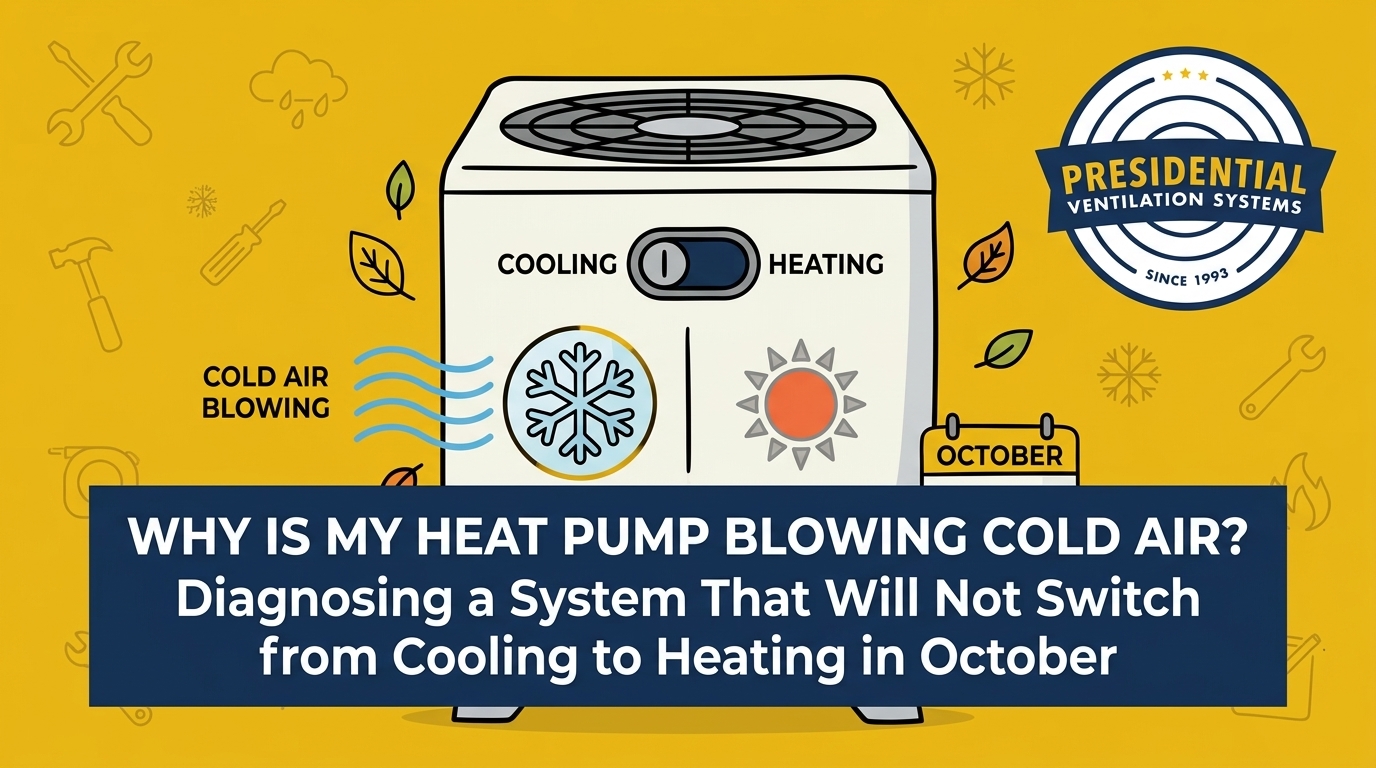
Why is your system actively chilling your house when you just turned the thermostat up? Diagnosing a heat pump that will not switch from cooling to heating in October usually comes down to one critical, stubborn component. It is incredibly frustrating to experience the first true cold snap of the October fall switchover, adjust your settings for warmth, and feel nothing but an icy breeze coming from your vents.
When this happens, you are immediately faced with a decision: is this a simple thermostat configuration error you can fix yourself, or a mechanical failure buried deep inside the outdoor unit? In most cases, a heat pump stuck in the wrong mode points directly to a malfunctioning reversing valve. This is the exact mechanism responsible for shifting your equipment between its summer and winter duties. If you are relying on heat pump systems to keep your home comfortable, understanding how this valve operates is the first step toward getting your heat back online.
Before you panic about a total system breakdown, it helps to know what you are looking for. Sometimes, the fix is as easy as adjusting a setting or waiting out a normal operational cycle. Other times, the sudden drop in temperature has exposed a hidden mechanical flaw that requires professional attention.
To understand why your system is blowing cold air, you have to look at how a heat pump actually works. Unlike a traditional furnace, a heat pump does not burn fuel or use electrical resistance coils to generate heat out of thin air. Instead, it moves existing heat from one place to another using refrigerant. During the summer, it absorbs heat from inside your house and dumps it outside. During the winter, it absorbs ambient heat from the outdoor air and pumps it inside.
The component that makes this two-way street possible is the reversing valve. It acts as a heavy-duty traffic cop for your refrigerant lines. If this valve fails or gets stuck, the system is physically trapped in one mode, regardless of what the thermostat on your wall says.
The reversing valve is not just a simple switch; it is a complex piece of engineering made up of two primary parts that must work in perfect harmony:
• The 24-volt electrical solenoid coil: This is the electronic brain of the valve. When you adjust your thermostat, it sends a low-voltage electrical signal to this coil.
• The pilot valve and magnetic field: Once energized, the solenoid creates a magnetic field that moves a tiny internal pilot valve.
• The main mechanical slider: The movement of the pilot valve changes the refrigerant pressure inside the main valve body. This pressure differential forces a heavy brass slider to shift from one side to the other, completely reversing the flow of refrigerant.
Interestingly, different manufacturers design their systems with different fail-safes. For example, brands like Daikin or Lennox engineer their reversing valves to default to a specific mode if the solenoid loses electrical power. Some systems are designed to default to heating, meaning a failed electrical coil will leave you warm but unable to cool your home in the summer. Other brands default to cooling, which means an electrical failure in the fall will leave you shivering. If the valve is trapped in the wrong position, your heat pump will continue to run its cooling cycle, blissfully unaware that you are freezing inside.
It might seem like your heat pump broke the very first time you tried to use the heat, but the damage was likely done months ago. In our 30+ years serving Nova Scotia, we see a distinct pattern every single autumn. The humid coastal summers require homeowners to run their air conditioning almost constantly for months on end. During this entire period, the reversing valve is locked tightly into the cooling position.
When October arrives, the weather in Nova Scotia can be notoriously unpredictable. You might have a warm, humid afternoon followed by a sharp drop to near-freezing temperatures overnight. When you switch your thermostat to heat for the first time in six months, you are asking a mechanical slider that has been sitting in one spot all summer to suddenly slide across the valve body.
Several factors contribute to the valve getting stuck during this critical transition:
• Sustained mechanical pressure: Sitting in one position under high refrigerant pressure for months can cause the internal brass slider to become physically jammed or sticky.
• Electrical degradation: The 24-volt solenoid coil sits outside in the harsh elements. Summer humidity, heavy rain, and constant operation can cause the electrical windings inside the coil to short out or degrade.
• Refrigerant charge issues: Because the slider relies on internal refrigerant pressure to move, a slow leak that developed over the summer might leave the system with too little pressure to physically force the valve over.
This is precisely why keeping up with a preventative maintenance plan is so valuable. A thorough inspection at the end of the cooling season can catch a degrading solenoid or a low refrigerant charge before you are left without heat on a cold night.
Before you assume the reversing valve is broken, it is important to rule out simple user errors or normal system behaviors. Heat pumps operate differently than traditional heating systems, and what seems like a breakdown might just be the system doing exactly what it was programmed to do.
Take a few minutes to walk through this basic diagnostic checklist:
• Verify the mode setting: Check your thermostat screen carefully. Is it explicitly set to "Heat"? Sometimes, programmable thermostats are accidentally left in "Auto" mode, or the schedule is still trying to run a summer cooling program.
• Check the fan setting: Ensure the fan is set to "Auto" rather than "On." If the fan is set to "On," it will blow air continuously, even when the heat pump is not actively running a heating cycle. This unheated air will feel cold coming out of the vents.
• Inspect the indoor air filter: A severely clogged air filter restricts airflow across the indoor coil. This can mess with the system's temperature sensors, causing it to behave erratically or shut down its heating cycle prematurely to prevent overheating.
• Wait for the defrost cycle to finish: This is the most common false alarm in the fall and winter. If frost builds up on the outdoor unit, the heat pump will temporarily switch itself back into cooling mode to melt the ice. During this 5-to-15-minute window, it is normal to feel cool air from the vents. Wait 20 minutes; if the hot air returns, the system is perfectly fine.
If you have run through these basic checks, confirmed the thermostat is set correctly, and the system is still blowing cold air after an hour, you have ruled out user error. At this point, the problem is internal, and it is time to call a professional.

Once a professional arrives, their primary job is to determine whether the reversing valve is suffering from a mechanical jam or an electrical failure. Guessing at the symptoms often leads to expensive, unnecessary part replacements.
For example, if you stand near the outdoor unit while someone switches the thermostat from cooling to heating, you might hear a distinct "click." That clicking sound usually means the electrical solenoid is receiving power and trying to do its job. If the system still doesn't switch, the issue is likely a mechanical slider jam or a lack of refrigerant pressure. Conversely, complete silence when switching modes often points to a dead 24-volt solenoid coil or a broken wire between the thermostat and the outdoor unit.
Misdiagnosing these symptoms is a common pitfall for inexperienced technicians. Replacing an entire reversing valve is a massive, labor-intensive job. If a technician replaces the whole valve when only the electrical coil was faulty, you end up paying for a major repair you didn't need.
This is why Presidential Ventilation Systems employs Red Seal tradespeople with dual HVAC and electrical expertise. Having technicians who deeply understand both the refrigeration cycle and complex electrical systems ensures the root cause is accurately identified. Last fall, a local homeowner reached out because their ductless heat pumps were stuck blowing cold air, and a previous technician from another company had failed to resolve it. Our technician arrived promptly, used their dual expertise to quickly diagnose the actual point of failure, verified the warranty coverage for the necessary parts, and fully restored proper operation to the system without unnecessary guesswork.
When your heating system acts up, you likely have immediate questions about what is happening and what you should do next. While you might need to read up on an air conditioner not working if you have issues in the summer, an October heating failure requires specific answers. Here is what our Red Seal technicians typically find when addressing stuck reversing valves.
It could be in a temporary defrost cycle, the thermostat may be misconfigured, or the reversing valve may be stuck in cooling mode. If the cold air only lasts for 10 to 15 minutes, the system is likely just melting frost off the outdoor unit. If it blows cold continuously for hours, the reversing valve has likely failed to shift.
Homeowners should never attempt to unstick a reversing valve themselves. It requires specialized tools to test electrical voltage and refrigerant pressures safely. Hitting the valve or tampering with the electrical connections can cause permanent damage to the compressor or result in severe electrical shock.
Symptoms include the system blowing cold air when set to heat, a clicking noise at the outdoor unit without a mode change, or the system being completely unresponsive to mode switches from the thermostat. You might also notice the outdoor unit icing up excessively if the valve is stuck halfway between modes.
It can be either. The electrical solenoid coil can fail, preventing the signal from reaching the valve, or the internal mechanical slider can become jammed due to wear, internal friction, or a lack of refrigerant pressure to push it over.
This depends entirely on the brand and model of your equipment. Some manufacturers design their reversing valves to default to heating if the solenoid loses power, ensuring you don't freeze in the winter. Others default to cooling when the solenoid is de-energized. A professional can check your specific model's technical data to confirm.
When faced with a cold house, it can be tempting to grab a multimeter or a wrench and try to fix the outdoor unit yourself. However, diagnosing and repairing a reversing valve is not a DIY project. The outdoor unit contains a mix of low-voltage controls (like the 24-volt solenoid) and high-voltage components (like the 240-volt compressor). Probing the wrong wire without proper training and safety equipment poses a severe risk of electrocution.
Furthermore, if the valve itself is mechanically jammed and needs to be replaced, the process is highly technical. A licensed professional must safely recover the existing refrigerant to prevent environmental contamination. Then, they must unbraze the old valve with a torch, carefully braze in a new one while wrapping it in wet rags to prevent heat damage to the new internal slider, pull a deep vacuum on the system, and precisely recharge the refrigerant.
Attempting any of this without the proper Red Seal credentials not only poses severe safety and frostbite risks, but it will also immediately void your manufacturer warranty. If you suspect an internal failure, rely on comprehensive heating services to handle the complex electrical and refrigerant work safely.
A clear understanding of how the reversing valve operates helps you recognize when it is time to stop adjusting the thermostat and call in a professional. Accurate, expert diagnosis prevents unnecessary expenses and ensures your system is truly ready for the long Nova Scotia winter ahead. If your system is struggling to make the switch this fall, contact Presidential Ventilation Systems to schedule a professional inspection and get your home's comfort back on track.