


The repair vs replace your heat pump decision guide you need comes down to five key factors: your system's age, its repair history, the cost of the current fix, how well it's keeping your home comfortable, and its energy efficiency.
Quick Answer: Should You Repair or Replace?
• System is under 10 years old, minor issue — Recommended Action: Repair
• System is 10-15 years old, isolated failure — Recommended Action: Evaluate using the $5,000 Rule
• System is 15+ years old, repeated breakdowns — Recommended Action: Replace
• Repair cost exceeds 50% of new system price — Recommended Action: Replace
• Rising energy bills despite normal usage — Recommended Action: Replace
• Single component failure, good maintenance history — Recommended Action: Repair
Your heat pump is one of the hardest-working systems in your home. In Nova Scotia, it runs through humid summers, icy winters, and everything in between. So when it starts acting up, the pressure to make the right call fast is real.
Here's the thing: the wrong decision costs you either way. Repair a dying system and you're pouring money into a unit that will fail again soon. Replace a fixable one and you've spent far more than you needed to.
Most homeowners make this decision based on one repair quote alone. That's rarely the full picture. Age, efficiency, repair patterns, and total cost of ownership all need to factor in before you commit.
This guide walks you through every piece of that decision clearly and without the guesswork.

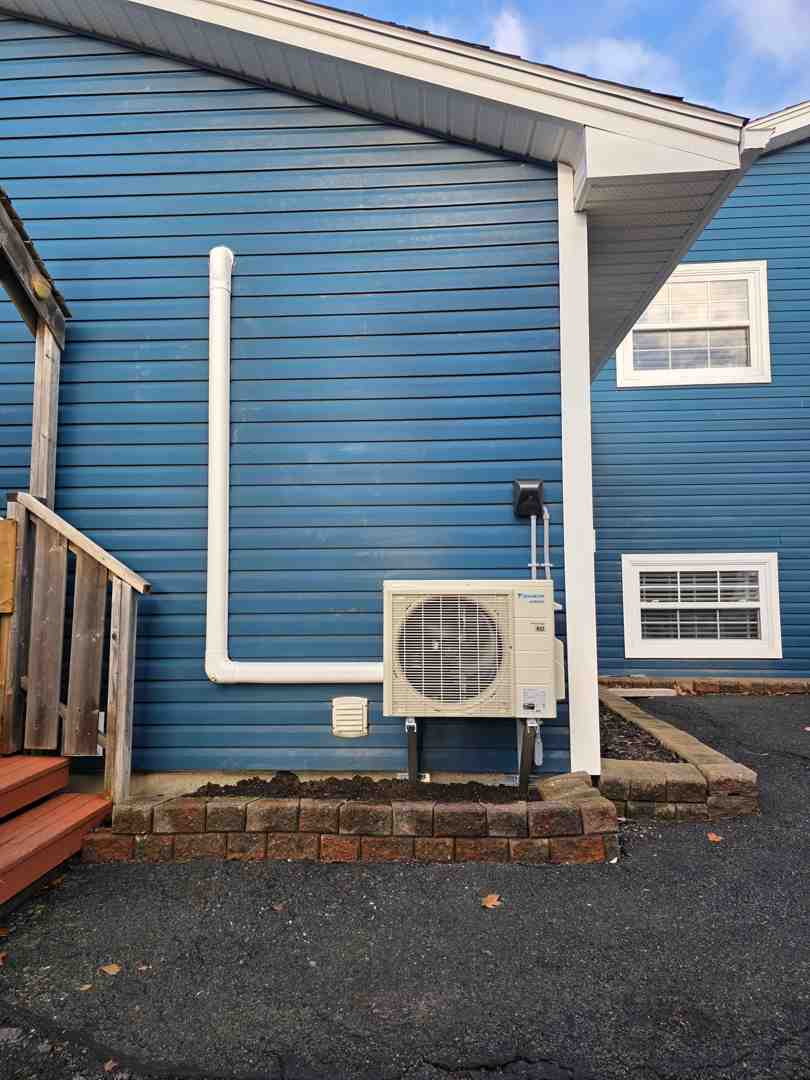
When we talk about how long a heat pump should last, we usually look at a window of 10 to 15 years. However, with the high-quality systems we install today and a consistent maintenance schedule, some units can stretch toward the 20-year mark. The reality for us here in Nova Scotia—from Halifax to Mount Uniacke—is that our systems work double duty. They provide cooling during our humid July afternoons and steady heat during the snowy depths of February.
Because they run year-round, they accumulate "mileage" faster than a furnace that sits idle all summer or an air conditioner that sleeps all winter. If your unit is approaching its tenth birthday, it is officially entering its "senior years." This is the point where we recommend homeowners start paying closer attention to performance. Knowing exactly time to replace your heat pump can save you from an emergency breakdown on the coldest night of the year.
Your heat pump rarely fails without sending out a few SOS signals first. One of the most common signs we see is "short cycling." This is when the unit turns on, runs for a few minutes, and shuts off before the house actually reaches the desired temperature, only to turn back on again moments later. This constant starting and stopping puts immense strain on the compressor.
You might also notice strange noises coming from the outdoor cabinet. While a gentle hum is normal, grinding, screeching, or loud rattling usually points to mechanical failure or loose components. If you start hearing these sounds, identifying early signs heat pump failure is the first step in deciding if a simple part replacement will do the trick or if the internal damage is too extensive.
Living near the Atlantic coastline in places like Eastern Passage, Cole Harbour, or Dartmouth means our heat pumps face a unique challenge: salt air. Salt is naturally corrosive, and over time, it can eat away at the delicate aluminum fins on your outdoor coils. Once these coils degrade, the system can’t exchange heat efficiently, forcing it to work harder and drive up your utility bills.
Furthermore, our extreme temperature swings and high humidity levels mean your system is constantly managing moisture. In the winter, a heat pump must go through "defrost cycles" to melt ice off the outdoor coils. If the system is old and struggling, these cycles might fail, leading to a block of ice that can damage the fan or the compressor. When we look at heat pump replacement halifax ns, we always consider how these local environmental factors have accelerated the wear and tear on your specific unit.
When we arrive at a home in Bedford or Sackville to look at a malfunctioning unit, we don't just look at the broken part. We look at the "medical history" of the machine. A repair vs replace your heat pump decision guide must weigh the immediate problem against the long-term reliability of the system.
If the unit has been a "lemon" for the last three years, requiring a service call every six months, the writing is likely on the wall. On the other hand, if this is the very first time the system has skipped a beat in seven years, a repair is almost certainly the way to go. We often point homeowners toward our heat pump repair halifax ultimate guide to help them understand which components are worth fixing and which are signs of a total system collapse.
To take the emotion out of the decision, many experts use a mathematical formula often called the "$5,000 Rule." Here’s how it works: you take the age of your heat pump and multiply it by the estimated cost of the repair. If the total is more than $5,000, it’s generally time to invest that money into a new system instead.
For example, if you have a 12-year-old unit and the repair is going to be significant, that calculation quickly exceeds the threshold. Another common benchmark is the "50% Rule"—if a single repair costs more than half the price of a brand-new system, it’s rarely a wise investment. timely heat pump replacement is crucial because a new unit comes with a fresh warranty, whereas a repair on an old unit only guarantees that one specific part.
Efficiency standards have changed dramatically over the last decade. In 2026, the gap between an old "standard" unit and a new high-efficiency model is wider than ever. We measure this using SEER (Seasonal Energy Efficiency Ratio) for cooling and HSPF (Heating Seasonal Performance Factor) for heating.
Older units might have a SEER rating of 10 or 12, while modern high-efficiency units can reach 20 or higher. This isn't just a number—it translates directly to how much electricity is used to keep your home comfortable. If you’re noticing that your power bills are creeping up every year even though you haven't changed your habits, your heat pump is likely losing its "muscle." Reviewing a heat pump replacements halifax ns guide can help you visualize how much you could save by switching to a unit that sips electricity rather than gulping it.
Replacement isn't always the answer. In fact, for many homeowners in Timberlea or Tantallon, a well-timed repair is the most sensible financial move. If your system is less than 10 years old and the issue is an isolated component failure—like a bad capacitor, a blown fuse, or a clogged condensate drain—repairing is the clear winner.
These are what we call "minor issues." They don't indicate that the system is dying; they just mean it needs a little professional attention. Additionally, if your unit is still under its manufacturer's warranty, you should almost always opt for the repair, as the cost of parts will likely be covered. We see many common heat pump issues that are easily fixed in a single visit, extending the life of your investment by several years.
Before you call us out to your home in Fall River or Waverley, there are a few things you can check yourself. Sometimes the "broken" heat pump is actually just a victim of a simple oversight.
• Check the Thermostat: Is it set to the correct mode (Heat or Cool)? Did someone accidentally change the schedule? Is the battery low?
• Inspect the Air Filter: A clogged filter is the number one cause of heat pump failure. It restricts airflow, causes the system to overheat, and can even lead to ice buildup.
• Look at the Breaker Panel: Did a power surge trip the circuit breaker for the outdoor unit?
• Clear the Outdoor Unit: Ensure there are no leaves, snow, or debris blocking the airflow around the outdoor cabinet.
If these steps don't fix the problem, you might need to solve common heat pump issues by calling in a professional to look at the deeper mechanics.
While we love a proactive homeowner, safety must come first. Heat pumps involve high-voltage electricity and pressurized refrigerant. You should never attempt to open the electrical cabinet or tamper with the refrigerant lines yourself.
If you smell something burning, see smoke, or hear a loud "bang," turn the system off at the thermostat and the breaker immediately. These are signs heat pump needs immediate attention from a licensed technician. Trying to DIY a major electrical or refrigerant issue can lead to personal injury or permanent damage to the system that might have otherwise been repairable.
There comes a point where the repairs just don't make sense anymore. If you find yourself on a first-name basis with your HVAC technician because they are at your house every few months, it’s time to look at a replacement.
• Efficiency (SEER) — Older Heat Pumps (10+ Years): 10 - 13 SEER — Modern Systems (2026 Models): 18 - 25+ SEER
• Refrigerant — Older Heat Pumps (10+ Years): R-22 (Phased out) — Modern Systems (2026 Models): R-32 or R-410A
• Compressor — Older Heat Pumps (10+ Years): Single-Stage (On/Off) — Modern Systems (2026 Models): Variable-Speed (Inverter)
• Humidity Control — Older Heat Pumps (10+ Years): Basic — Modern Systems (2026 Models): Advanced Dehumidification
• Smart Tech — Older Heat Pumps (10+ Years): Manual/Basic Programmable — Modern Systems (2026 Models): Full Smart Home Integration
If you are seeing uneven temperatures—where the living room is freezing but the bedroom is sweltering—your old system is likely struggling to distribute air properly. For our neighbors in Dartmouth, heat pump replacement dartmouth ns often becomes the best choice when the cost of keeping an old, inefficient unit running exceeds the monthly payment on a new, energy-saving model.
One mistake we often see homeowners make is trying to save money by replacing only the outdoor unit while keeping an ancient indoor air handler. This is called a "mismatched system," and it's a recipe for trouble. Modern outdoor units are designed to communicate perfectly with their indoor counterparts.
When you mix old and new tech, you lose out on the efficiency ratings you paid for. It can also lead to premature compressor failure because the two units aren't "speaking the same language." When we provide a heat pump replacements guide kentville ns, we always emphasize the importance of a matched system to ensure your warranty remains valid and your comfort remains consistent.
The technology inside a heat pump has leaped forward recently. The biggest game-changer is inverter technology (variable-speed compressors). Older units were either 100% on or 100% off. Imagine driving a car where you could only go 0 km/h or 100 km/h—it would be a jerky, inefficient ride.
Inverter systems work like a cruise control; they slow down or speed up to maintain the exact temperature you want. This uses significantly less energy and keeps the temperature in your home rock-steady. If you’re exploring a heat pump replacements truro ns guide, you’ll see that these modern units are also much quieter, meaning you won't have to turn up the TV every time the heat kicks on.
In our climate, 10 to 15 years is the standard expectation. Units located right on the coast (like in Prospect or Sambro) may lean toward the 10-year mark due to salt air, while units in more sheltered areas like Middle Sackville might last 15 years or more with excellent maintenance.
The compressor is generally the most expensive part of a heat pump. It is essentially the "heart" of the system. If your compressor fails and your unit is out of warranty and over 10 years old, we almost always recommend replacement over repair.
If your heat pump is part of a "hybrid" or "dual-fuel" system that uses a furnace as a backup, it’s a good idea to evaluate both. If the furnace is also over 15 years old, replacing them together can save you on labor and ensure the entire system is perfectly matched for efficiency. You can read more about this in our guide on whether to repair or replace your furnace.
At Presidential Ventilation Systems, we’ve spent over 30 years helping homeowners across Nova Scotia—from Halifax to Indigo Shores—navigate these tough decisions. We know that choosing between a repair and a replacement isn't just about the equipment; it's about your family's comfort and your long-term financial peace of mind.
Our goal is to help you evaluate the total cost of ownership. Sometimes that means a quick, expert repair to get you through the season. Other times, it means helping you select a new, high-efficiency system that will lower your bills and provide reliable comfort for the next decade.
If you’re feeling stressed about your heat pump’s performance, don't wait for it to fail completely. A professional assessment can give you the clarity you need to make the right choice for your home. Explore our full range of heat pump services and let us help you take the guesswork out of your home comfort.
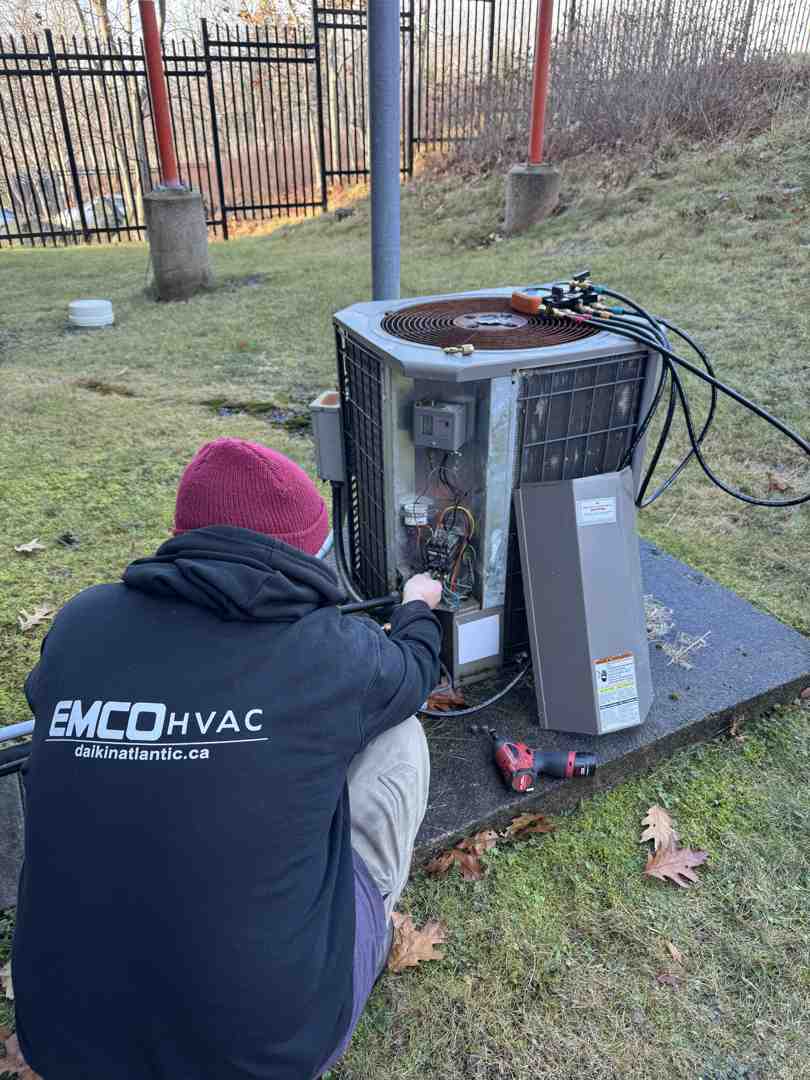

The repair vs replace your heat pump decision guide you need comes down to five key factors: your system's age, its repair history, the cost of the current fix, how well it's keeping your home comfortable, and its energy efficiency.
Quick Answer: Should You Repair or Replace?
• System is under 10 years old, minor issue — Recommended Action: Repair
• System is 10-15 years old, isolated failure — Recommended Action: Evaluate using the $5,000 Rule
• System is 15+ years old, repeated breakdowns — Recommended Action: Replace
• Repair cost exceeds 50% of new system price — Recommended Action: Replace
• Rising energy bills despite normal usage — Recommended Action: Replace
• Single component failure, good maintenance history — Recommended Action: Repair
Your heat pump is one of the hardest-working systems in your home. In Nova Scotia, it runs through humid summers, icy winters, and everything in between. So when it starts acting up, the pressure to make the right call fast is real.
Here's the thing: the wrong decision costs you either way. Repair a dying system and you're pouring money into a unit that will fail again soon. Replace a fixable one and you've spent far more than you needed to.
Most homeowners make this decision based on one repair quote alone. That's rarely the full picture. Age, efficiency, repair patterns, and total cost of ownership all need to factor in before you commit.
This guide walks you through every piece of that decision clearly and without the guesswork.
When we talk about how long a heat pump should last, we usually look at a window of 10 to 15 years. However, with the high-quality systems we install today and a consistent maintenance schedule, some units can stretch toward the 20-year mark. The reality for us here in Nova Scotia—from Halifax to Mount Uniacke—is that our systems work double duty. They provide cooling during our humid July afternoons and steady heat during the snowy depths of February.
Because they run year-round, they accumulate "mileage" faster than a furnace that sits idle all summer or an air conditioner that sleeps all winter. If your unit is approaching its tenth birthday, it is officially entering its "senior years." This is the point where we recommend homeowners start paying closer attention to performance. Knowing exactly time to replace your heat pump can save you from an emergency breakdown on the coldest night of the year.
Your heat pump rarely fails without sending out a few SOS signals first. One of the most common signs we see is "short cycling." This is when the unit turns on, runs for a few minutes, and shuts off before the house actually reaches the desired temperature, only to turn back on again moments later. This constant starting and stopping puts immense strain on the compressor.
You might also notice strange noises coming from the outdoor cabinet. While a gentle hum is normal, grinding, screeching, or loud rattling usually points to mechanical failure or loose components. If you start hearing these sounds, identifying early signs heat pump failure is the first step in deciding if a simple part replacement will do the trick or if the internal damage is too extensive.
Living near the Atlantic coastline in places like Eastern Passage, Cole Harbour, or Dartmouth means our heat pumps face a unique challenge: salt air. Salt is naturally corrosive, and over time, it can eat away at the delicate aluminum fins on your outdoor coils. Once these coils degrade, the system can’t exchange heat efficiently, forcing it to work harder and drive up your utility bills.
Furthermore, our extreme temperature swings and high humidity levels mean your system is constantly managing moisture. In the winter, a heat pump must go through "defrost cycles" to melt ice off the outdoor coils. If the system is old and struggling, these cycles might fail, leading to a block of ice that can damage the fan or the compressor. When we look at heat pump replacement halifax ns, we always consider how these local environmental factors have accelerated the wear and tear on your specific unit.
When we arrive at a home in Bedford or Sackville to look at a malfunctioning unit, we don't just look at the broken part. We look at the "medical history" of the machine. A repair vs replace your heat pump decision guide must weigh the immediate problem against the long-term reliability of the system.
If the unit has been a "lemon" for the last three years, requiring a service call every six months, the writing is likely on the wall. On the other hand, if this is the very first time the system has skipped a beat in seven years, a repair is almost certainly the way to go. We often point homeowners toward our heat pump repair halifax ultimate guide to help them understand which components are worth fixing and which are signs of a total system collapse.
To take the emotion out of the decision, many experts use a mathematical formula often called the "$5,000 Rule." Here’s how it works: you take the age of your heat pump and multiply it by the estimated cost of the repair. If the total is more than $5,000, it’s generally time to invest that money into a new system instead.
For example, if you have a 12-year-old unit and the repair is going to be significant, that calculation quickly exceeds the threshold. Another common benchmark is the "50% Rule"—if a single repair costs more than half the price of a brand-new system, it’s rarely a wise investment. timely heat pump replacement is crucial because a new unit comes with a fresh warranty, whereas a repair on an old unit only guarantees that one specific part.
Efficiency standards have changed dramatically over the last decade. In 2026, the gap between an old "standard" unit and a new high-efficiency model is wider than ever. We measure this using SEER (Seasonal Energy Efficiency Ratio) for cooling and HSPF (Heating Seasonal Performance Factor) for heating.
Older units might have a SEER rating of 10 or 12, while modern high-efficiency units can reach 20 or higher. This isn't just a number—it translates directly to how much electricity is used to keep your home comfortable. If you’re noticing that your power bills are creeping up every year even though you haven't changed your habits, your heat pump is likely losing its "muscle." Reviewing a heat pump replacements halifax ns guide can help you visualize how much you could save by switching to a unit that sips electricity rather than gulping it.
Replacement isn't always the answer. In fact, for many homeowners in Timberlea or Tantallon, a well-timed repair is the most sensible financial move. If your system is less than 10 years old and the issue is an isolated component failure—like a bad capacitor, a blown fuse, or a clogged condensate drain—repairing is the clear winner.
These are what we call "minor issues." They don't indicate that the system is dying; they just mean it needs a little professional attention. Additionally, if your unit is still under its manufacturer's warranty, you should almost always opt for the repair, as the cost of parts will likely be covered. We see many common heat pump issues that are easily fixed in a single visit, extending the life of your investment by several years.
Before you call us out to your home in Fall River or Waverley, there are a few things you can check yourself. Sometimes the "broken" heat pump is actually just a victim of a simple oversight.
• Check the Thermostat: Is it set to the correct mode (Heat or Cool)? Did someone accidentally change the schedule? Is the battery low?
• Inspect the Air Filter: A clogged filter is the number one cause of heat pump failure. It restricts airflow, causes the system to overheat, and can even lead to ice buildup.
• Look at the Breaker Panel: Did a power surge trip the circuit breaker for the outdoor unit?
• Clear the Outdoor Unit: Ensure there are no leaves, snow, or debris blocking the airflow around the outdoor cabinet.
If these steps don't fix the problem, you might need to solve common heat pump issues by calling in a professional to look at the deeper mechanics.
While we love a proactive homeowner, safety must come first. Heat pumps involve high-voltage electricity and pressurized refrigerant. You should never attempt to open the electrical cabinet or tamper with the refrigerant lines yourself.
If you smell something burning, see smoke, or hear a loud "bang," turn the system off at the thermostat and the breaker immediately. These are signs heat pump needs immediate attention from a licensed technician. Trying to DIY a major electrical or refrigerant issue can lead to personal injury or permanent damage to the system that might have otherwise been repairable.
There comes a point where the repairs just don't make sense anymore. If you find yourself on a first-name basis with your HVAC technician because they are at your house every few months, it’s time to look at a replacement.
• Efficiency (SEER) — Older Heat Pumps (10+ Years): 10 - 13 SEER — Modern Systems (2026 Models): 18 - 25+ SEER
• Refrigerant — Older Heat Pumps (10+ Years): R-22 (Phased out) — Modern Systems (2026 Models): R-32 or R-410A
• Compressor — Older Heat Pumps (10+ Years): Single-Stage (On/Off) — Modern Systems (2026 Models): Variable-Speed (Inverter)
• Humidity Control — Older Heat Pumps (10+ Years): Basic — Modern Systems (2026 Models): Advanced Dehumidification
• Smart Tech — Older Heat Pumps (10+ Years): Manual/Basic Programmable — Modern Systems (2026 Models): Full Smart Home Integration
If you are seeing uneven temperatures—where the living room is freezing but the bedroom is sweltering—your old system is likely struggling to distribute air properly. For our neighbors in Dartmouth, heat pump replacement dartmouth ns often becomes the best choice when the cost of keeping an old, inefficient unit running exceeds the monthly payment on a new, energy-saving model.
One mistake we often see homeowners make is trying to save money by replacing only the outdoor unit while keeping an ancient indoor air handler. This is called a "mismatched system," and it's a recipe for trouble. Modern outdoor units are designed to communicate perfectly with their indoor counterparts.
When you mix old and new tech, you lose out on the efficiency ratings you paid for. It can also lead to premature compressor failure because the two units aren't "speaking the same language." When we provide a heat pump replacements guide kentville ns, we always emphasize the importance of a matched system to ensure your warranty remains valid and your comfort remains consistent.
The technology inside a heat pump has leaped forward recently. The biggest game-changer is inverter technology (variable-speed compressors). Older units were either 100% on or 100% off. Imagine driving a car where you could only go 0 km/h or 100 km/h—it would be a jerky, inefficient ride.
Inverter systems work like a cruise control; they slow down or speed up to maintain the exact temperature you want. This uses significantly less energy and keeps the temperature in your home rock-steady. If you’re exploring a heat pump replacements truro ns guide, you’ll see that these modern units are also much quieter, meaning you won't have to turn up the TV every time the heat kicks on.
In our climate, 10 to 15 years is the standard expectation. Units located right on the coast (like in Prospect or Sambro) may lean toward the 10-year mark due to salt air, while units in more sheltered areas like Middle Sackville might last 15 years or more with excellent maintenance.
The compressor is generally the most expensive part of a heat pump. It is essentially the "heart" of the system. If your compressor fails and your unit is out of warranty and over 10 years old, we almost always recommend replacement over repair.
If your heat pump is part of a "hybrid" or "dual-fuel" system that uses a furnace as a backup, it’s a good idea to evaluate both. If the furnace is also over 15 years old, replacing them together can save you on labor and ensure the entire system is perfectly matched for efficiency. You can read more about this in our guide on whether to repair or replace your furnace.
At Presidential Ventilation Systems, we’ve spent over 30 years helping homeowners across Nova Scotia—from Halifax to Indigo Shores—navigate these tough decisions. We know that choosing between a repair and a replacement isn't just about the equipment; it's about your family's comfort and your long-term financial peace of mind.
Our goal is to help you evaluate the total cost of ownership. Sometimes that means a quick, expert repair to get you through the season. Other times, it means helping you select a new, high-efficiency system that will lower your bills and provide reliable comfort for the next decade.
If you’re feeling stressed about your heat pump’s performance, don't wait for it to fail completely. A professional assessment can give you the clarity you need to make the right choice for your home. Explore our full range of heat pump services and let us help you take the guesswork out of your home comfort.

Verifying Red Seal certification when hiring HVAC technicians in Nova Scotia is the single most important step you can take to protect your home, your safety, and your financial investment. You are looking at a competitive quote for your new heating system, but there is a crucial detail that might be missing from the paperwork. Many homeowners assume that any general contractor offering installation services is fully qualified to handle the complex requirements of modern HVAC systems. Unfortunately, a pattern we see often in our service calls is that this assumption frequently leads to unsafe installations, voided warranties, and systems that fail long before their time.
When you are planning a major home upgrade and need professional heating services, the critical moment occurs when you are reviewing estimates. This is the exact point when verifying credentials becomes your strongest defense against sub-par workmanship. Whether you are looking into a ductless mini-split or a comprehensive central heat pump installation, ensuring the team has the legal authority and technical training to perform the work is non-negotiable.
A proper installation is not simply a matter of bolting a piece of equipment to a wall and plugging it in. Modern heat pumps are highly sophisticated machines that require specialized knowledge of refrigerant pressures, precise airflow dynamics, and high-voltage electrical systems. Drawing on our 30+ years of experience across residential retrofits, new construction, and commercial projects in Mount Uniacke and beyond, we frequently see the costly downstream consequences of uncertified installations. When an unqualified individual attempts to balance refrigerant lines or wire a high-draw compressor, the results range from poor energy efficiency to severe fire hazards.
Homeowners often trust a general contractor because that individual has done excellent carpentry, plumbing, or renovation work for them in the past. However, HVAC is a distinct, highly regulated field. Without the proper training, even the most well-intentioned handyman cannot properly commission a heat pump to manufacturer specifications. By understanding what to look for on an estimate, you can ensure your system is installed safely and optimized for long-term performance.
To make an informed decision, it is essential to understand the vast difference between a general contractor and a certified refrigeration mechanic. A general contractor manages broad construction projects, coordinating various trades to build or renovate a space. While they are highly skilled in project management and general carpentry, they rarely hold the specialized licensing required for handling regulated refrigerants.
The Refrigeration and Air Conditioning Mechanic designation is a highly regulated trade in Canada. Earning a Red Seal refrigeration mechanic certification requires thousands of hours of hands-on apprenticeship, rigorous classroom instruction, and passing a comprehensive interprovincial examination. Only professionals who have earned this specific credential possess the legal authority and technical expertise to handle refrigerants safely.
At Presidential Ventilation Systems, we maintain a roster of approximately 70 employees, which allows us to deploy dedicated, skilled Red Seal tradespeople for every phase of a project. Hiring a multi-trade team—encompassing HVAC, electrical, ventilation, and sheet-metal experts—ensures that the specific complexities of your heating system are managed by dedicated specialists rather than generalists. When you work with certified HVAC technicians, you are paying for an uncompromising standard of technical proficiency.
• Refrigerant Handling — General Contractor: Legally prohibited without specific certification. — Red Seal Refrigeration Mechanic: Fully licensed and trained to handle, recover, and charge refrigerants safely.
• System Commissioning — General Contractor: Relies on basic manufacturer manuals, often missing technical nuances. — Red Seal Refrigeration Mechanic: Uses specialized gauges to calculate superheat and subcooling for exact performance.
• Warranty Authorization — General Contractor: Installations often result in immediate warranty denial by major brands. — Red Seal Refrigeration Mechanic: Recognized by premium manufacturers to validate and register full warranties.
• Environmental Compliance — General Contractor: High risk of accidental venting due to lack of specialized recovery equipment. — Red Seal Refrigeration Mechanic: Strict adherence to provincial and federal environmental protection laws.
Handling refrigerants without proper certification is a direct violation of environmental regulations and poses severe safety risks to your property. Beyond the legal implications, the physical behavior of refrigerant inside your heat pump dictates how well the system will heat and cool your home. Inaccurate refrigerant charges lead to immediate efficiency losses, causing the system to overwork, consume excess electricity, and eventually fail prematurely.
Nova Scotia's freezing Maritime winters and humid summers demand absolute precision in refrigerant charging to prevent system failure during extreme temperature swings. When a heat pump is extracting ambient heat from sub-zero winter air, the refrigerant must be balanced perfectly. If the system is undercharged, the compressor will overheat trying to meet the thermostat's demand. If it is overcharged, liquid refrigerant can flood back into the compressor, destroying the internal valves.
Certified technicians use specialized digital gauges, temperature probes, and mathematical formulas to achieve the exact charge required by the manufacturer. A pattern we see often across the province is systems completely breaking down because the initial installer lacked the training to correctly balance the refrigerant lines. Last summer, one Nova Scotia homeowner reached out to our team during a heat wave after going without a working heat pump since the previous August. Previous uncertified technicians had failed to diagnose and fix the broken system. A skilled technician from our team properly diagnosed the issue—which was completely different from what was previously claimed—and accurately repaired the system.
Installing a modern heating system is not just a plumbing or refrigeration job; it requires integrating high-voltage electrical components safely into your home's existing infrastructure. A heat pump requires dedicated circuits, properly sized breakers, and specific wire gauges to handle the significant electrical draw of the compressor and auxiliary heating elements.
Because our team handles comprehensive electrical panel upgrades and installations daily, we know firsthand that improperly sized wiring or incorrect breaker installations by uncertified workers pose severe fire hazards. If an installer uses a wire gauge that is too small for the circuit's amperage, the wire will generate extreme heat inside your walls, potentially melting the insulation and sparking an electrical fire. Furthermore, failing to install the required outdoor disconnect switches violates local building codes and puts future service technicians at risk of electrocution.
A true HVAC contractor provides a seamless integration of both refrigeration and electrical expertise to ensure the system operates safely. Because the installation spans multiple disciplines, homeowners must ensure that the electrical portion of the hookup is performed by appropriately licensed professionals to meet provincial building codes. Understanding the Red Seal electrician requirements for heat pump hookups is just as critical as verifying the refrigeration credentials. When a multi-trade company handles the installation, both the mechanical and electrical permits are pulled and executed by specialized tradespeople, leaving no room for dangerous guesswork.
Premium equipment manufacturers, such as Daikin and Lennox, strictly mandate that their systems be installed by licensed professionals. These companies invest heavily in engineering highly efficient equipment, and they know that the lifespan of that equipment is entirely dependent on the quality of the installation. If a system fails and the manufacturer discovers it was installed by an uncertified general contractor, the warranty claim is instantly denied.
Working with recognized, certified dealers ensures that your investment is protected for the full duration of the warranty period. For example, maintaining our Daikin Comfort Pro status requires strict adherence to manufacturer installation guidelines, continuous factory training, and a proven track record of technical excellence. When an installation is completed by a contractor holding this status, the manufacturer registers the equipment with full confidence.
Last fall, a homeowner contacted us because their mini-split heat pumps were not working properly after a poor initial service by a different company. The previous company had failed to identify the root problem. One of our certified technicians quickly diagnosed the issue and confirmed warranty coverage for the necessary parts, completely solving the problem and restoring the system to proper operation. Proper diagnostics by a certified technician can often salvage a system and restore its warranty standing after a poor initial installation, but we always recommend preventing the issue entirely by hiring a certified professional from day one.
Government and provincial rebate programs are designed to make energy-efficient upgrades more accessible to homeowners. Programs like Efficiency Nova Scotia offer significant incentives for upgrading to modern heating systems, particularly for oil-to-heat-pump conversions. However, these programs almost universally require that the installation be completed by an approved, certified contractor.
Submitting an invoice from an uncertified handyman or general contractor will result in a rejected rebate application. The administrative bodies governing these funds require strict proof of compliance, including the contractor's credentials, the exact AHRI (Air-Conditioning, Heating, and Refrigeration Institute) matching numbers of the equipment, and detailed commissioning reports. An uncertified installer simply cannot provide the necessary documentation to satisfy the auditors.
Because rebate programs, funding caps, and eligibility criteria can change frequently, we strongly recommend confirming current programs with Presidential Ventilation Systems before starting work. A reputable HVAC company will not only hold the necessary Red Seal certifications to keep you eligible, but their administrative team will also be familiar with the latest program updates. They can guide you through the required pre-approval steps, ensure the equipment selected qualifies for the highest possible incentive, and provide the exact invoicing format the provincial programs demand.
Protecting yourself during the estimate phase requires asking direct questions and requesting physical proof of credentials. Do not wait until the equipment is sitting in your driveway to confirm the installer's qualifications. Follow these actionable steps to verify a contractor's Red Seal certification before signing any agreements:
1. Ask for the Nova Scotia Apprenticeship Agency certification number: During the initial consultation, request the lead technician's certification number. Legitimate contractors are proud of their credentials and will provide this information without hesitation.
2. Request proof of dedicated Red Seal refrigeration mechanics: Ensure the company actually employs technicians with a Red Seal refrigeration mechanic certification on staff, rather than sub-contracting the work to unverified third parties.
3. Verify specialized liability insurance: Check that the contractor carries appropriate liability insurance and workers' compensation coverage specifically rated for HVAC and electrical work, not just general carpentry or landscaping.
4. Review the written estimate for trade specifics: Ensure the written quote clearly outlines who will be handling the electrical integration, who will be pulling the electrical permits, and who is responsible for the refrigerant charging.
5. Plan for ongoing professional care: Once verified and installed, ongoing care by these same certified professionals ensures the system maintains its efficiency. Securing preventative HVAC maintenance from a credentialed team extends the lifespan of your investment.

Yes, Refrigeration and Air Conditioning Mechanic is a designated Red Seal trade across Canada. It requires extensive apprenticeship hours and passing a rigorous interprovincial examination. This designation ensures the technician has mastered the complex thermodynamics, electrical troubleshooting, and environmental safety protocols required to work on modern heating and cooling systems.
Homeowners can ask the contractor directly for their certification card before the project begins. Credentials can also be cross-referenced with the Nova Scotia Apprenticeship Agency to ensure they are current and valid. A reputable HVAC company will always be transparent about the qualifications of the technicians they send to your home.
Yes, handling the refrigerants within a heat pump requires a certified refrigeration mechanic by law. Additionally, the electrical connections required to power the unit demand appropriate electrical licensing and permits. Attempting to bypass these licensing requirements can result in severe fines, voided warranties, and dangerous operating conditions.
It can lead to unsafe operation, voided manufacturer warranties, and rejected provincial rebate applications. Improper refrigerant handling can also cause premature system failure, meaning you may have to replace the entire unit years before its expected lifespan. Furthermore, uncertified electrical work poses a significant fire hazard to your property.
No, unless the general contractor personally holds a valid Red Seal refrigeration certification or directly employs someone who does. Environmental regulations strictly prohibit uncertified individuals from handling, recovering, or charging regulated refrigerants due to the severe environmental impact of accidental venting and the technical precision required for safe operation.
Protecting your home, your warranty, and your investment starts with asking the right questions during the estimate process. In our 30+ years of experience serving Mount Uniacke and greater Nova Scotia, we have found that transparency regarding credentials is the foundation of a trustworthy contractor relationship. You deserve the peace of mind that comes from knowing your equipment is being handled by professionals who respect the trade and adhere to all provincial safety standards.
Choosing a multi-trade team with verified tradespeople ensures your system is installed safely, efficiently, and in full compliance with warranty and rebate requirements. If you are planning an upgrade, explore your options with a team that prioritizes certification and ongoing education. Contact Presidential Ventilation Systems today to request a free estimate for your heat pump installation.
